

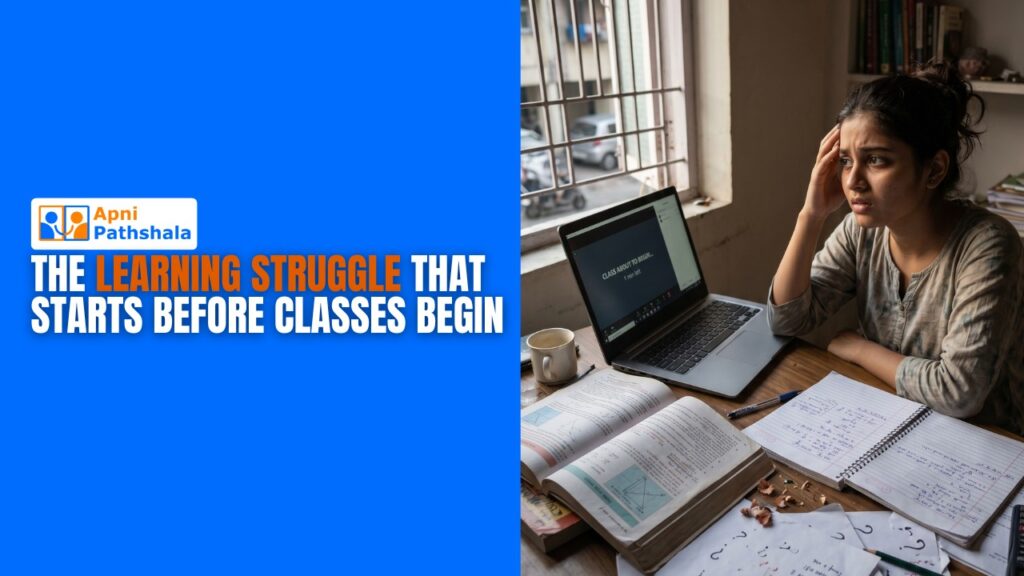
Before the first bell rings, before the teacher writes a single word on the board, many students are already at a disadvantage. The learning challenges for students in India often begin not inside a classroom, but in the hours before school, in the morning rush, in homes without a quiet corner or a working device. Understanding where the struggle actually starts is the first step toward fixing it.
The Problems Students Face in Education Before School Even Begins
Most people assume school is where learning problems start and where they need to be solved. But the problems students face in education often take root much earlier, in the daily realities that happen before a student even enters the classroom.
Consider a class 8 student in a semi-urban town. Her school starts at 7:30 AM. She wakes at 6, helps prepare breakfast, gets a younger sibling ready, and takes an overcrowded bus. By the time she sits down in class, she’s tired. She hasn’t revised yesterday’s lesson. She hasn’t read ahead. She’s starting the day already behind, and class hasn’t even properly begun.
This is not a story about laziness. It’s a story about what mornings look like for millions of Indian students, and how those hours quietly shape what’s possible once learning begins.
Education Barriers for Students That Live Inside the Home
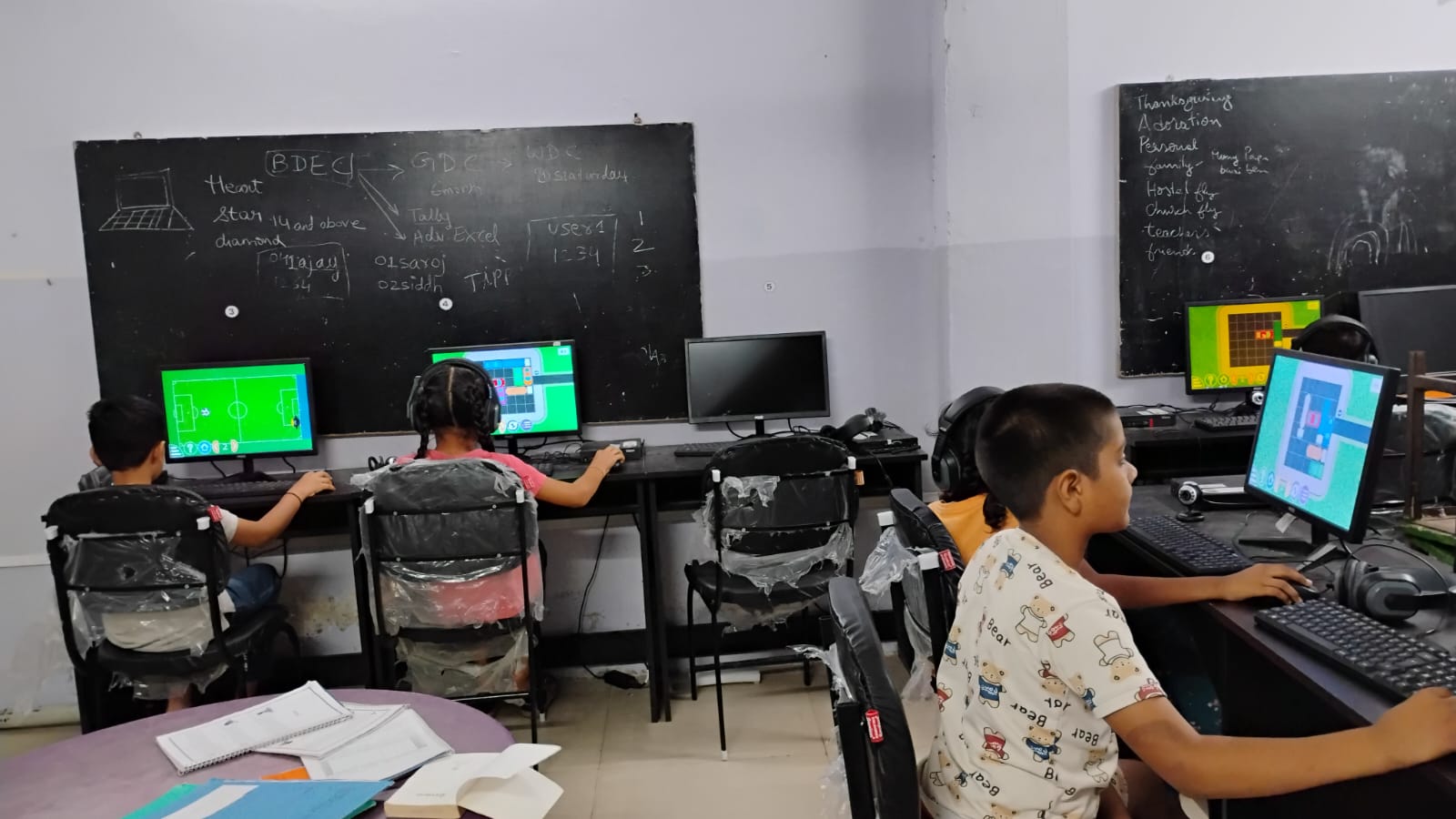
The education barriers for students aren’t only found in underfunded schools or overcrowded classrooms. Some of the biggest ones exist at home, and they are far more common than most people admit.
No personal device. When one phone serves an entire family, there is no reliable way for a student to prepare before class, revise in the evening, or catch up on anything they missed. The phone is always needed for something else.
No quiet space to study. Concentration requires an environment that supports it. A student studying next to a running television or a crying toddler cannot absorb and retain as well as one who has a dedicated corner with a proper setup.
No access to supplementary material. Textbooks alone are not enough in today’s learning environment. Students who cannot access video explanations, practice exercises, or online resources are working with half the tools they actually need.
No support at home. Many parents in first-generation education households cannot help with difficult concepts. Without a device, even self-directed learning becomes impossible. The student is left with only what they absorbed in a forty-minute class.
According to NCERT (National Council of Educational Research and Training), structured home-based learning is a critical complement to classroom instruction. Without it, even good teaching does not fully translate into lasting student understanding.
Study Challenges at Home Are Bigger Than Families Realise
The study challenges at home are often invisible, not just to teachers, but to parents themselves. A child sitting with a notebook every evening looks like they’re studying. But if they have no device, no internet, and no way to go deeper than the printed page, they are barely scratching the surface of what learning requires today.
This is where gaps quietly compound. A student in class 6 who cannot revise properly misses foundational concepts. By class 8, those gaps create visible confusion. By class 10, the results show on paper, and everyone wonders what went wrong. What went wrong started years earlier, at home, long before any exam was in sight.
The Central Board of Secondary Education (CBSE) has steadily moved toward competency-based learning, a model that expects students to understand, apply, and analyse, not just memorise. This means home study time must be active and resourced. Students who lack access to the right tools are being assessed on skills they’ve had no real chance to practise outside class.
The pressure lands on the student, but the cause often lies in the structure around them.
Removing the Barriers Is the Only Real Fix
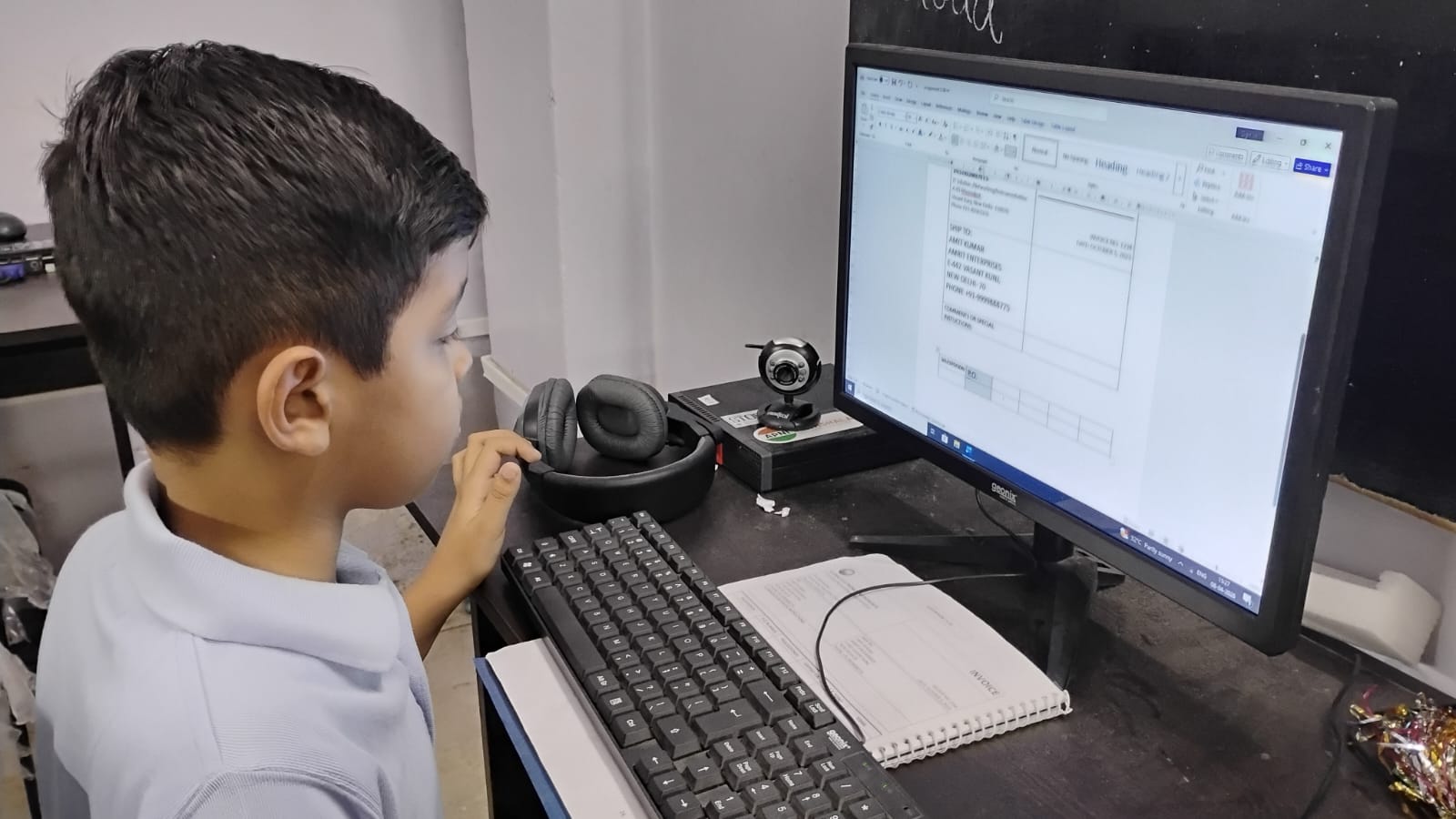
More homework does not help a student who has no device. More tuition does not help a child who cannot consolidate learning at home. What genuinely helps is removing the barriers that prevent effective learning from happening in the first place.
A student with their own computer can revisit any lesson before the next school day, watch video explanations for concepts that didn’t land in class, use curriculum-aligned apps to self-assess, and study at their own pace, without competing for a shared family phone.
Why Every Indian Student Needs Their Own Computer is no longer idealistic; it is a practical necessity for any family serious about their child’s future. And How a Personal Computer Helps Students Learn goes far beyond what a school timetable alone can offer.
Apna PC makes this possible at just ₹21,000 (shipping and GST excluded), an education-ready computer built for Indian students and families. When the right tool is in the right hands, the struggle that starts before school can finally end.
Your child’s learning gap may have nothing to do with effort and everything to do with what’s missing at home. Give them the right start. Visit apnapc.com to learn more.