

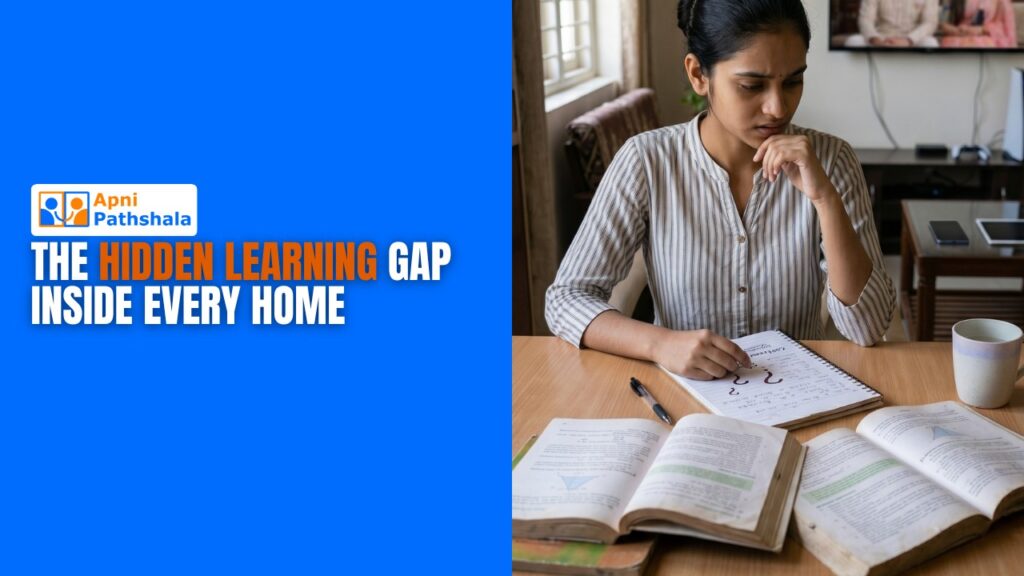
Most parents believe that once a child gets into a good school, the hard part is done. But the learning gap in education doesn’t start in the classroom; it starts at home. Two students can sit in the same class, study from the same textbook, and still end up miles apart academically. The difference is rarely about talent or effort. It is about what happens after the school bell rings.
What Is the Learning Gap in Education?
The education gap India talks about is usually about schools, teacher shortages, poor infrastructure, and government policy. But there is another kind of gap that gets almost no attention. It forms quietly inside homes every evening.
One student goes home to a personal computer and the freedom to revise and explore. Another goes home to a shared device, siblings waiting their turn, and a parent who needs the phone back by seven. Same school. Same teacher. Completely different learning environment.
According to UNESCO global education research, consistent home learning environments are among the strongest predictors of long-term academic success. The classroom teaches, but home is where learning actually sticks.
How the Digital Divide in Education Goes Deeper Than the Internet
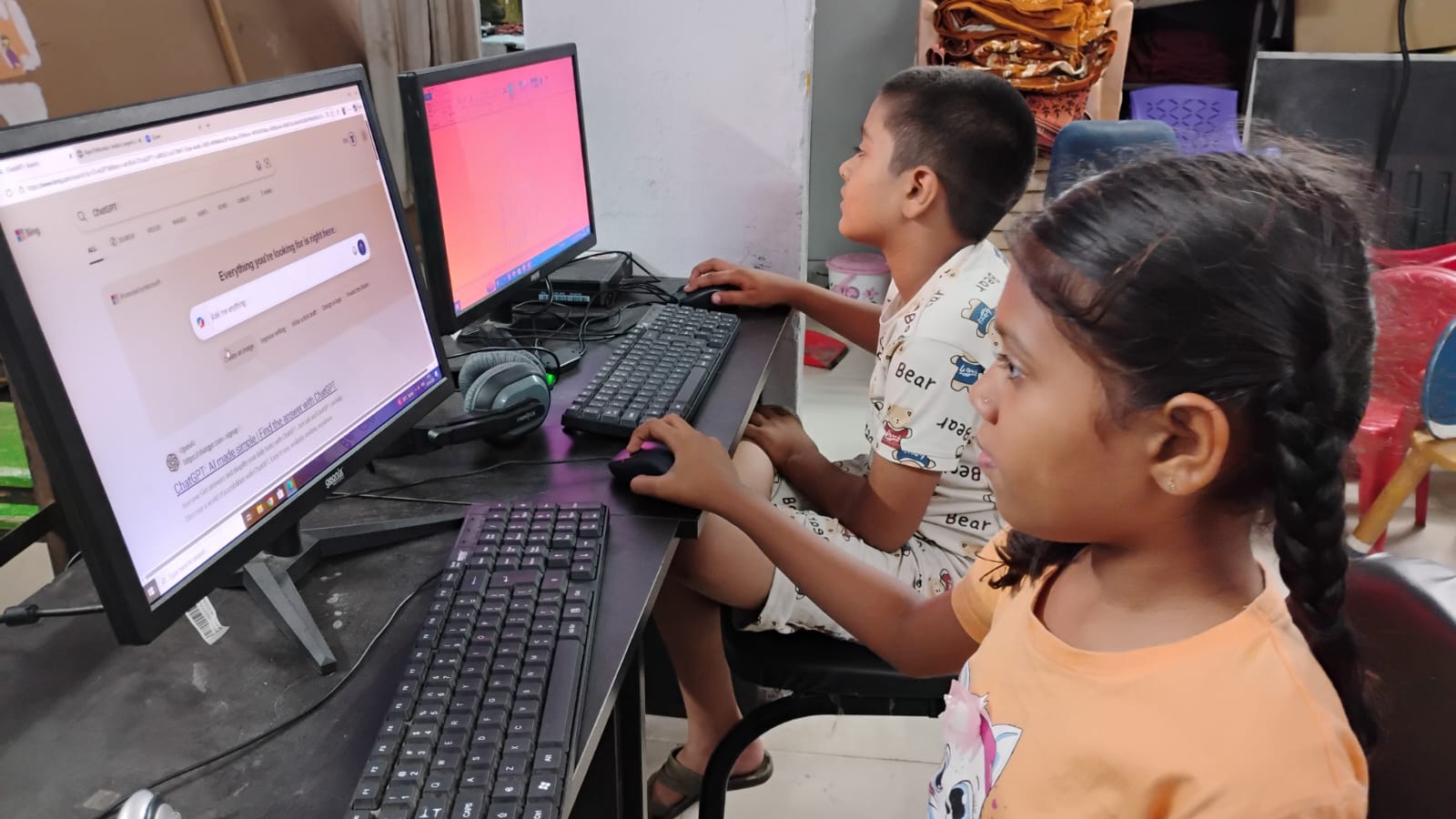
The digital divide in education is often treated as a connectivity problem. But internet access is only part of it. The deeper issue is device access, whether a student has a computer that is genuinely theirs, available whenever they need it, without waiting or competing for it.
When a student does not have personal access to a device, here is what quietly disappears:
- Daily practice on typing, research, and subject-specific tools
- The ability to revise lessons at their own pace and time
- Time spent on creative work, projects, presentations, and early coding skills
- Familiarity with technology that shapes every career path today
These are not extras. They are the building blocks of a student who is genuinely prepared for the world beyond school. How a Personal Computer Helps Students Learn is no longer a question worth debating; the answer is clear. The question now is access.
Why Student Learning Inequality Compounds Every Day?
Student learning inequality is uncomfortable to discuss because it often stems from what a family can or cannot afford. Wealthier households do not just provide better food or private coaching; they provide better tools. A personal laptop. A quiet desk. Uninterrupted time to study and practice.
The hidden gap does not widen overnight. It grows in small increments. One student practices typing while the other waits for the shared phone to become available. One student looks up a concept they did not understand in class. Another memorises without comprehension. Repeated every day for months, these small differences become enormous ones.
By the time both students appear for a board exam or a competitive entrance test, they are no longer on equal footing. No last-minute effort bridges what years of missed daily practice could have built.
The UNICEF India education report highlights that millions of children in India still lack access to devices and digital tools needed for quality learning outside school. The problem is real. The solution, for individual families, is within reach.
A Step That Makes a Real Difference at Home
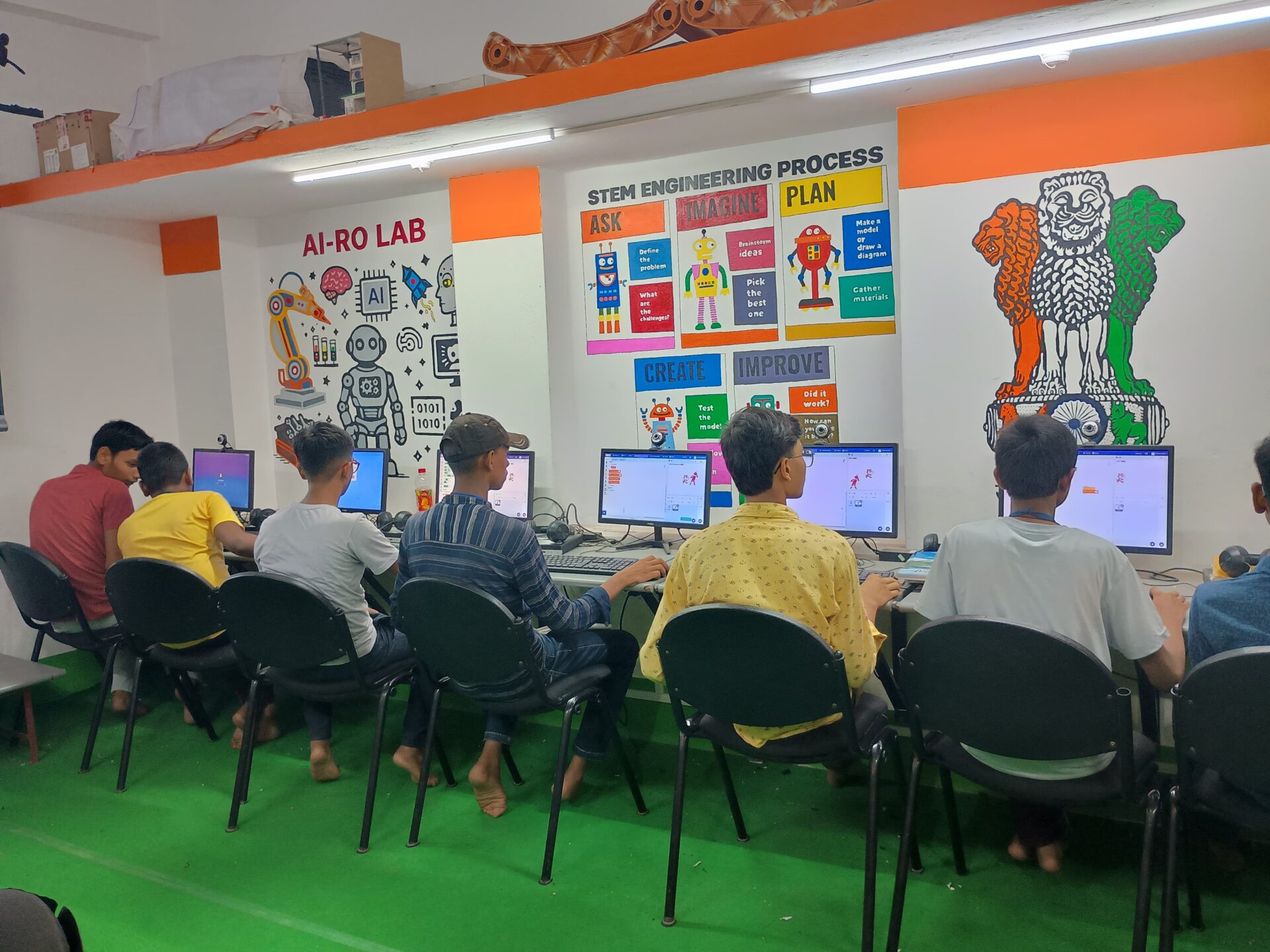
Apna PC was built to address this problem directly. It is an affordable, student-ready computer designed for Indian families, especially in Tier 2 and Tier 3 cities, where ambition runs high but practical options have always been limited.
At ₹21,000 (shipping and GST excluded), Apna PC gives a student their own dedicated device. Not shared. Not borrowed. Entirely theirs. That means consistent daily practice, better revision habits, and the quiet confidence that comes from having the right tools at the right time.
Understanding What Is Apna PC is starts with understanding who it was built for: students from regular Indian families who deserve the same learning advantage that personal devices have always given to others.
The education gap India faces cannot be solved by schools alone. It is solved one home at a time, with the right tools in the right hands.
The hidden learning gap inside your home can be closed. If your child is working hard but still does not have a personal device, that is the most important gap to address first. Visit apnapc.com to learn more.