

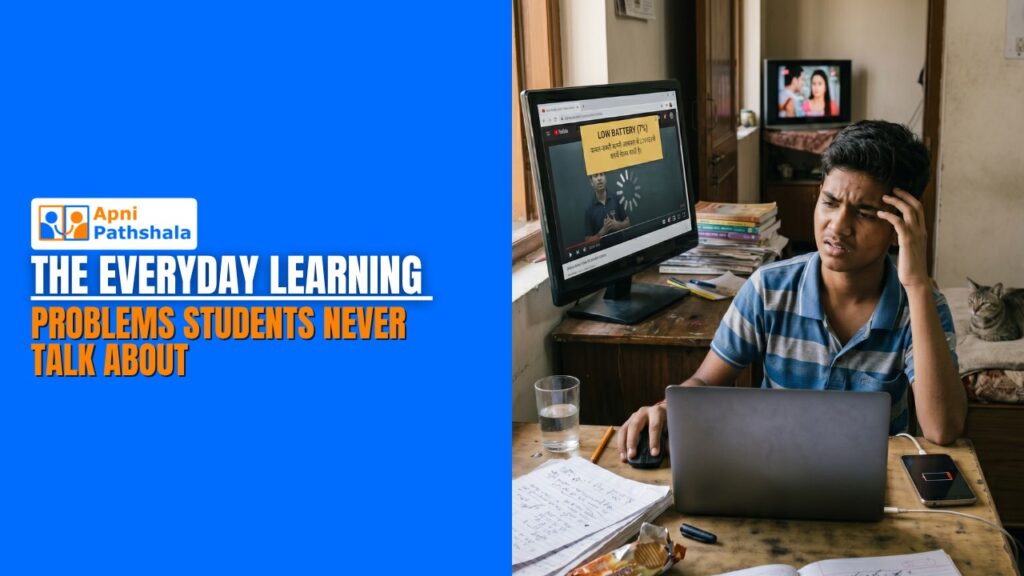
Most conversations about student learning problems focus on what is easy to see: poor grades, unfinished homework, or a child who seems to have given up. But the problems that hurt students the most are often the ones nobody talks about. They are quiet, invisible, and easy to mistake for laziness or a bad attitude. They happen at home, after school, in the hours when students are completely on their own, and they shape futures more than most teachers ever realise.
This blog is about those problems. The ones students carry without naming them, either because they do not know how to explain what they are feeling, or because they are afraid that bringing it up will make things worse.
The Challenges Faced by Students in Learning That Nobody Sees
When we talk about the challenges students face in learning, we usually refer to syllabus difficulty or classroom size. But the challenges that weigh heaviest are almost never academic; they are environmental and emotional.
Take the simple act of not understanding something in class. Most students will not raise their hands. Not because they are not curious, but because asking a question in front of thirty classmates feels risky. They worry about being laughed at. They worry about being seen as the one who does not get it. So they stay silent, note down what is on the board, and go home hoping it will make more sense later.
But later, there is no one to ask. Parents are busy or unfamiliar with the subject. Siblings have their own workload. Tuition may not cover every topic. And without a device at home, there is no way to search for a simpler explanation, watch a video, or try a different approach to the same problem.
The gap that began as one unanswered question slowly becomes a missing foundation. New lessons build on it, and each week the student falls a little further behind, not because they stopped trying, but because they never had the means to catch up.
According to UNESCO global education research, students who lack access to learning support outside classroom hours are significantly more likely to experience persistent knowledge gaps that affect long-term academic outcomes.
Why Students Struggle to Study When They Are on Their Own?
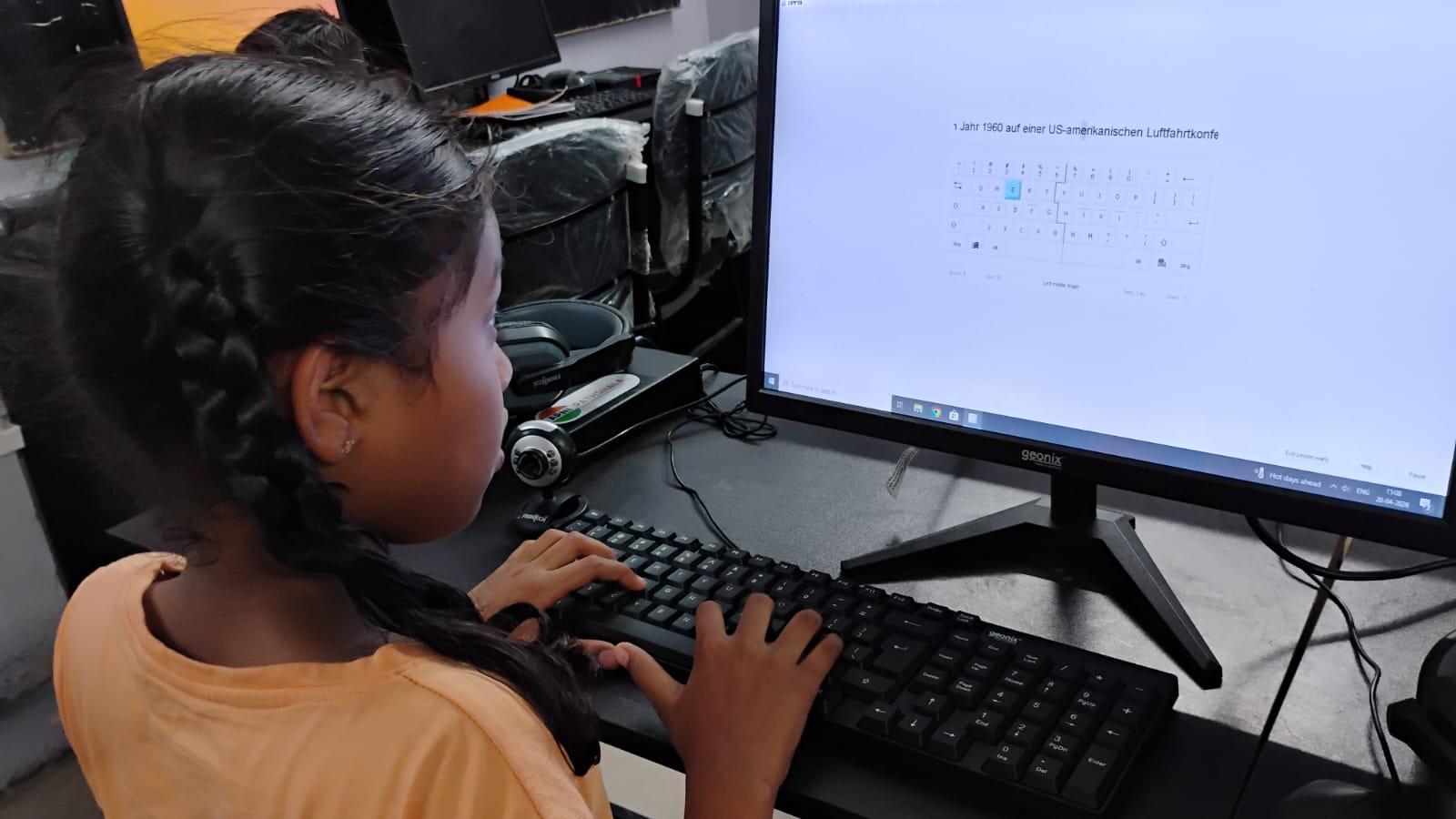
Understanding why students struggle to study requires examining what studying demands actually are and whether most Indian students have those conditions at home.
Effective studying is not just reading. It involves revisiting concepts, practising problems, testing understanding, and correcting mistakes without someone holding your hand. All of that requires tools. A notebook is a start, but it is not enough in 2026. Students today need to be able to look things up, access practice material, watch explanations, and organise their work digitally.
For a student in a Tier 2 or Tier 3 city who shares a single smartphone with four family members, none of that is reliably possible. The phone gets used for calls. The data runs out. The screen is too small for sustained focus. And even when it is available, a shared device does not feel like a personal learning tool; it feels borrowed, temporary, and interruptible.
This is why the idea that students just need more willpower is so damaging. Willpower cannot substitute for a stable, personal study environment. A student who cannot revise a concept independently will always be dependent on the next class to carry them forward. One absent day, one fast-moving teacher, and the chain breaks.
How a Personal Computer Helps Students Learn beyond the classroom is a direct response to this reality, because the gap between school hours and exam results is almost always filled by what a student can or cannot do at home.
Common Learning Difficulties That Look Like Something Else
Many of the common learning difficulties of students in India are not cognitive. They are circumstantial. But because they are invisible, they get misread by teachers, parents, and even students themselves.
A student who cannot concentrate is often in a noisy room with no dedicated study space, not because they lack discipline. A student who submits incomplete work is often someone who ran out of time on shared resources, not someone who is careless. A student who cannot type properly is often someone who has never owned a keyboard, not someone who is behind intellectually.
These are the difficulties that go undiagnosed and unaddressed. And over time, they become the story a student tells themselves: that they are not smart enough, not disciplined enough, not cut out for this.
NCERT (National Council of Educational Research and Training) has long emphasised the importance of supporting diverse learning needs through appropriate tools and resources. The intent is right, but tools need to reach students, not just curriculum designers.
That is the gap Apna PC was built to close. It is a personal computer designed specifically for Indian students in Tier 2 and Tier 3 cities, priced at ₹21,000 (shipping and GST excluded), making ownership realistic for families who have always believed in education but have never had the right starting point. The Biggest Advantage a Student Can Have Today is not a tutor or a coaching class. It is a device they own that is always available and that puts the power of learning entirely in their hands.
When a student has that, the problems they never talked about start to disappear on their own.
If your child is struggling and you are not sure why, start by looking at what they have to work with at home. Visit apnapc.com to learn more.