


The home study environment most of us grew up with was a desk, some books, and hopefully a quiet corner. That setup still matters, but it is no longer enough on its own. Students today are expected to research online, submit work digitally, participate in video calls, and build skills that will carry them into careers that did not exist ten years ago. A future-ready study environment accounts for all of that, and getting it right does not have to be expensive or complicated.
Start With the Right Device

Everything else in a study environment depends on having a reliable computer. A phone can supplement learning, but it cannot replace a proper device for writing long assignments, working in spreadsheets, creating presentations, or coding. The screen is too small, the keyboard is too limited, and the multitasking is too constrained.
Many families delay getting a computer because they assume it means a large upfront purchase. That assumption is where Apna PC makes a direct difference. A well-refurbished computer from Apna PC gives a student everything they need for academic work at a price point that is genuinely accessible. It does not need to be the latest model. It needs to work reliably and handle the software a student uses daily. For a deeper look at what a personal computer truly changes for a student’s daily learning, read our post on how a personal PC transforms a student’s daily life.
Once the device question is sorted, the rest of the study environment can be built thoughtfully around it.
Organise the Physical Space
The physical setup around the computer matters more than most people realise. A student who sits hunched over a low table on the floor will tire quickly and associate studying with discomfort. A student who has a proper chair, a surface at the right height, and adequate lighting is in a much better position to focus for longer stretches.
None of this requires expensive furniture. A sturdy chair with back support, a table at elbow height, and a lamp that lights the workspace without glare covers the basics. Keeping the study area separate from sleeping and entertainment areas, even if space is limited at home, helps the brain associate the location with focus.
It is also worth being intentional about what lives on the desk. A clutter-free space reduces the mental load that competes with studying. Books and materials for the current task, a notepad, and the computer are all that really need to be there.
Set Up the Digital Environment Thoughtfully
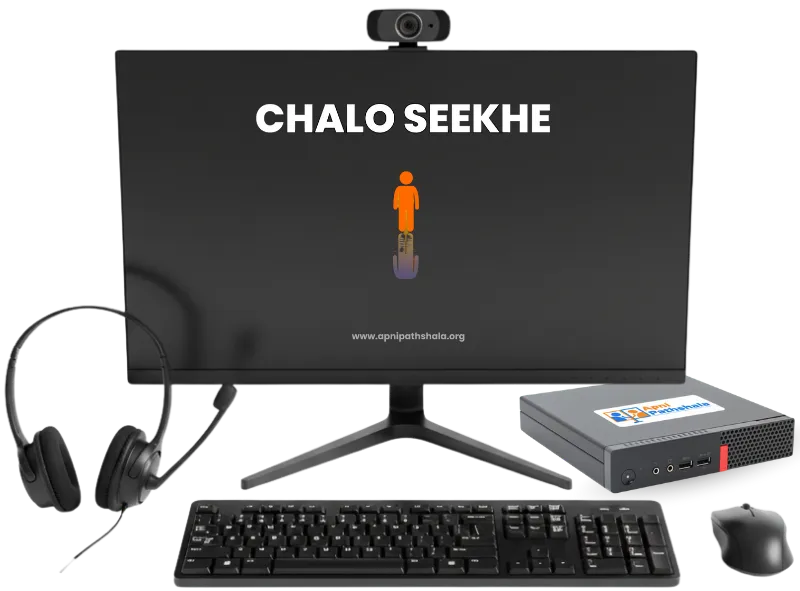
The computer itself needs some organisation to function as a serious study tool rather than a distraction machine. This is something students can do themselves with a little guidance, and it builds habits that will serve them throughout their academic and professional lives.
Create clear folder structures for different subjects and projects. Set up a basic system for naming files so that the right version of the right document is always easy to find. Install the software actually needed for schoolwork: a word processor, a browser with educational bookmarks, and any subject-specific tools the student uses.
It is also worth having an honest conversation about the difference between study time and entertainment time on the device. This is not about restricting access but about building the self-awareness to switch between modes deliberately. A student who can sit down at a computer and shift into focus mode has a skill that will pay dividends for the rest of their education. Our guide on simple daily routines to boost learning with technology offers practical strategies for building exactly these kinds of focused habits.
Bring in the Right Resources
A future-ready study environment is not just a physical and digital setup. It is also a collection of resources that support deep learning. This includes access to good educational websites, digital libraries, and subject-specific tools that go beyond the school textbook.
The internet, used well, turns a home study space into something far more powerful than a school library. Students can watch explanations of difficult concepts from multiple angles, access NCERT’s free digital learning materials directly, explore topics that genuinely interest them beyond what the curriculum covers, and practice skills through interactive platforms. India’s national digital education initiatives, including DIKSHA and SWAYAM, offer free curriculum-aligned content that students can access right from their home computer.
Apna PC helps families get the hardware in place. How that hardware is used is shaped by habits, guidance, and the resources available to the student. A family that invests in both the device and the practices around it creates a study environment that genuinely prepares a child for what comes next.
Conclusion
A future-ready study environment is less about any single item and more about the combination: a reliable device, a comfortable physical space, a well-organised digital setup, and access to resources that stretch a student’s thinking. Getting all of these things right does not require a large budget. It requires some thought, some consistency, and the right starting point.
Apna PC provides that starting point for families who need it. The rest is something every family can build, one small improvement at a time.