

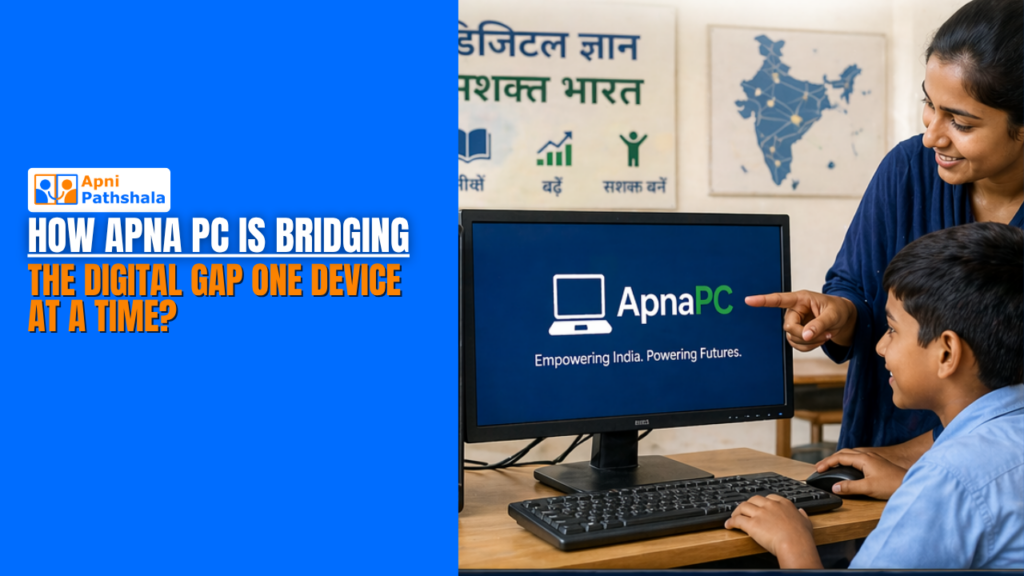
Every year, millions of Indian students write the same exams and compete for the same futures. What separates those who move ahead from those who fall behind is rarely intelligence or effort. More often, it comes down to access. The digital divide in India is not a statistic in a government report; it is the daily reality for families where children study hard but do so with tools from a different era.
What the Digital Divide in India Looks Like on the Ground?
Over half of Indian households still do not own a computer. In rural areas and smaller towns, the numbers are far worse. Most students share a single phone between siblings. Internet access is inconsistent. And in many government schools, a working computer lab is the exception, not the rule.
A student in a metro city goes home to a personal computer. They revise lessons, watch concept videos, build typing speed, and develop digital fluency without anyone formally teaching them; it comes from daily access. A student in a Tier 2 or Tier 3 town often goes home to none of that.
That gap compounds over the years. By the time both students apply to college or for a first job, they are not on equal terms, regardless of their marks. Access to computers for students is not a privilege in 2026. It is the baseline for a competitive education, and millions of Indian students do not have it.
Why Digital Education for Rural Students in India Lags Behind?
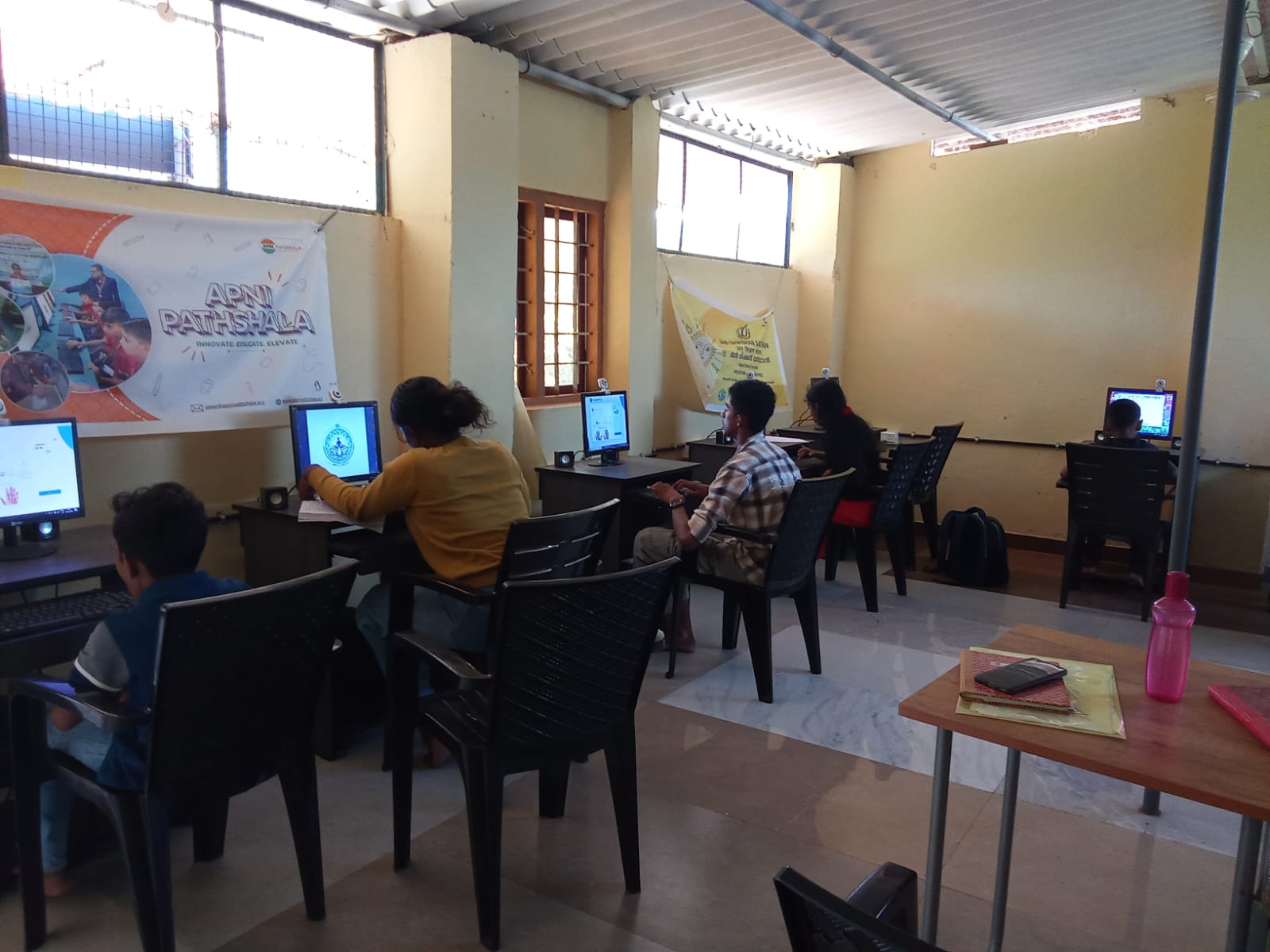
It is not a shortage of ambition. Students in rural India are just as motivated as those in cities. The gap is structural.
Teachers in underserved schools are often untrained in digital tools. Schools lack devices. Parents who have never used a computer themselves do not always know what their children are missing. Because the whole community is in the same situation, the disadvantage feels normal until that student competes for the same seat as someone who grew up with a laptop at home.
The UNICEF India education report consistently shows that children from low-income households have significantly lower digital literacy, not due to any difference in potential, but because of an access gap that starts early and widens every year.
Digital education for rural students in India is not a problem of willingness. It is a problem of last-mile infrastructure, getting a device into a student’s hands at home, where learning actually continues.
The Importance of Computers in Education Beyond the Obvious
The importance of computers in education goes far beyond typed assignments and internet access. The deeper benefit is what daily use builds over time: the ability to search and evaluate information, organise ideas, present work clearly, and solve problems independently. These habits are not taught in a classroom; they develop through consistent, unsupervised access to a device that is genuinely theirs.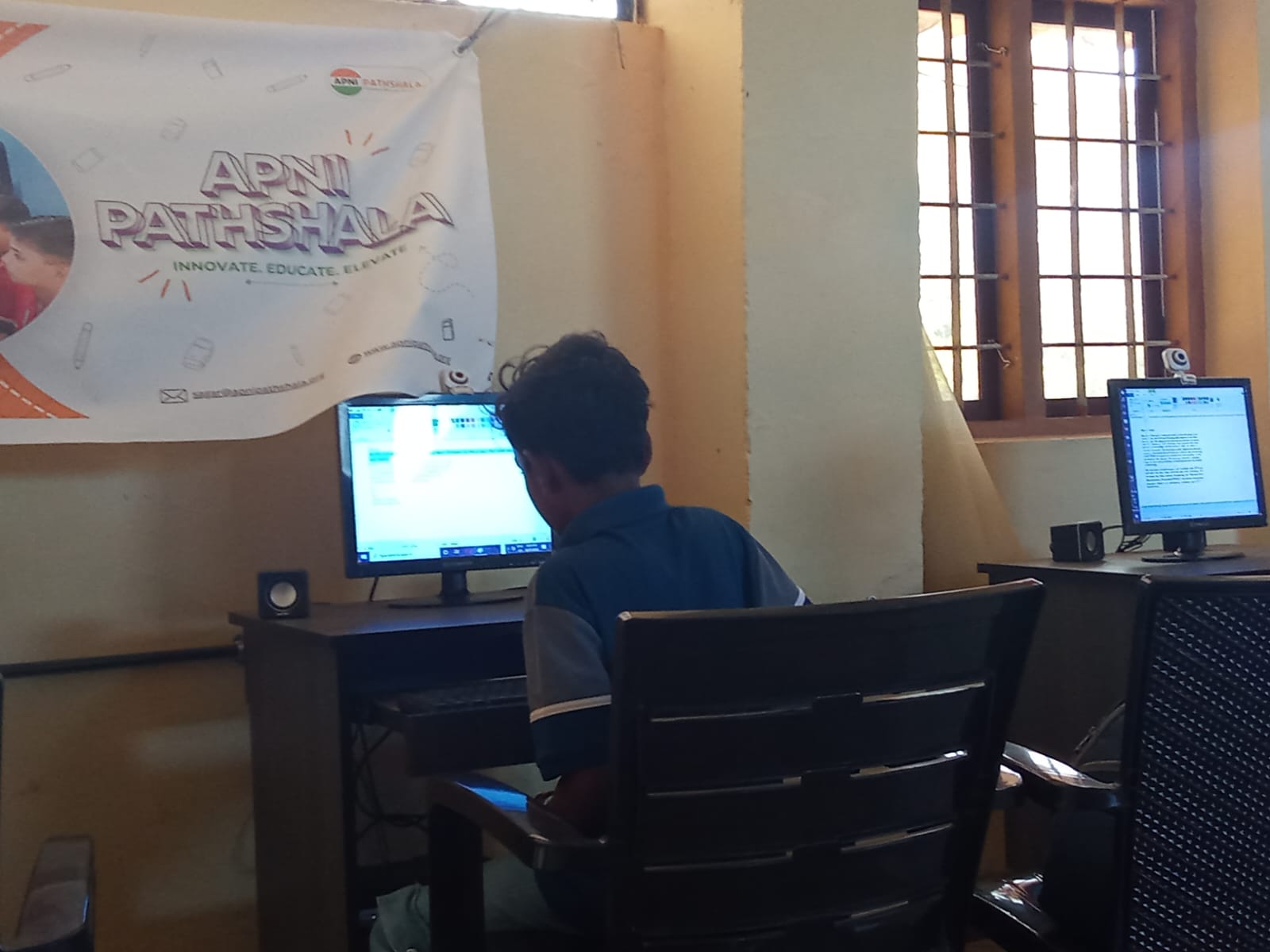
The Digital India initiative has expanded broadband infrastructure across the country. But infrastructure only helps when students have a device to use it with. A fibre-optic cable reaching a village does not help a student without a computer at home. The final step, individual access, is where large programmes consistently fall short.
For a clear picture of what that gap actually costs a family, The Hidden Cost of Not Having a Computer in 2026 is worth reading.
How Apna PC Is Closing the Gap, One Device at a Time
Apna PC was built for one purpose: to put an affordable, education-ready computer within reach of the Indian families who need it most and have always been priced out.
At ₹21,000 (shipping and GST excluded), it is designed for Tier 2 and Tier 3 households where a ₹50,000 laptop has never been realistic. But the price is only part of the design. Apna PC comes with educational software pre-installed, handles variable power conditions reliably, and requires no technical setup. A student with no prior computer experience can start learning from day one. It also connects to Apni Pathshala for structured courses, Eklavya for self-directed learning, and Apni Prerna for parental monitoring.
Surendra Kumar Saini had no prior access to technology. He used Apna PC to build digital skills that led him to run his own e-Mitra services shop, now the person his entire community depends on for help with government forms and online services. One device. One student. One neighbourhood changed.
The digital divide will not close through policy alone. It closes one device at a time, placed in the right hands, at the right time. Why Every Indian Student Needs Their Own Computer explains why individual access is what creates lasting change. Visit apnapc.com to learn more.