

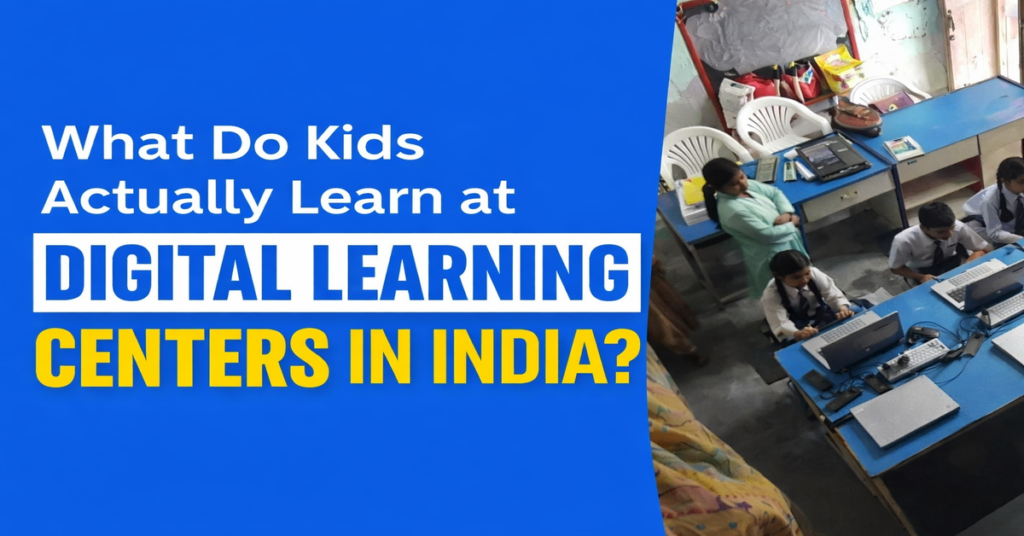
For many Indian parents, education has always meant textbooks, homework, exams, and marks. If a child is attending school regularly and scoring well, we assume learning is happening. But in today’s fast-changing world, an important question is slowly coming to the surface: what do kids actually learn?
With the rise of digital learning centres across India, parents are curious, hopeful, and also a little confused. Are children just spending more time in front of screens, or are they learning something deeper that schools often miss?
Let’s look beyond assumptions and understand what really happens inside a good digital learning environment.
Learning Goes Beyond Syllabus and Textbooks
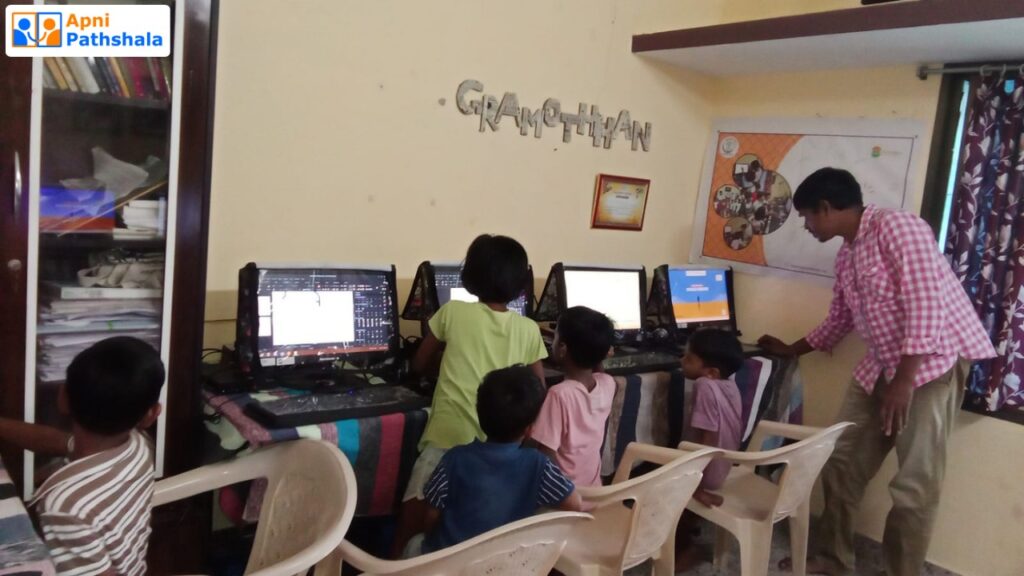
Traditional education in India is heavily syllabus-driven. Children are expected to move at the same pace, study the same chapters, and give the same exam regardless of their interests or learning styles.
Digital learning centres change this equation.
Here, learning is not limited to finishing chapters. Children are encouraged to understand concepts, explore topics, and ask questions freely. Instead of memorising answers, they learn how to think, how to search, and how to make sense of information.
This shift is subtle but powerful. It helps children develop clarity instead of confusion, and confidence instead of fear.
Children Learn How to Learn
One of the most valuable skills children gain at digital learning centres is self-learning.
Rather than waiting for a teacher to explain everything, children are guided to
-
- Explore topics on their own
-
- Use digital tools responsibly
-
- Learn through videos, projects, and experiments
-
- Reflect on what they have understood
This ability to learn independently becomes a lifelong advantage. In the real world, success does not depend on how many answers you remember, but on how quickly and confidently you can learn something new.
Digital Skills That Actually Matter
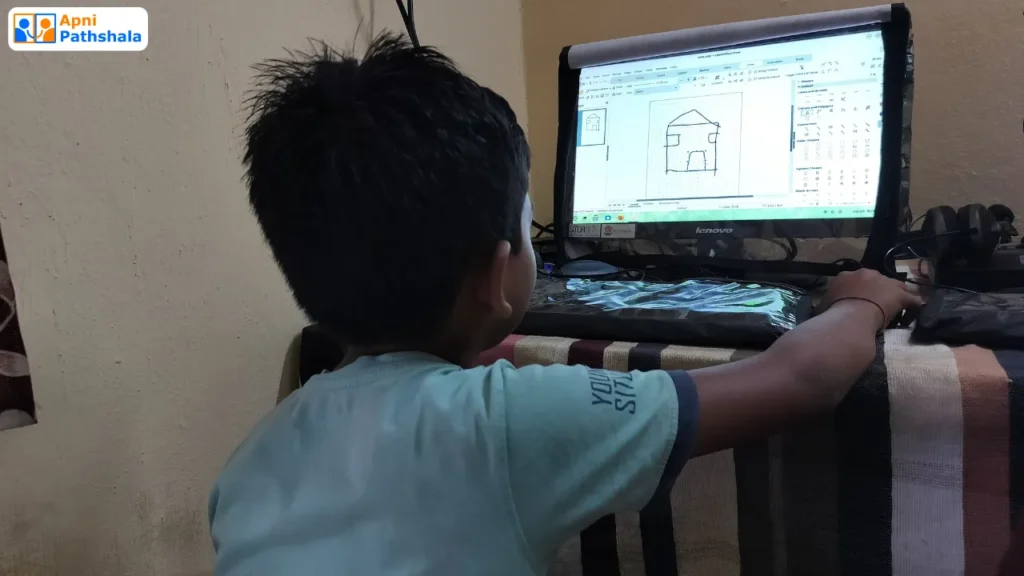
When parents hear “digital learning,” they often think it only means computers or coding. In reality, children learn much more than that.
They develop:
-
- Digital awareness and basic technology confidence
-
- Comfort with online tools used in real workplaces
-
- Research skills and information filtering
-
- Responsible and safe internet usage
Instead of random screen time, children experience purpose-driven digital exposure. They begin to understand that technology is a tool for learning, not just entertainment.
Emotional Safety and Reduced Academic Pressure
One major issue in traditional education is pressure to perform, to score, to compete.
Digital learning centres usually offer a pressure-free environment where:
-
- Children are not constantly judged by marks
-
- Mistakes are treated as part of learning
-
- Curiosity is encouraged, not suppressed
This emotional safety plays a huge role in how children absorb knowledge. When fear is removed, learning becomes natural and enjoyable.
Parents often notice that children who were earlier disinterested or anxious about studies start showing curiosity and confidence again.
Learning at Their Own Pace
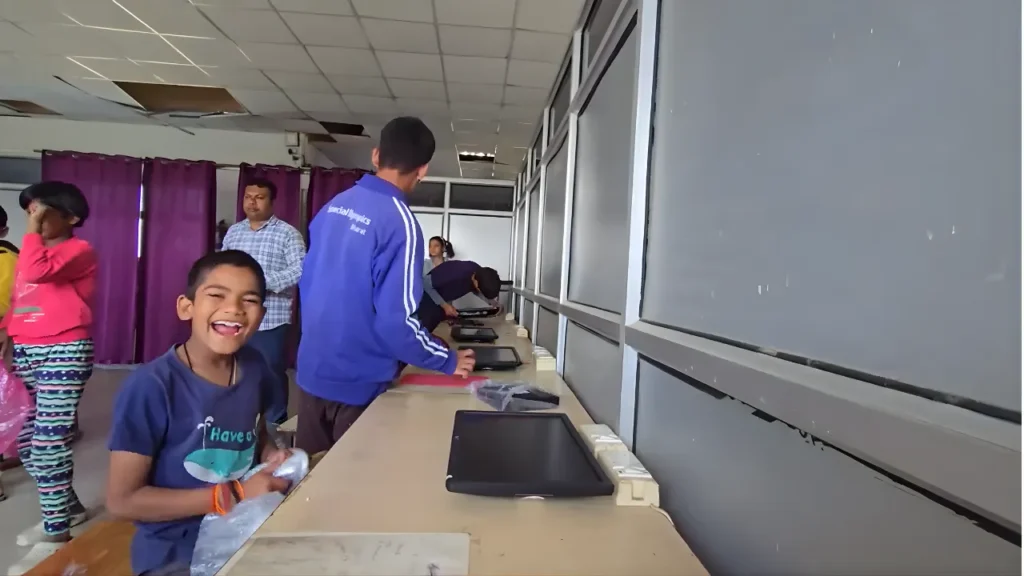
Every child is different, yet schools expect uniform performance. Digital learning centres recognise this gap.
Children are allowed to:
-
- Spend more time on topics they find difficult
-
- Move faster where they are confident
-
- Explore interests beyond their grade level
This personalised pace helps children build strong foundations instead of carrying learning gaps year after year.
Real-World Thinking, Not Just Exam Preparation
Another important difference is the focus on real-world thinking.
Children engage in:
-
- Problem-solving activities
-
- Project-based learning
-
- Logical and creative tasks
-
- Discussions that build communication skills
These experiences prepare children for real life, not just for exams. They start connecting learning with the world around them, which makes education meaningful instead of mechanical.
What Parents Start Noticing
Parents whose children attend digital learning centres often share similar observations:
-
- Children ask better questions
-
- They show more independence in learning
-
- Screen time becomes productive, not addictive
-
- Confidence improves without extra pressure
The biggest change is in mindset. Children stop seeing learning as a burden and start seeing it as a tool.
So, What Do Kids Actually Learn?
At good digital learning centres, children learn:
-
- How to learn independently
-
- How to think critically
-
- How to use technology safely and wisely
-
- How to grow without constant pressure
-
- How to stay curious and confident
These are skills that textbooks alone cannot teach, but today’s world demands.
Final Thought
Education is no longer just about finishing a syllabus. It is about preparing children for a future that is unpredictable, digital, and skill-driven.
When learning focuses on understanding, curiosity, and confidence, children don’t just perform better they grow better.
2 Responses
It clearly explain how digital learning center help kids build real skill like problem solving cretivity and independent learning
Thank you so much for your kind feedback, Rohan! 😊
We’re glad you found the explanation helpful. Our goal is to highlight how digital learning centers can truly support children in developing real-world skills like problem-solving, creativity, and independent learning. Your encouragement means a lot to us!