

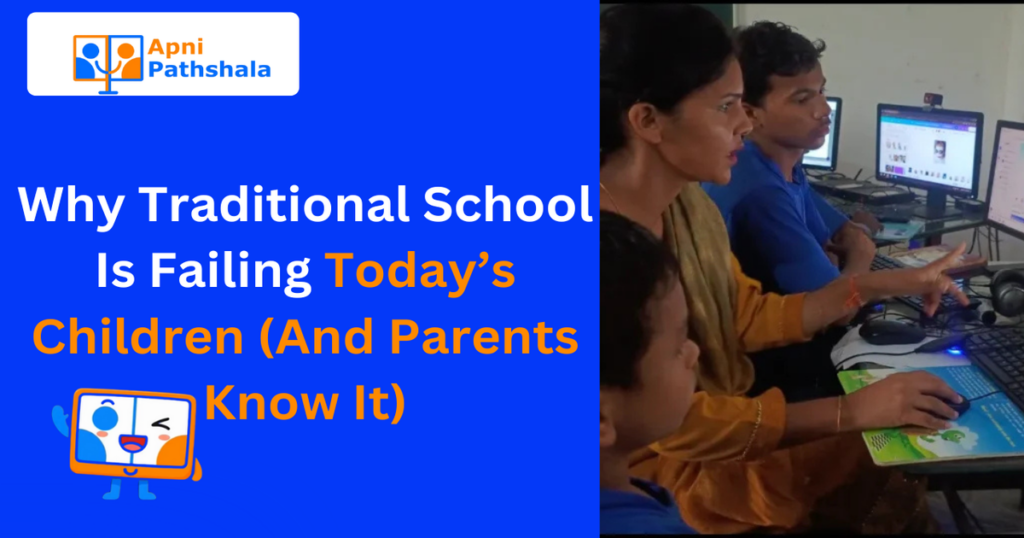
Children are more stressed than ever. Parents are more worried than ever. And despite all the effort, time, and money invested, many parents quietly ask themselves a difficult question: Is school really helping my child grow?
The truth is uncomfortable but important to understand.
The Education System Was Designed for a Different Time
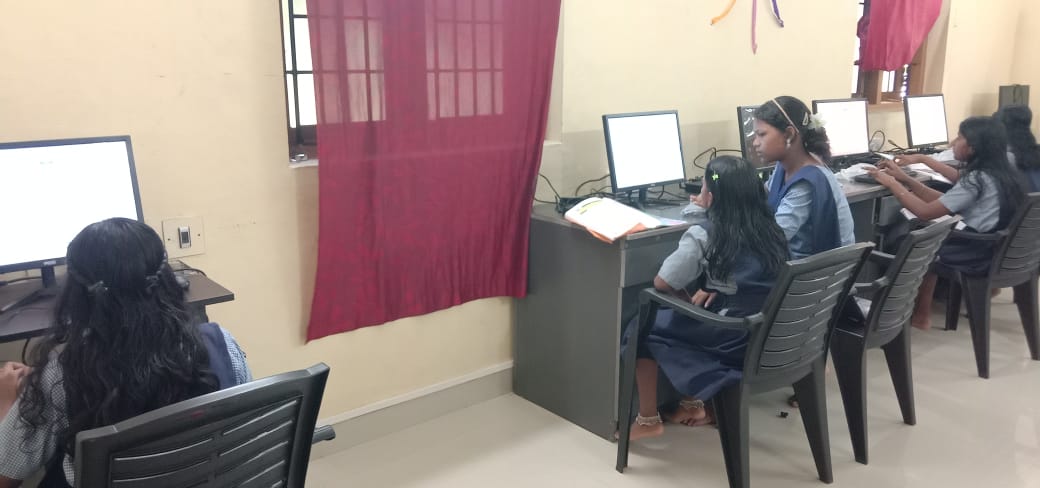
Traditional schooling in India was built for an era where information was limited and careers were predictable. Memorising facts, following instructions, and scoring well in exams made sense back then.
But today’s world is completely different.
Information is everywhere. Careers are changing rapidly. Skills matter more than marks. Yet most schools are still following the same rigid structure, fixed syllabus, same pace for all children, and success measured only by exam scores.
This gap between the system and reality is where the problem begins.
One Classroom, Many Children, One Method
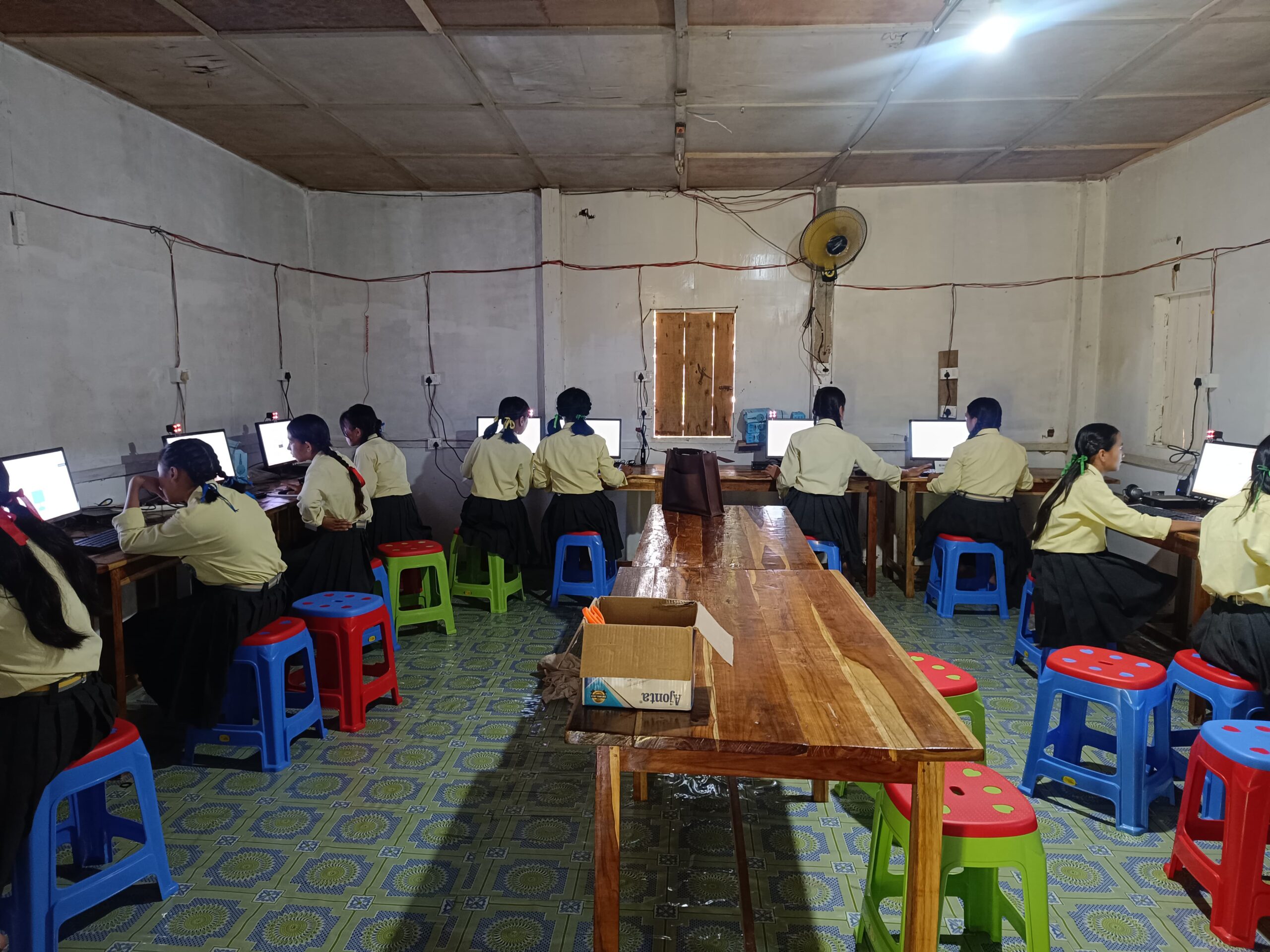
Every child is different. Some learn fast, some need time, Some are curious, some are creative, some are practical thinkers.
Traditional schools, however, treat all children the same.
When teaching is standardised, many children are left behind emotionally or mentally. Some struggle silently, while others lose interest because they are not challenged enough. Over time, learning turns into pressure rather than curiosity.
Parents often notice that their child is “studying” but not really understanding.
Marks Over Mindset
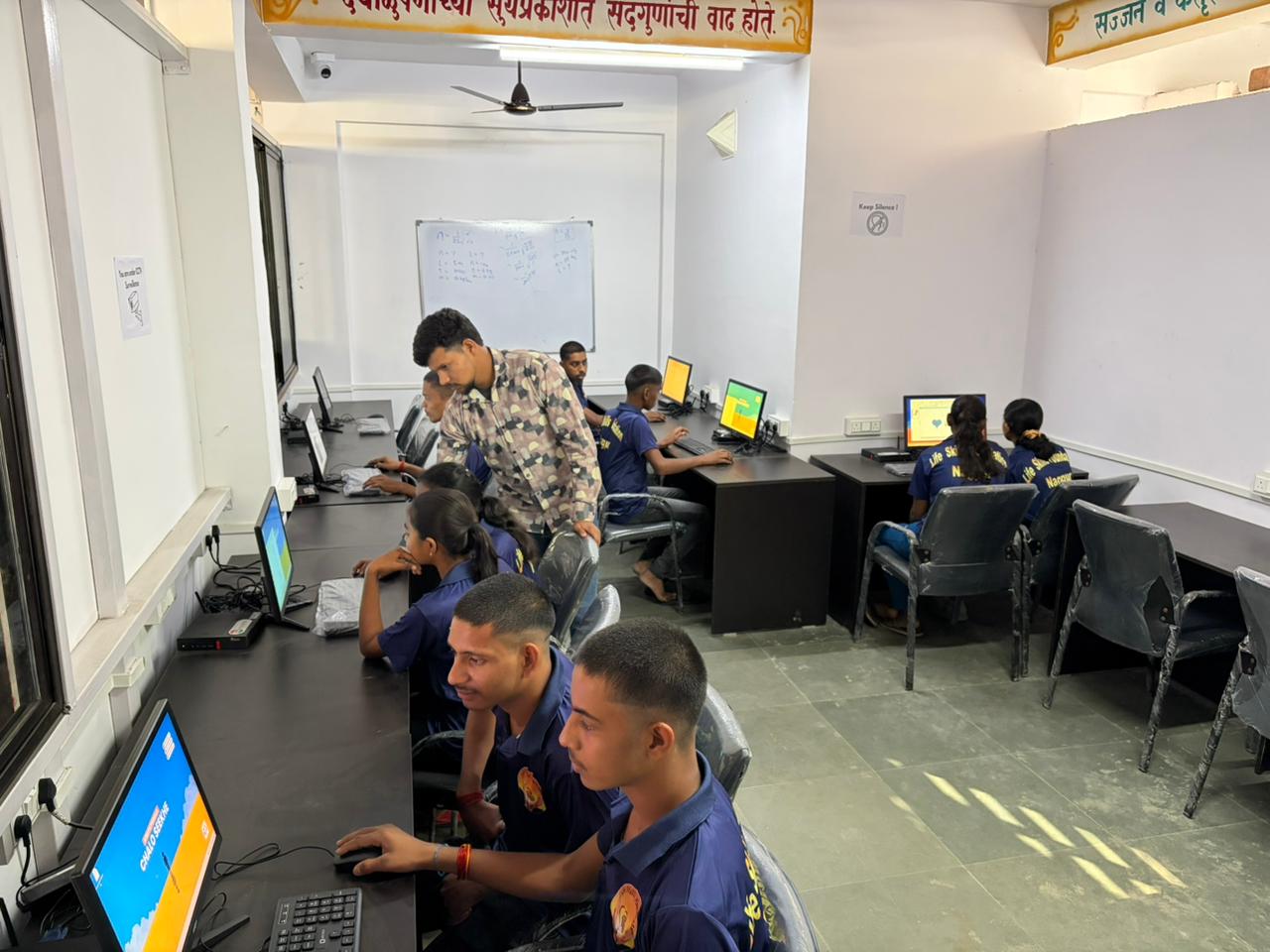
In most schools, marks have become more important than learning.
Children quickly learn that:
-
- Scoring is more important than understanding
-
- Mistakes are something to fear
-
- Asking questions slows the class
-
- Exams decide self-worth
This creates anxiety, comparison, and self-doubt at a very young age. Even capable children start believing they are “weak” just because they don’t fit into the exam-oriented system.
Parents see this when children lose confidence, motivation, or interest in learning altogether.
Too Much Pressure, Too Little Purpose
Between school, homework, tuition, and exams, children barely get time to think, explore, or reflect.
Learning becomes mechanical:
-
- Finish syllabus
-
- Prepare for exams
-
- Forget and move on
There is little space for real-world thinking, creativity, or problem-solving. As a result, children may score well but struggle with basic skills like decision-making, communication, or independent thinking.
This is why many parents feel their child is “busy all day” but still not growing meaningfully.
Parents Are Starting to Notice the Signs
Parents today are more aware than before. They notice:
-
- Children getting anxious about studies
-
- Fear of exams instead of excitement for learning
-
- Dependence on tuition for even basic concepts
-
- Lack of confidence despite good marks
These signs raise an important realization education should build children, not break them.
What Children Actually Need Today
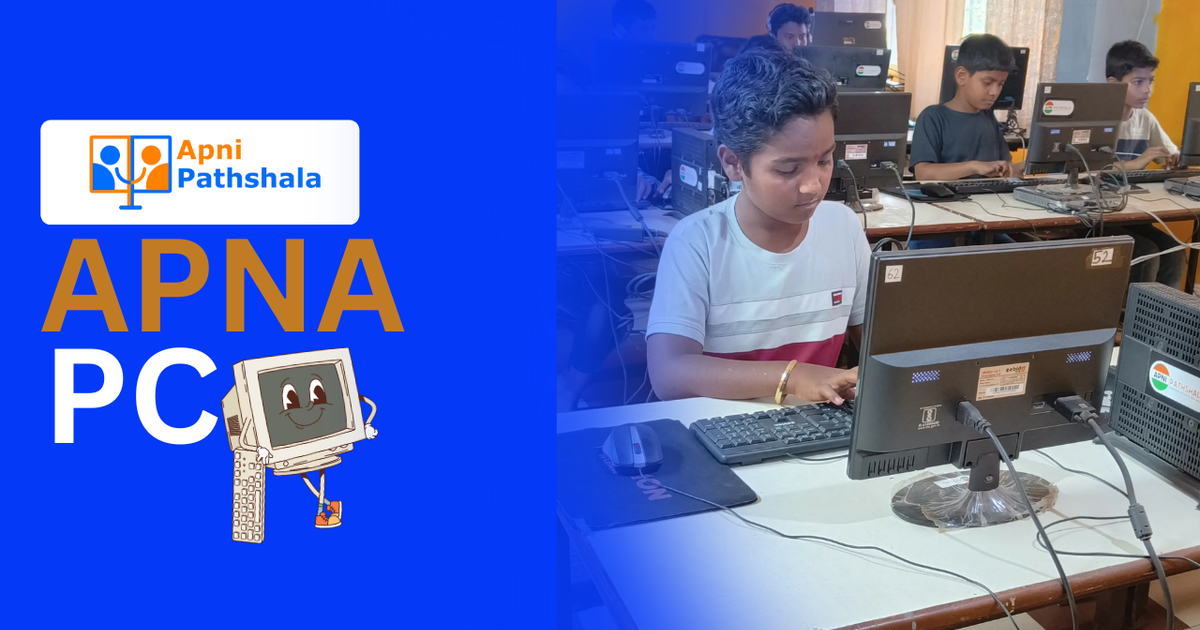
Today’s children need more than textbooks and tests. They need:
-
- A safe environment to ask questions
-
- Freedom to learn at their own pace
-
- Skills that connect learning to real life
-
- Confidence to explore, fail, and grow
-
- Guidance instead of constant pressure
When these needs are ignored, even the best schools fail to support a child’s true potential.
The Shift Parents Are Quietly Making
This is why many parents are now exploring alternative learning models environments where:
-
- Learning is child-centric, not syllabus-centric
-
- Skills and thinking are valued over rote memorization
-
- Digital tools are used purposefully
-
- Children are encouraged to become independent learners
This shift is not about rejecting schools, but about filling the gaps schools cannot address.
Final Thought
Traditional schools are not “bad,” but they are no longer enough on their own.
The world has changed, children have changed, but the system has not evolved at the same pace. Parents sense this gap instinctively, which is why they feel worried even when everything looks “normal” on paper.
Real education should prepare children not just for exams, but for life.