


When Rohit Got His First Device: A Screen or a Learning System?
Rohit’s mother, Priya, sat in their Indore living room holding two boxes. One contained a basic tablet she found online for Rs.15,000. The other was an Apna PC learning system for students priced at Rs.30,000. Her 10-year-old son waited eagerly in the next room. She faced a choice that thousands of Indian parents in tier 2 and tier 3 cities face every year: give him a screen or give him a real learning system?
That night, Priya made a choice that changed everything. She chose the learning system. Within weeks, Rohit was not just watching videos. He coded in Scratch, submitted assignments through Apni Prerna, and learned offline when the internet failed. His father noticed Rohit’s homework improved. His teacher noticed his confidence grew. This is the difference between a screen and a learning system.
A Screen Does One Thing. A Learning System Does Everything.
When you give your child a tablet or phone, you give them access to everything. YouTube, games, social media, and yes, some educational apps. But you also give them distraction. Your child can switch between a math lesson and a video in two seconds. There is no structure. There is no accountability. No offline learning when your WiFi drops at 8 PM.
A learning system for students is built differently. It comes pre-loaded with Zorin OS, a clean operating system designed for focus. It has LibreOffice for document creation. It has Scratch for coding and creativity. It has Apni Prerna, which lets you monitor your child’s progress in real time. You can see which lessons your child completed, how much time they spent, and where they struggle.
The Apna PC student computer comes with 8GB RAM and 128GB SSD storage. This means your child can run multiple educational applications smoothly. They can work on homework, watch educational videos, and code all at the same time without lag. No frustration. No wasted time waiting for the device to respond.
- Screens are passive. Your child watches content someone else created. A learning system is active. Your child creates, solves, and builds.
- Screens encourage switching. A learning system encourages focus. The operating system is clean. Distractions are minimal.
- Screens cost money but teach nothing specific. A learning system costs more upfront but teaches coding, document creation, and digital citizenship.
This is not just about price. This is about what research says about learning. When you give your child the right tool, their brain works differently. They stop consuming and start creating.
Why Your Child’s First Computer Shapes Everything
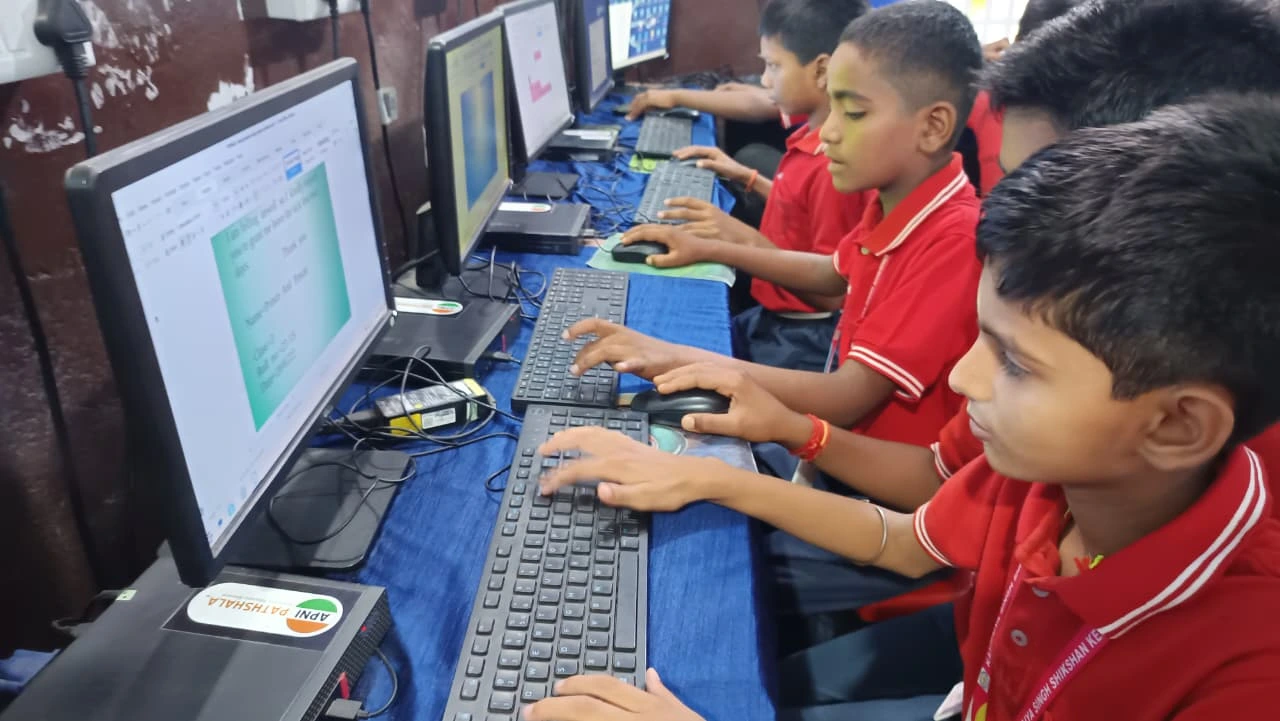
Your child’s first computer is not just a device. It is their first real introduction to digital life. If their first experience is a screen full of distractions, they learn to scroll. If their first experience is a learning system with purpose, they learn to create.
The habits your child builds now will follow them for years. If they learn to use a computer for work and creation, they will do that in college and their career. If they learn to use it for entertainment and distraction, that becomes their pattern.
The Apna PC comes with Scratch pre-loaded. Scratch is a visual programming language used by millions of children worldwide. Your child can create games, animations, and interactive stories. They are not just learning code. They are learning logic, problem-solving, and creative thinking. These skills matter more than any test score.
Apni Prerna’s student monitoring feature lets you stay involved without hovering. You see progress reports. You know when your child completes lessons. You can have real conversations about what they learned, not just “How was school today?”
The Hidden Cost of Choosing Wrong
Many parents think a cheaper device is better. Rs.15,000 for a tablet seems smart. But what is the real cost? Your child spends 2 hours on YouTube instead of 30 minutes on homework. Their eyes hurt from screen glare. They develop poor posture, hunching over a small screen. They never learn to type properly. They never experience creating something with code.
Research shows that children who learn primarily on mobile devices develop different neural pathways than those who use proper computers. Mobile learning is passive. Computer learning is active. The difference matters.
An Apna PC learning device for students costs Rs.30,000 before shipping and GST. But your child gets a proper keyboard, a proper screen, proper storage, and proper software. They get offline access to learning when the internet fails. They get a device built for learning, not distraction.
What You Get With Apna PC
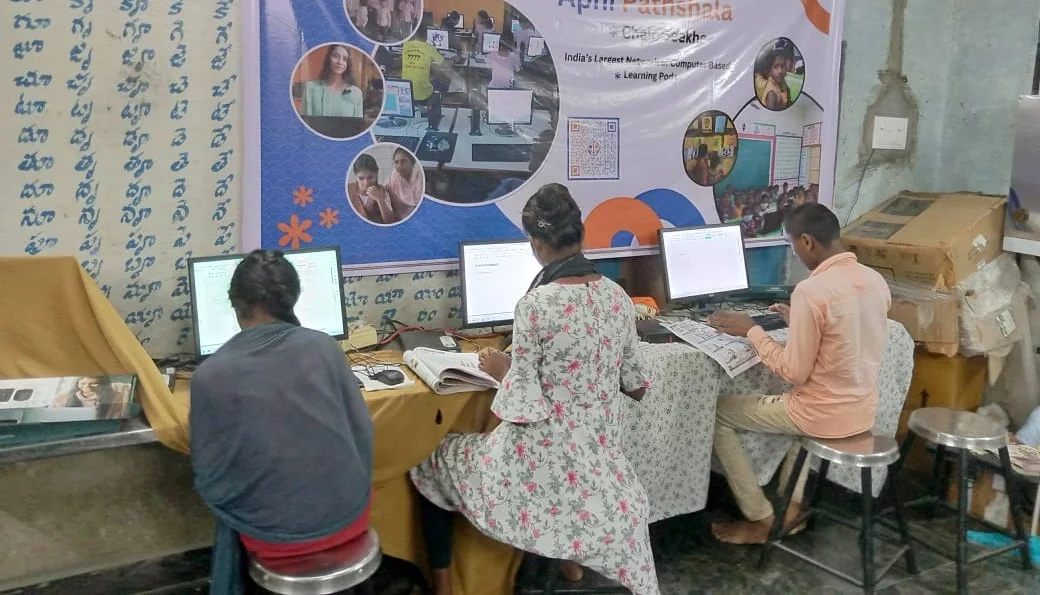
The Apna PC is not a gaming machine. It is not a streaming device. It is a learning system for students built by Apni Pathshala, an organisation focused on digital education in India.
- Zorin OS: A clean, fast operating system with zero bloatware
- LibreOffice: Professional document creation, spreadsheets, and presentations
- Scratch: Visual programming for creative learning
- Apni Prerna: Real time progress monitoring for parents
- 8GB RAM: Smooth multitasking without lag
- 128GB SSD: Fast storage with room for thousands of files
- Offline capability: Learning does not stop when the internet fails
Your child can access DIKSHA digital learning platform through the Apna PC. DIKSHA is India’s national digital learning platform with millions of educational resources. Your child gets access to structured learning aligned with their curriculum.
The device works with your existing internet. It does not require expensive subscriptions. You pay once, and your child learns for years. No hidden monthly charges. No forced upgrades.
Real Parents, Real Results
Priya’s choice worked. Rohit went from struggling in math to scoring 92 in his last test. He started a coding club at school. He taught his younger sister to code using Scratch. His screen time is measured and purposeful, not endless.
This is what happens when you give your child a learning system for students instead of just a screen. They do not just consume. They create. They do not just watch. They think. They do not just play games. They solve problems.
Your child deserves a device built for their future, not for corporate profits. The Apna PC is that device. It is the choice that parents in Indore, Nagpur, Lucknow, and hundreds of tier 2 and tier 3 cities are making right now.
The question is not whether you can afford to buy a learning system for students. The question is whether you can afford not to. Visit apnapc.com to learn more.