

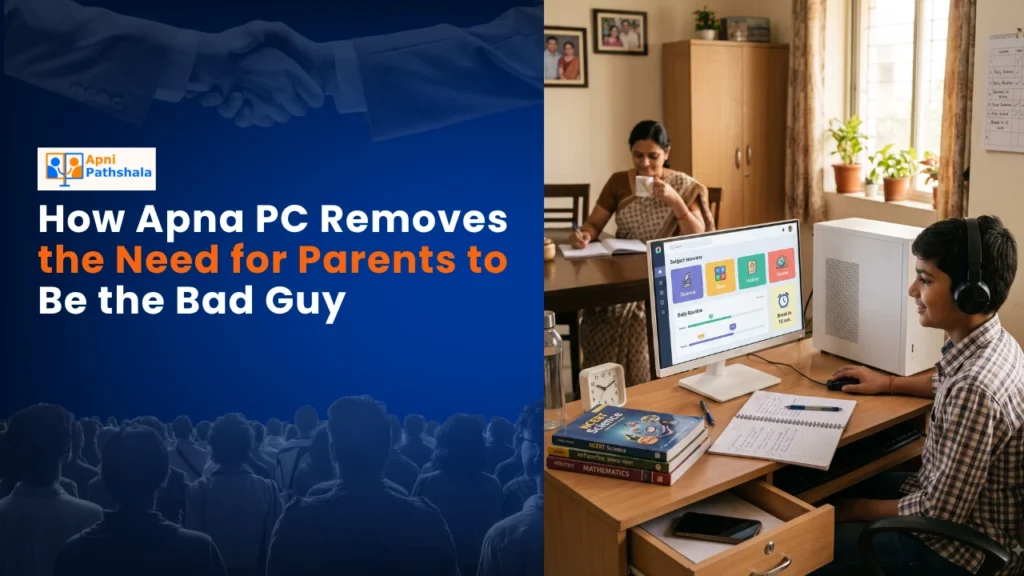
Meera sat across from her 12-year-old son Arjun at the dinner table in their Lucknow home, her chest tight with frustration. For the third time that week, she’d found him watching YouTube instead of finishing his math homework. “Why do you make me the villain?” she’d asked him, voice rising. Arjun had looked away, shoulders hunched. That night, Meera couldn’t sleep. She didn’t want to be the parent who yelled, who threatened, who took away devices. She wanted to be the parent who understood. She wanted positive parenting to mean something real in her house, not just a phrase she read in parenting blogs. What Meera didn’t know was that the solution wasn’t about being stricter or softer. It was about changing the tools her son used to learn.
If you’re a parent in a tier-2 or tier-3 city, you’ve likely felt this same tension. Your child needs a computer for school. You want them to study. But you’re terrified they’ll waste time online instead. You end up becoming the person who monitors, restricts, and argues. Positive parenting gets lost in the daily battle over screen time and study motivation.
The Problem With Regular Computers at Home
Regular computers and laptops aren’t built for students. They come with access to everything: YouTube, games, social media, streaming apps. Your child sits down to do their homework, and suddenly they’re lost in a rabbit hole. You have to police them constantly. You become the bad guy enforcing rules instead of supporting their learning journey.
This creates a cycle. Your child resents the restrictions. You feel guilty for being harsh. The learning process suffers because it’s wrapped in tension and conflict. Study motivation dies. Your relationship with your child takes a hit.
What if there was a way to remove yourself from this equation entirely? What if the computer itself could be designed to support your child’s education without you having to be the enforcer?
Positive Parenting Means Removing the Need to Say No
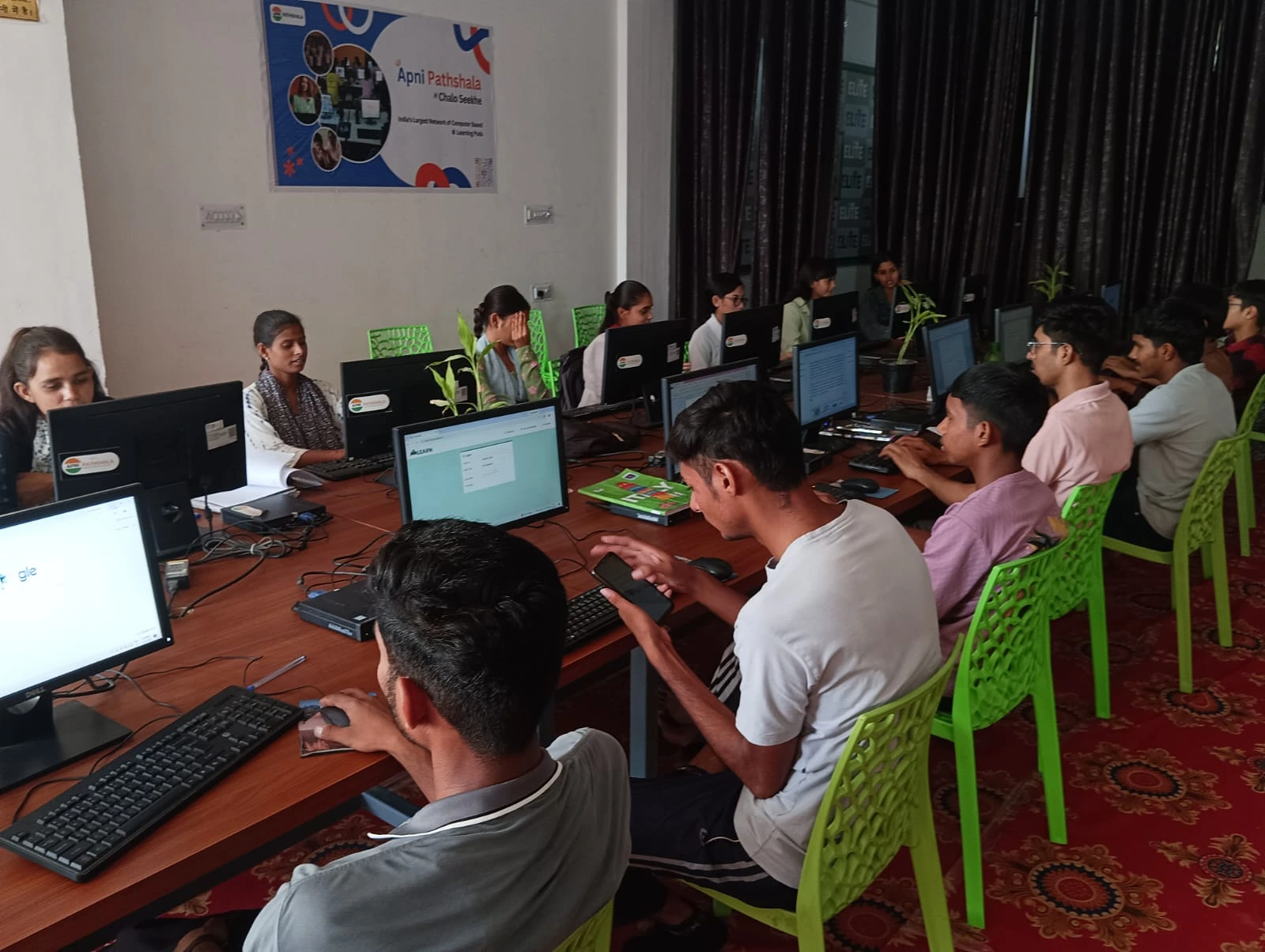
Apna PC changes this completely. It’s an educational computer built specifically for students, not a general-purpose machine. It comes pre-loaded with Zorin OS, a clean, distraction-free operating system. There’s no app store full of games. No YouTube is waiting to pull your child away from their work.
Instead, your child gets exactly what they need. LibreOffice for documents and presentations. Scratch for learning coding, Apni Prerna, the built-in student monitoring system that tracks progress without feeling invasive. The computer is designed to automatically say yes to learning and no to distractions.
You don’t have to. You’re not the one enforcing rules anymore. The device itself is built around your child’s educational needs. This is what positive parenting looks like when technology works with you instead of against you.
At Rs. 30,000 (exculding shipping and GST), Apna PC is an investment in peace at home. It’s an investment in your relationship with your child. You get to be the supportive parent who believes in your child’s potential, not the parent who constantly says no.
How Apna PC Supports Study Motivation Naturally
Study motivation comes from confidence and success, not from fear of punishment. When your child sits down at Apna PC, they’re not thinking about what they can’t do. They’re focused on what they can accomplish.
The device comes with 8GB of RAM and a 128GB SSD, providing enough power to run educational software smoothly without lag. Your child can work on projects, create presentations, and learn coding without frustration. Smooth performance builds confidence. Confidence builds motivation.
Apni Prerna lets you track your child’s progress without hovering over their shoulder. You can see what they’re working on, how much time they’re spending on different subjects, and where they might need help. This is splitting study supervision between you and the device. You’re informed, but you’re not interrogating. You’re supporting, not policing.
You can also integrate your child’s learning with a DIKSHA digital learning platform to access quality educational content. Your child has access to structured learning resources. You’re not wondering if they’re learning enough or the right things.
Building a Reward System That Actually Works
Positive parenting includes celebrating progress. When your child completes their assignments on Apna PC, finishes a coding project in Scratch, or improves their grades, you want to acknowledge it. A reward system for study milestones keeps motivation high without you having to invent incentives.
The device becomes a partner in your child’s success story, not a battleground. Your conversations shift from “Why weren’t you studying?” to “I saw you completed three math assignments this week. That’s great progress.”
This is the difference between positive parenting and punishment-based parenting. One builds your child up. The other tears them down, even when you’re doing it with good intentions.
Your Child Learns Responsibility Without Resentment
Apna PC also teaches your child responsibility. The device isn’t locked down in a way that feels controlling. It’s focused. Your child learns that computers can be tools for growth, not just entertainment. They develop healthy digital habits early because they’re not constantly fighting restrictions.
When your child uses Apna PC, they’re choosing to learn. You’re not forcing them. You’re providing the right environment. There’s a huge difference in how that feels for both of you.
Over time, your child internalises better study habits. They don’t resent you for taking away devices because you never had to. They respect the tool because it respects their potential. This builds the foundation for lifelong learning and a stronger parent-child relationship.
Apna PC isn’t just a computer. It’s a way to practice positive parenting in the real world, where your child has genuine needs and genuine distractions. It removes the need for you to be the bad guy. It lets you be the parent you actually want to be. Visit apnapc.com to learn more.