

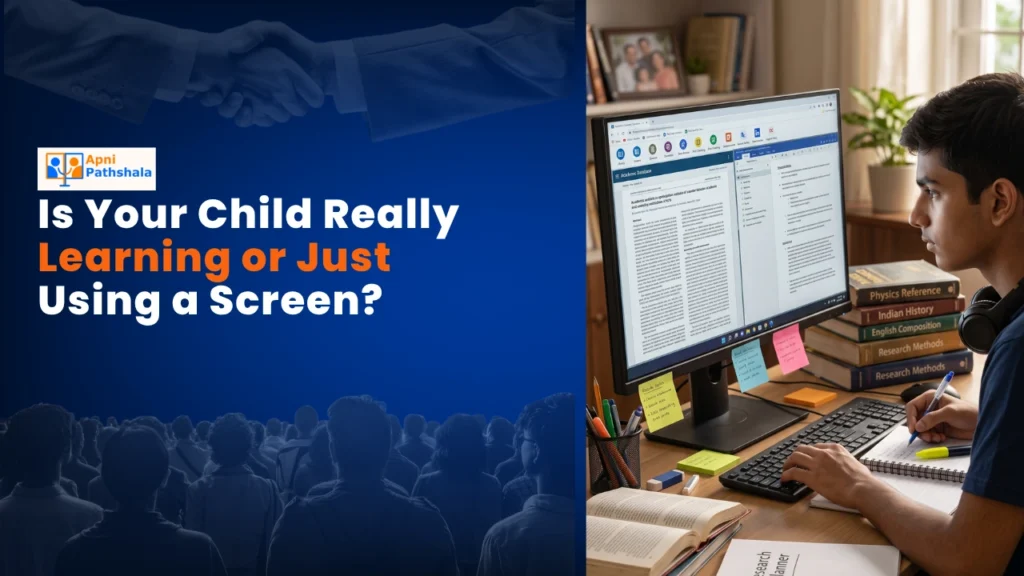
Rajesh’s Screen Time Worry
Rajesh sat in his Indore living room, watching his 10-year-old son Arjun stare at the laptop screen for the third hour. The boy claimed he was “learning coding” for school. Rajesh felt that familiar knot in his stomach. Was Arjun actually absorbing anything, or was this just expensive screen time dressed up as digital learning?
You’re probably asking yourself the same question right now. With digital learning becoming the norm in Tier 2 and Tier 3 cities across India, parents like you are caught between two fears: letting your child fall behind, or watching them waste hours in front of a screen. How do you tell the difference between real learning and just scrolling?
The Real Signs Your Child Is Learning Through Screens
Here’s what actually matters. Real learning leaves traces. Your child won’t just sit passively; they’ll do things, make things, and ask questions about what they’re seeing.
- They can explain what they learned to you. Ask your child to tell you one thing they learned today. If they can explain it in their own words, even if it’s simple, that’s a green flag. If they go blank or repeat exactly what the teacher said, word for word, that’s different.
- They’re making mistakes and fixing them. Real learning involves struggle. If your child is sometimes frustrated, tries things that don’t work, and then tries again, that’s the actual learning process. Too much smooth sailing may mean they aren’t being challenged enough.
- They’re creating something, not just consuming. Whether it’s a drawing, a story, a simple code, or even notes in their own style, creation is proof. Passive video watching all day is not the same as digital learning that sticks.
- They’re asking follow-up questions. Real learning sparks curiosity. Your child might ask “Why does that work?” or “What happens if I try this?” These questions show their brain is engaged, not just running on autopilot.
- Their screen time has structure and purpose. Is there a clear start and end? Does your child know what they’re supposed to do? Or are they jumping between apps randomly? Purposeful screen time looks different from endless browsing.
You can read more about the signs that your child is learning digitally to better understand these patterns in your own home.
What You Should Actually Watch For (The Warning Signs)
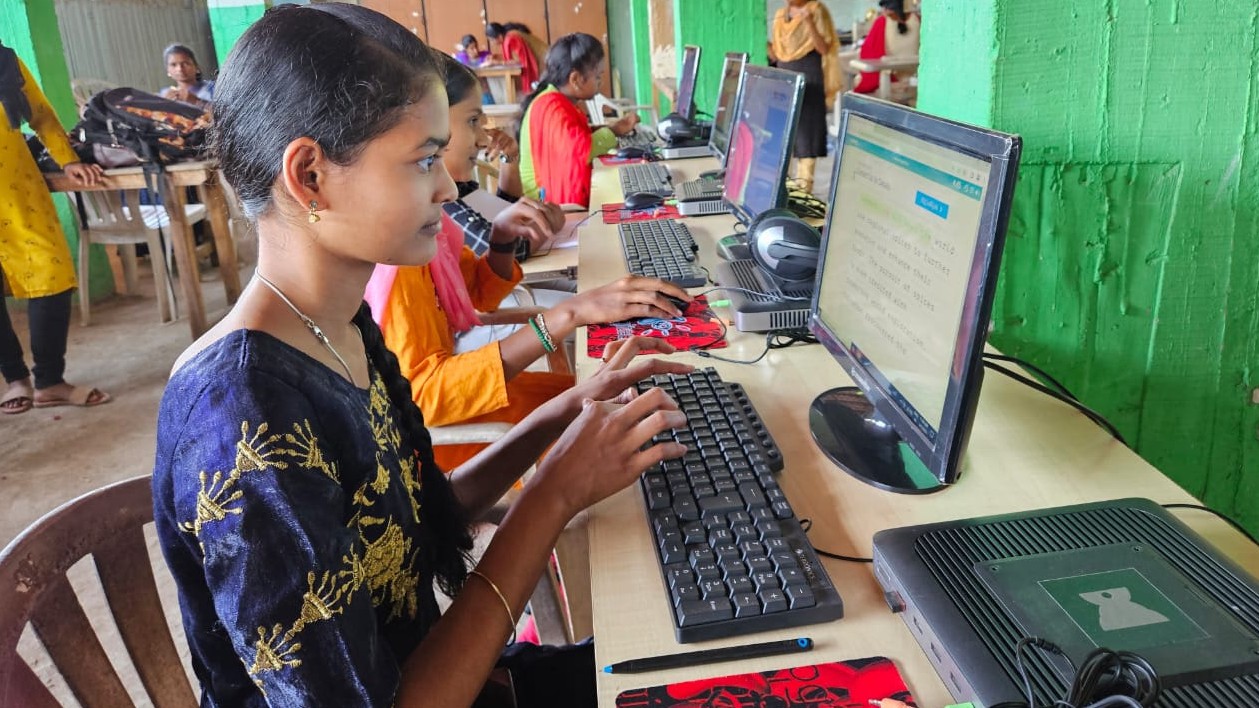
Not all screen time is equal. Some habits suggest your child isn’t really learning, just passing time.
- Your child can’t remember anything from yesterday’s “lesson”
- They get angry or distracted the moment you ask them to stop
- They’re switching between five different apps or websites
- They’re watching videos without any notebook, project, or output
- They’re alone in a room with no one checking in or asking questions
These aren’t necessarily signs of failure. They’re signals that something needs to change in the way your child uses screens for learning.
The Device Matters More Than You Think
Here’s something many parents miss: the type of device your child uses affects whether they actually learn or just consume. A proper educational computer is built differently than a phone or tablet.
When your child has real tools designed specifically for learning, not endless scrolling.
The difference between learning on a phone and on a dedicated educational device is like the difference between studying in a noisy market and in a quiet library. One setup supports focus. The other doesn’t.
You can explore making the most of free time with a computer that’s actually designed for students, not just entertainment.
Questions to Ask Your Child (The Real Test)
Don’t just observe. Ask these questions to understand what’s really happening on that screen.
- “What was the hardest part of what you did today?”
- “Show me something you made or changed.”
- “What will you do differently next time?”
- “What didn’t you understand?”
- “Why does that matter?”
A child who’s actually learning can answer most of these. A child who’s just passing time will struggle or give vague responses.
Understanding What Learning Really Means
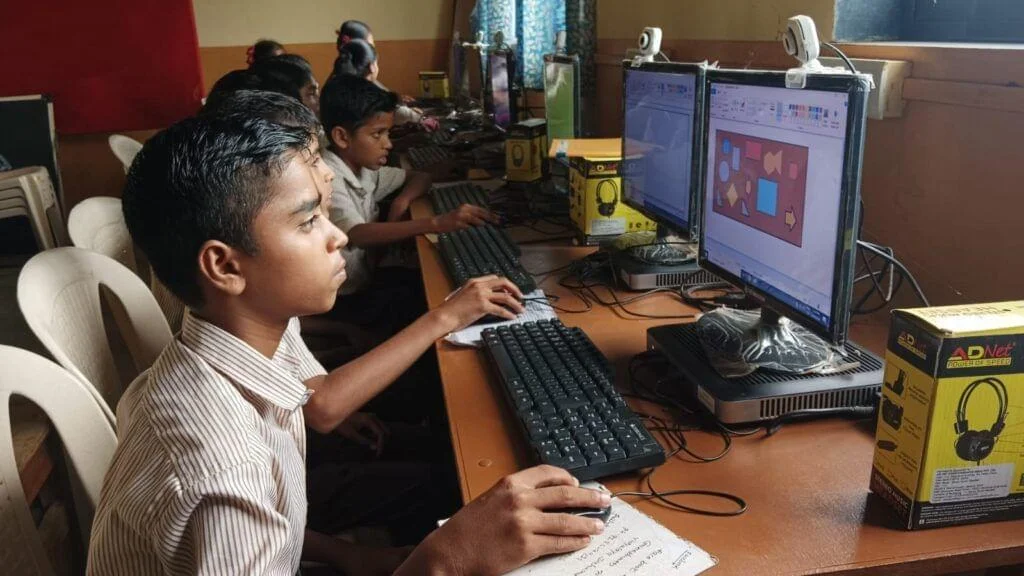
According to what learning really means, it’s not about information going into your child’s head. It’s about your child being able to do something new, think differently, or solve problems they couldn’t solve before.
Digital learning in India is growing rapidly, supported by initiatives such as Digital India. But growth doesn’t mean every screen session is productive. You still need to judge for yourself.
The Bottom Line for Your Family
Screen time isn’t the enemy. Purposeless screen time is. Your job as a parent isn’t to eliminate devices; it’s to make sure the devices serve your child’s learning, not replace it.
Watch for creation, not just consumption. Listen for questions and explanations. Notice whether your child is frustrated in a good way (learning) or frustrated in a bad way (bored or overwhelmed). These small observations will tell you far more than the hours on a clock.
Arjun, Rajesh’s son, was actually learning to code. Rajesh discovered this only when he sat down and asked Arjun to show him what he’d built. The boy had created a simple game. That’s when Rajesh knew the screen time was real.
Your child’s digital learning journey depends on you paying attention, asking the right questions, and providing the right tools. Visit apnapc.com to learn more.