

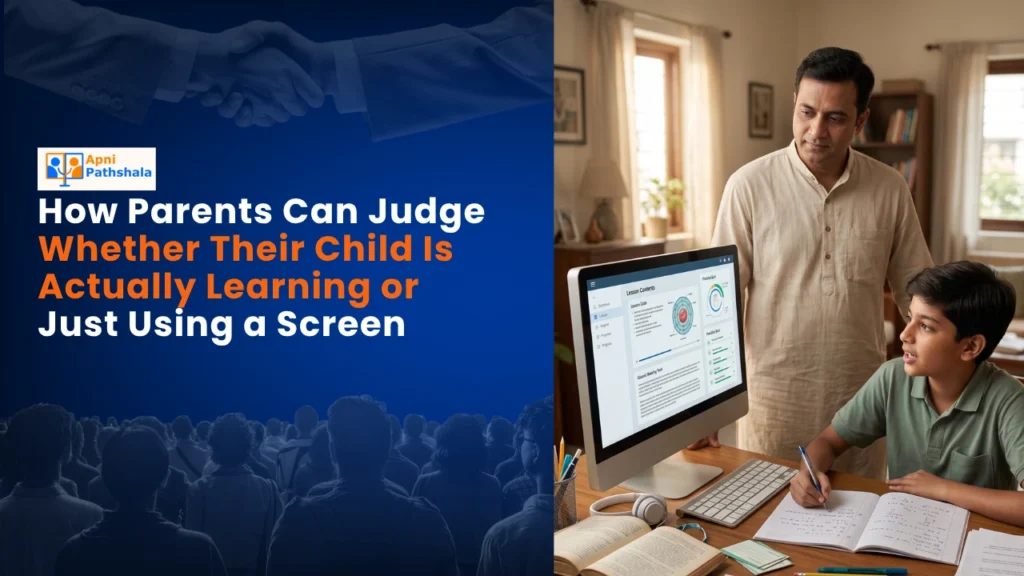
Rajesh’s Worry: Is Isha Really Learning?
Rajesh sat in his Indore living room, watching his 10-year-old daughter Isha stare at the laptop screen for the third hour. She’d been “studying” since 2 PM, but he couldn’t shake the feeling that she was just scrolling, clicking, wasting time. When he asked what she’d learned, Isha gave vague answers. Rajesh wasn’t alone in this worry, thousands of parents in Tier 2 and Tier 3 Indian cities face the same question every day: Is my child actually learning through digital learning, or is screen time just replacing real education?
The truth is, you can tell the difference. Digital learning isn’t bad. What matters is knowing the signs that separate genuine learning progress from mindless screen time.
What Real Digital Learning Looks Like
When your child is genuinely engaged in digital learning, their behaviour changes in specific, observable ways. They’re not just passively watching; they’re creating, solving, and thinking. Real learning leaves traces you can see and measure.
Your child asks questions that go deeper than the lesson. If your son learns about fractions and suddenly asks why pizza slices work that way, he’s thinking. He’s connecting what he saw on screen to the real world. This is how learning actually works; it’s not about watching; it’s about understanding.
They can explain what they learned to you without the screen. This is the real test. Ask your daughter to teach you what she just studied. Can she explain it? Can she give you examples? If she freezes without the video playing, that’s a red flag. Real learning sticks in the mind.
Your child shows excitement about the topic later. Digital learning that works creates curiosity. Your child might draw pictures about what they learned, talk about it at dinner, or want to explore more on their own. Engagement doesn’t end when the screen turns off.
- They complete tasks without constant reminders. Children genuinely learning are motivated. They don’t need you calling them back to the desk every five minutes.
- They make mistakes, notice them, and fix them. Real learning includes trial and error. If your child is using interactive tools like Scratch for coding, they’ll debug their own mistakes.
- Their grades or assessment scores improve. This is measurable. Digital learning should show up in actual results, not just hours spent online.
Red Flags That Screen Time Isn’t Real Learning
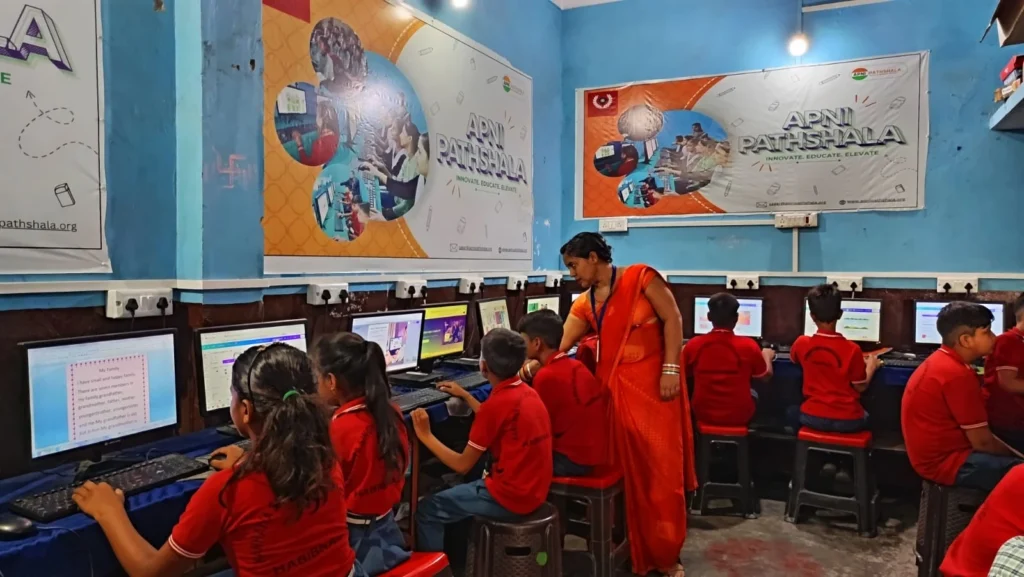
Now, let’s talk about what doesn’t work. Screen time becomes wasteful when certain patterns emerge, and you need to spot them early.
Your child can’t recall anything 10 minutes after finishing. If Isha watched a 30-minute video on photosynthesis but can’t answer a single question about it afterwards, the screen time didn’t convert to learning. Passive watching doesn’t create memory.
They’re distracted by other tabs, notifications, or apps. Real digital learning requires focus. If your child keeps switching between YouTube, games, and the lesson, their brain isn’t consolidating the information. The screen becomes a distraction tool, not a learning tool.
You can’t see what they’re actually doing. If your child’s screen is always angled away from you, or they get defensive when you ask what they’re working on, something’s off. Transparency matters. You have the right to know what your child is accessing and how long they spend on each activity.
Screen time keeps increasing, but learning doesn’t. If your child needs 2 hours to learn what should take 30 minutes, efficiency is dropping. More screen time should mean better results, not just more hours wasted.
How to Monitor Learning Progress at Home
You don’t need to be a tech expert to track whether digital learning is working. Simple, regular checks give you clear answers.
Set specific learning goals before screen time starts. Don’t let your child just “use the computer.” Say: “Today you’ll learn how to solve word problems. By the end, you’ll show me three examples.” Goals create accountability.
Use monitoring tools built into quality educational devices. Many devices designed for children include parent dashboards that show what your child accessed, for how long, and what they completed. This removes guesswork. When you choose the right learning device, look for built-in monitoring features like Apni Prerna, which tracks student progress in real time.
Ask open-ended questions, not yes-or-no questions. Don’t ask: “Did you learn today?” Ask: “What was the hardest part? What would you teach me?” Open questions force your child to recall and organise their thoughts.
Keep a simple weekly log. Write down what your child studied, for how long, and what they could explain afterwards. After three weeks, you’ll see patterns. You’ll know which apps, platforms, or subjects actually work for your child.
Talk to teachers about what you’re seeing. Parent engagement in education means staying connected with schools. If digital learning at home isn’t matching classroom performance, teachers can help you adjust.
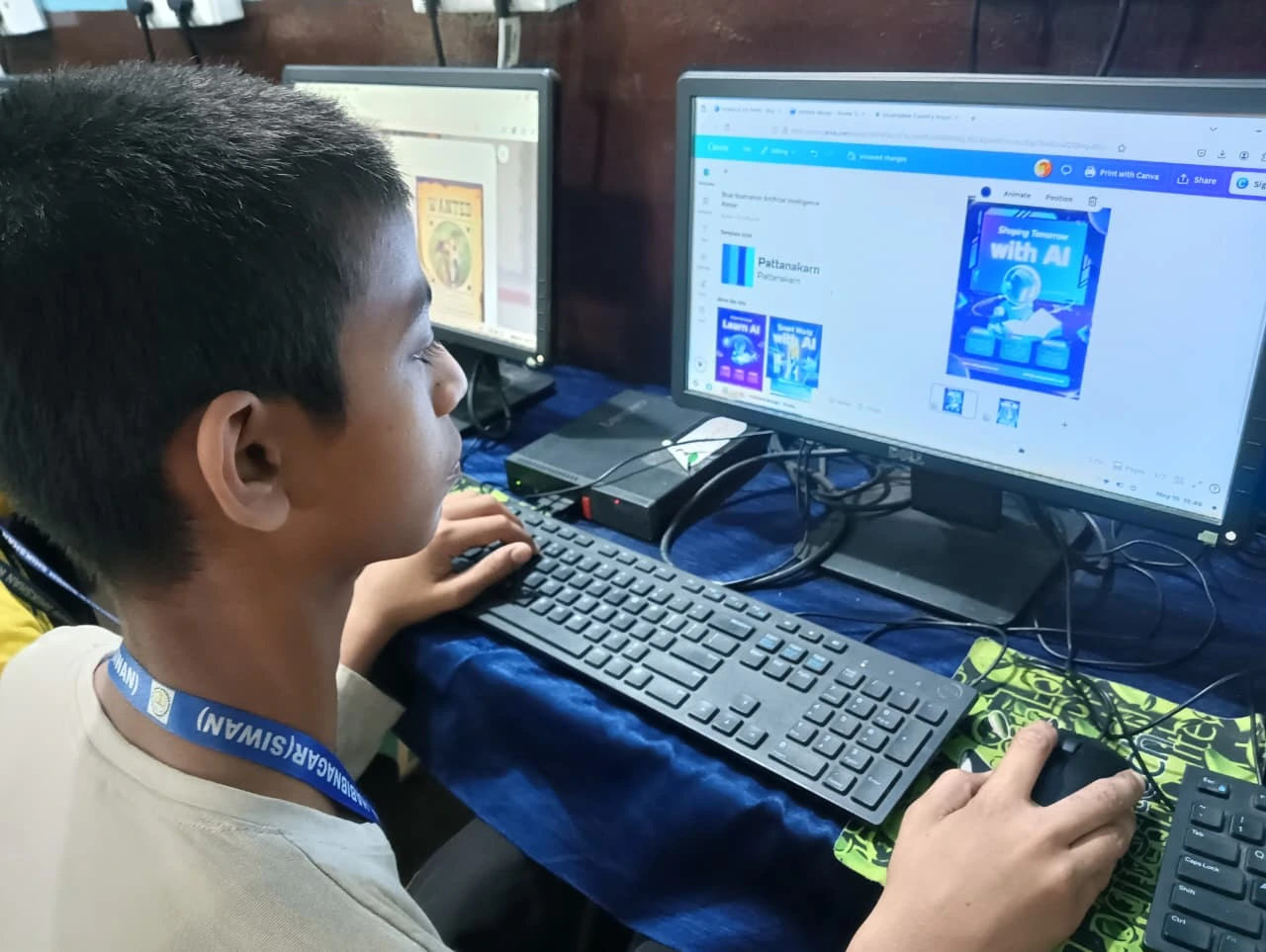
Screen Time Isn’t the Enemy, Purposeless Time Is
Here’s what many parents miss: screen time itself isn’t harmful. Purposeless screen time is. Your child can learn more in 45 focused minutes on a quality educational platform than in three hours of aimless browsing.
The Digital India initiative pushes technology into education for a reason. Digital tools can personalise learning, give instant feedback, and make complex topics visual and interactive. These are real advantages. But only if your child is actually using them to learn.
Choose devices and platforms designed for education, not entertainment. A computer loaded with educational software, clear parental controls, and monitoring tools, like Apna PC with Apni Prerna built in, keeps your child focused on learning, not distraction. The device matters. The software matters. The structure matters.
What Isha’s Father Did
After three weeks of tracking Isha’s screen time and asking better questions, Rajesh noticed something. When Isha used structured coding apps with clear projects, she learned fast and was excited. When she had open-ended “study time” on generic sites, nothing stuck.
He set specific goals before each session. He asked Isha to teach him what she learned. He noticed when she was genuinely engaged versus when she was clock-watching. Within a month, Isha’s math scores improved, and her enthusiasm for learning returned.
The screen time didn’t disappear. But it became purposeful. That’s the difference between digital learning that works and screen time that wastes hours.
Your child can learn through screens. You just need to know what real learning looks like and stay involved. The investment is small. The results are significant. Visit apnapc.com to learn more.