

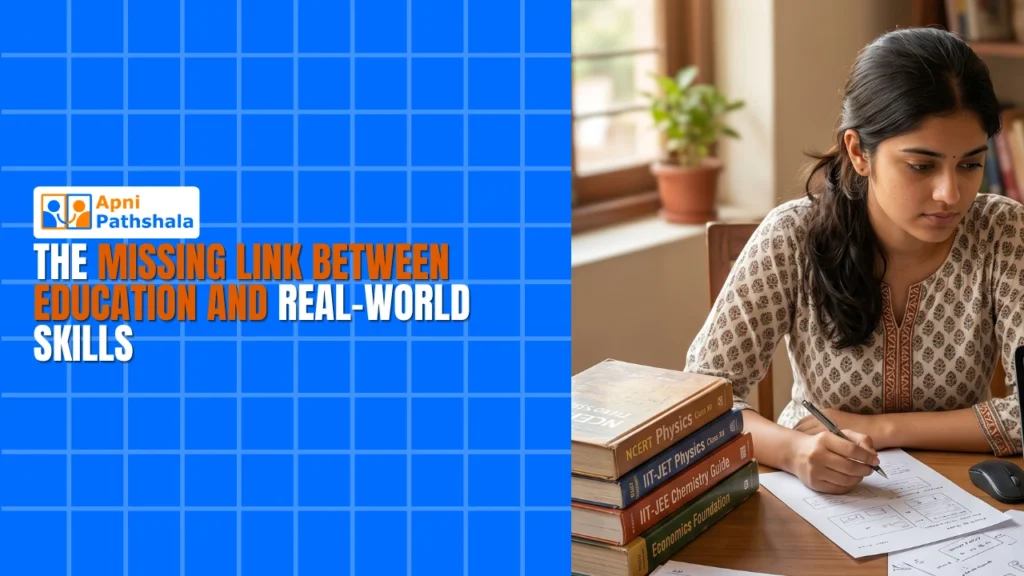
Rohan scored 92 percent in his board exams. He was the topper in his school. His parents were proud. His relatives called to congratulate him. Everyone assumed he had a clear path ahead. Six months later, he sat in a college placement interview. The interviewer asked him to create a spreadsheet from raw data. He had never done it. He stared at the screen. He did not get the job.
Down the hall, a student named Priya scored 78 percent. Not the topper. Not even close. But she had been using a computer since Class 7. She typed the spreadsheet in ten minutes. She added formulas, created a chart, and presented it confidently. She got the job.
Rohan had knowledge. Priya had real-world skills. The gap between them was not intelligence. It was preparation. The education system taught Rohan to memorize. It did not teach him to apply. The missing link between education and real-world skills is not more subjects. It is more tools.
Why Education Alone Is Not Enough?
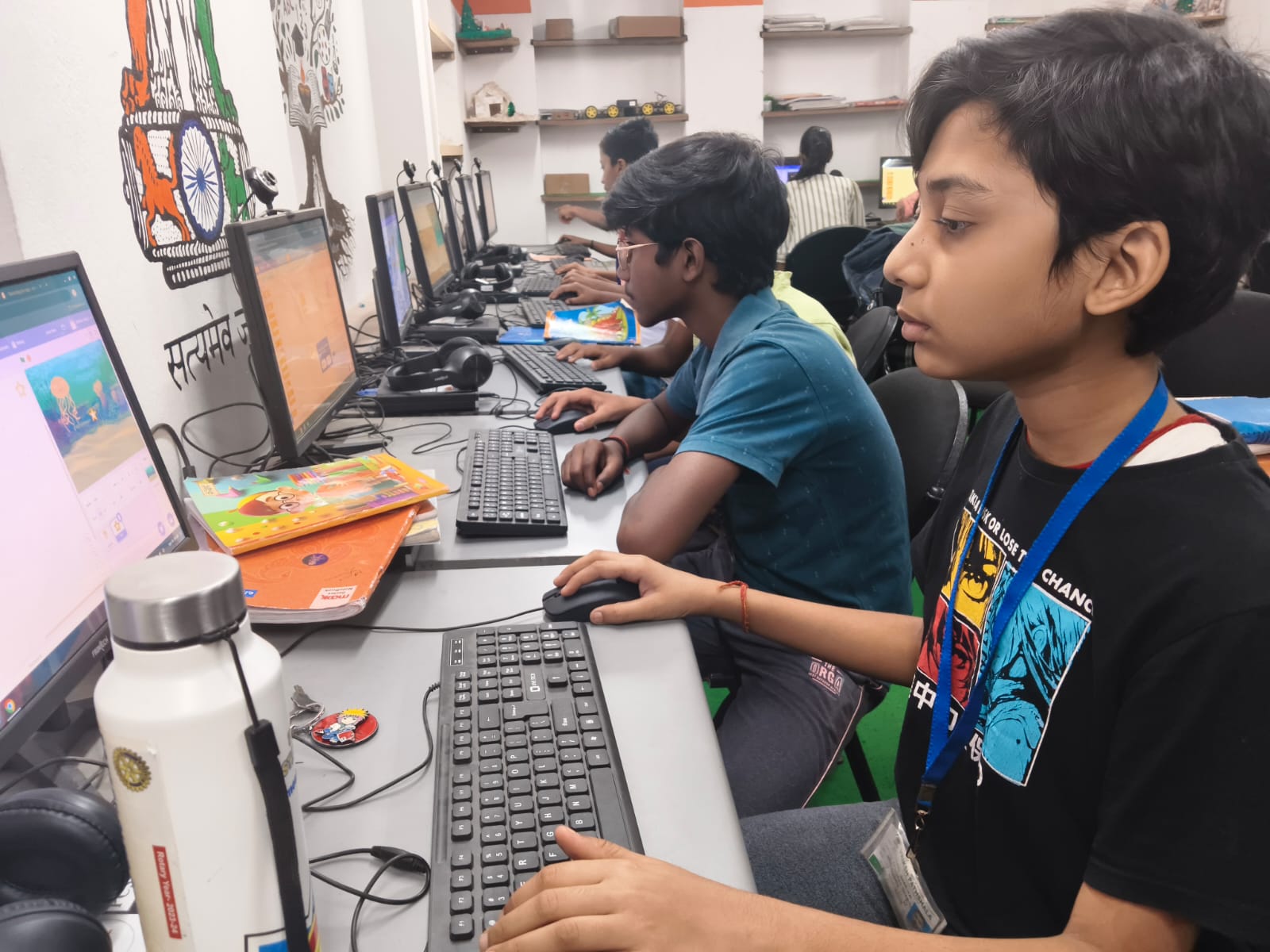
The Indian education system is built on a simple model: learn the textbook, pass the exam, move to the next class. This model produces students who can recall facts, solve textbook problems, and score well on written tests. It does not produce students who can apply knowledge in practical situations.
A student who memorizes the formula for compound interest can solve problems on paper. But can they use a spreadsheet to calculate it for a real business scenario? A student who learns about photosynthesis can explain the equation. But can they use a computer to simulate the process? A student who studies economics can define GDP. But can they analyze real economic data?
Skill-based learning helps students apply their knowledge. It takes the knowledge from the textbook and applies it through tools. The student who learns to use a spreadsheet does not just know formulas. They know how to use them. The student who learns to code does not just know logic. They know how to express it.
DIKSHA, India’s national digital learning platform is pushing for competency-based education in India. But competency means more than passing exams. It means being able to do things, not just to know things.
What Real-World Skills Look Like?
Real-world skills are not about learning one specific tool. They are about developing the ability to use any tool effectively. A student who can type, search, organise, and present on a computer can adapt to any software, any platform, and any workplace requirement.
Practical learning means a student who can write a professional email. It means a student who can create a presentation from scratch. It means a student who can search for information online and evaluate what they find. It means a student who can organize data in a spreadsheet and draw conclusions from it.
These are not advanced skills. These are baseline expectations in every modern workplace. A graduate who cannot do these things is unemployable, regardless of their exam scores. A graduate who can do these things has options, regardless of their percentage.
Future-ready skills go beyond basic computer use. They include the ability to learn new tools quickly, solve problems digitally, and collaborate using technology. A student who has been using a computer since childhood develops these skills naturally. A student who first touches a computer in college has to learn it under pressure.
What Is Apna PC and How Does It Help Indian Students Learn Better. It gives them the practical experience that textbooks cannot provide.
The Gap Between School and Workplace
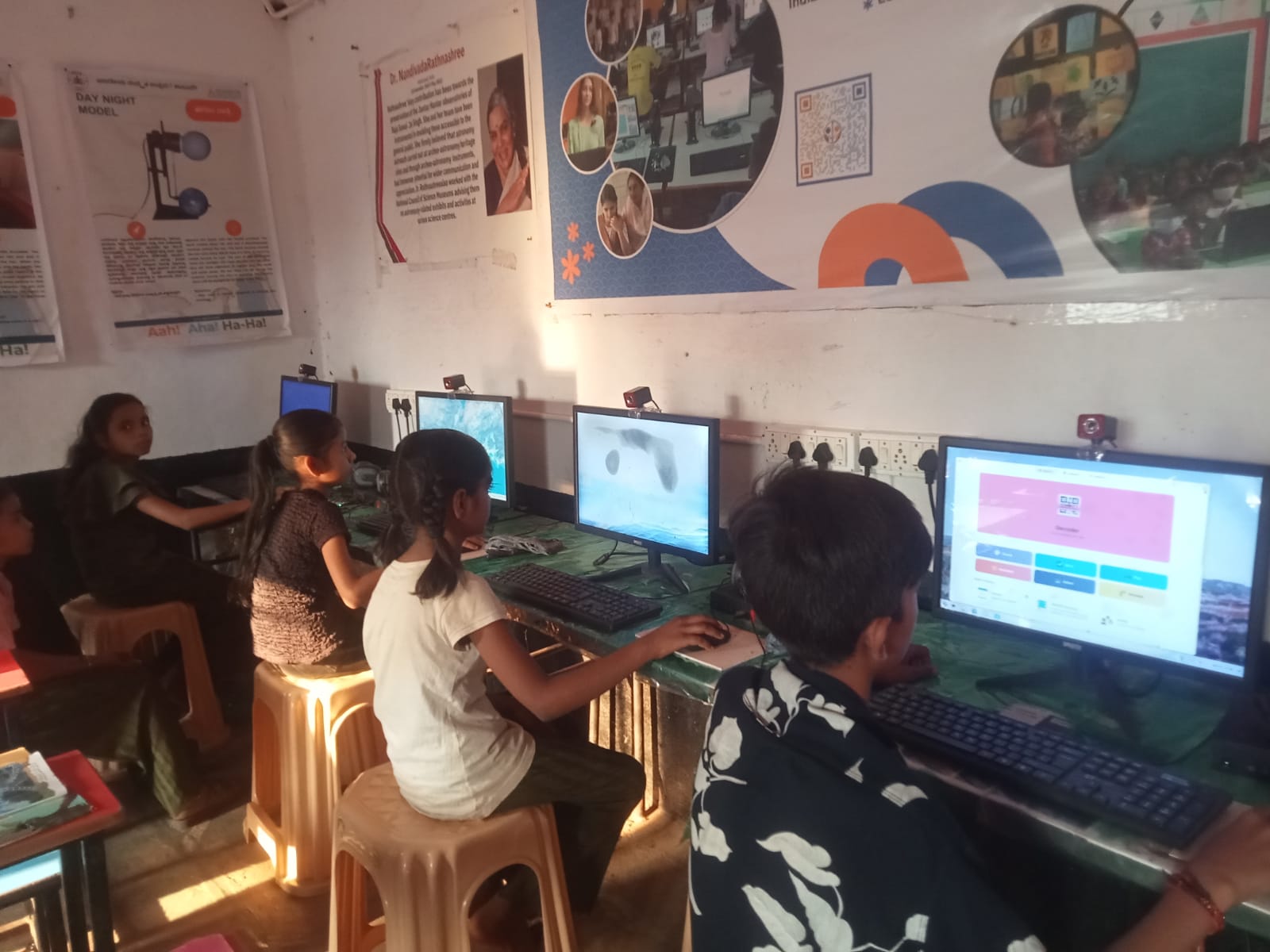
Every year, lakhs of Indian graduates enter the workforce. They have degrees. They have marks. They have knowledge. What they do not have is the ability to apply that knowledge using digital tools.
Employers do not ask about exam scores. They ask if you can use a spreadsheet. They ask if you can create a presentation. They ask if you can write a professional email. They ask if you can learn new software quickly. These are the questions that decide who gets hired and who does not.
The gap between school and workplace is not about content. It is about application. Schools teach content. Workplaces demand application. The student who uses digital tools to bridge this gap enters the workforce prepared. The student who does not bridge it enters the workforce confused.
The Biggest Advantage a Student Can Have Today. But more importantly, it prepares them for a workplace that runs on digital tools.
What Parents Should Do?
You cannot change the education system overnight. You cannot make schools teach practical skills instead of textbook content. But you can change what happens at home.
Give your child a computer. Let them learn to type, search, organize, and create. Let them build projects that apply what they learn in school. Let them use tools that the workplace demands. Do not wait for the school to teach these things. The school will not. You have to.
Apna PC, priced at ₹21,000 (shipping and GST excluded), comes pre-loaded with LibreOffice, Scratch, VS Code, Blender, and Arduino IDE. These are not entertainment tools. These are tools that build real-world skills. Your child plugs it in and starts building practical competence from day one.
Digital India initiative is creating the infrastructure for a digital India. But infrastructure needs people who can use it. Give your child the skills to be one of those people. Visit apnapc.com to learn more.