

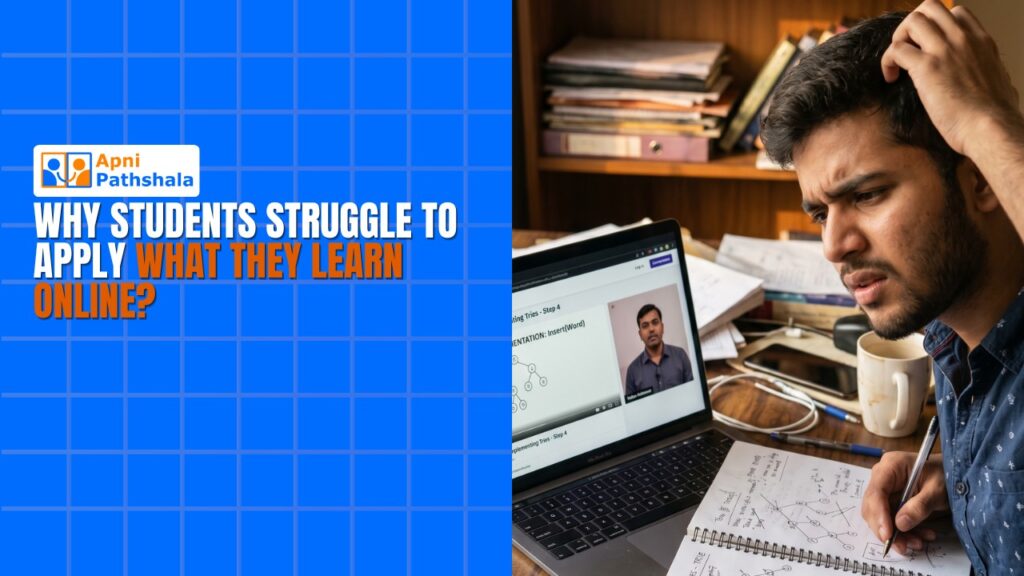
A student watches an hour-long video on a topic, takes mental notes, and even feels confident by the end. Then, a week later, they sit for an exam, and the same concept feels foreign. This is one of the most common online learning problems students face today. Consuming content is easy, but converting that content into real, usable knowledge is a different challenge entirely. The gap between watching and actually knowing is bigger than most students realise.
What Makes Practical Learning Online So Difficult?
The internet has made information more accessible than ever. But access to information is not the same as learning. Practical online learning requires more than watching or reading; it requires active engagement, repetition, and the chance to apply what you’ve just seen in a real or simulated context.
Most online content is designed for consumption, not practice. A YouTube video explains a concept well, but it does not immediately ask the student to solve a problem. A PDF note can be read and forgotten within hours if the student does not return to it. Without built-in friction, without being asked to recall, attempt, or create, the brain does not encode the information deeply enough for it to stick.
This is not a failure on the student’s part. It is a design problem. And the solution is not to watch fewer videos or read fewer articles; it is to change how students interact with the material they consume. The moment a student pauses a video and tries to summarise what they just heard, or attempts a problem before checking the answer, the learning process shifts from passive to active. That shift makes all the difference.
Why Students Struggle in Their Studies Even With Internet Access?

One of the biggest myths in education today is that internet access alone solves learning problems. It does not. Why students struggle in their studies, even with smartphones and data, often comes down to three things: distraction, lack of structure, and a lack of a feedback loop.
Distraction is the most obvious. A student who opens a browser to study is one notification away from a thirty-minute detour. Smartphones, in particular, are designed to fragment attention. A student using a shared family phone has almost no control over their study environment, calls, messages, and other apps compete with every attempt to focus.
Structure is the second problem. A classroom gives students a sequence: topic, explanation, example, practice, assessment. Online learning rarely replicates this unless the student deliberately builds it themselves. Most students, especially younger ones, do not know how to structure their own learning sessions without guidance.
The feedback loop is the third gap. When a student does a sum wrong in a notebook, a teacher can catch and correct it. Online, a student can watch the same incorrect concept three times and walk away more confident in a wrong understanding. Without timely, accurate feedback, mistakes get reinforced instead of corrected.
WHO guidelines on children and screen use highlight that the quality and nature of screen engagement matter far more than duration alone. Purposeful, interactive screen time produces very different outcomes compared to passive consumption. This applies directly to how students use their devices for learning.
Building Effective Online Learning Habits at Home
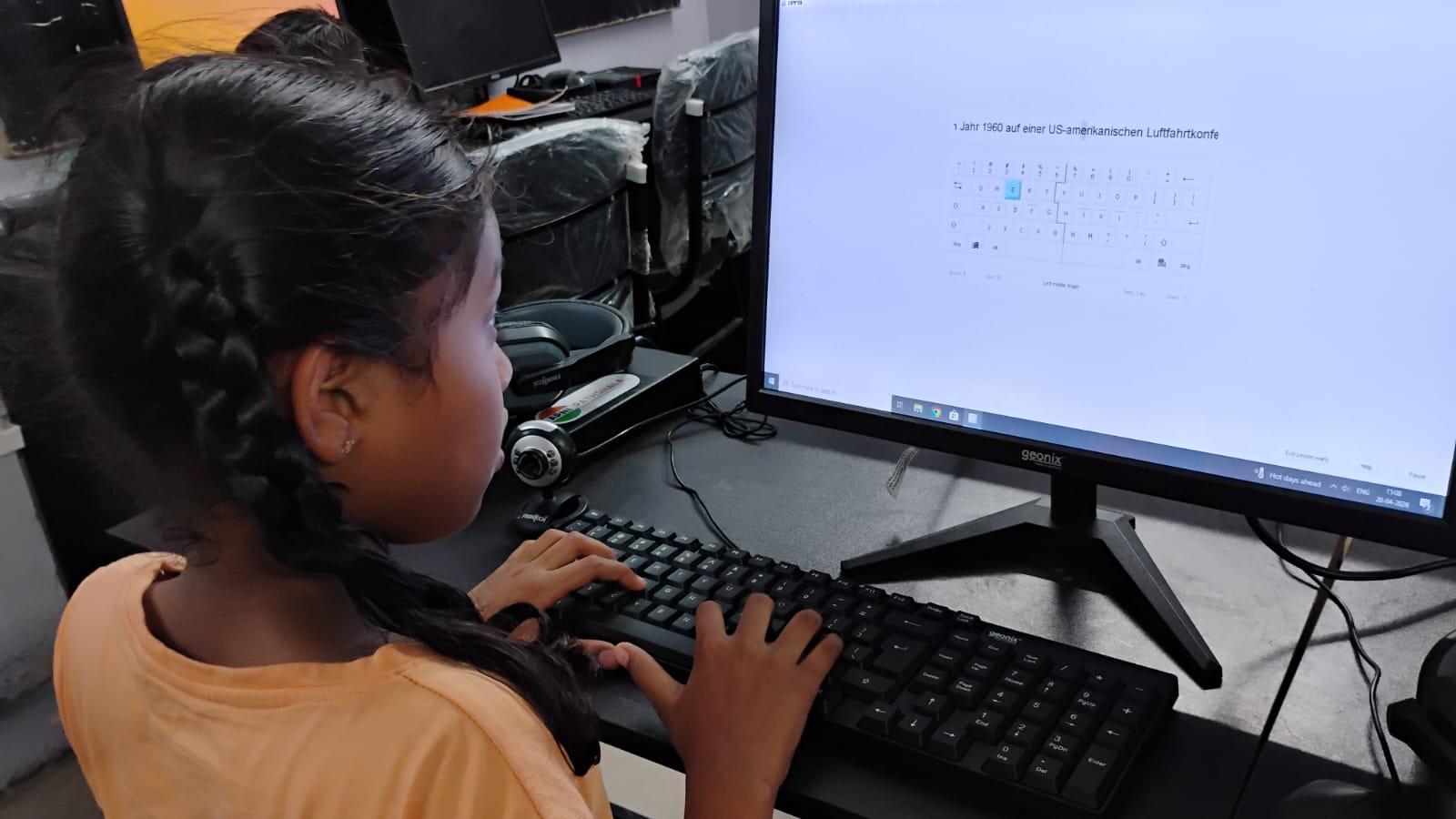
The students who benefit most from online resources are not necessarily the most intelligent; they are the most intentional. Effective online learning is built on a handful of habits that any student can develop with the right setup and a little consistency.
First, a dedicated device matters more than most parents realise. A student who has their own computer, not a shared phone, can open a learning session, leave it running, return to it, and pick up exactly where they left off. That continuity is essential for building the kind of deep practice that online learning requires.
Second, spacing matters. Instead of one long study session, shorter sessions spread across days produce far better retention. A student who spends twenty minutes on a concept today, ten minutes reviewing it tomorrow, and five minutes recalling it on Friday will remember it weeks later. A student who studies it for two hours in one sitting is unlikely to.
Third, application beats repetition. Reading a concept five times is less effective than reading it once and then attempting five problems based on it. Every time a student is forced to retrieve information from memory rather than simply reread it, the memory trace becomes stronger.
Understanding how a personal computer helps students learn beyond the school curriculum shows exactly why a dedicated device changes the equation. And for students who want to compete seriously in today’s environment, knowing the biggest advantage a student can have today is what separates those who use the internet to drift and those who use it to grow.
Online learning does not fail students. But students without the right tools, the right habits, and a structured approach will always struggle to turn what they watch into what they know. The good news is that all of this is fixable, with access, intention, and a little consistency. As the India.gov.in education portal notes, digital learning resources in India are vast and growing, but they are only as useful as students’ ability to engage meaningfully with them.
Turn Online Learning Into Real Knowledge
Online content is everywhere. What most Indian students still lack is the right device, the right environment, and the right habits to make that content actually work. Apna PC gives students a personal, education-ready computer for just ₹21,000 (shipping and GST excluded), so online learning stops being a passive habit and becomes a real skill. Visit apnapc.com to learn more.