

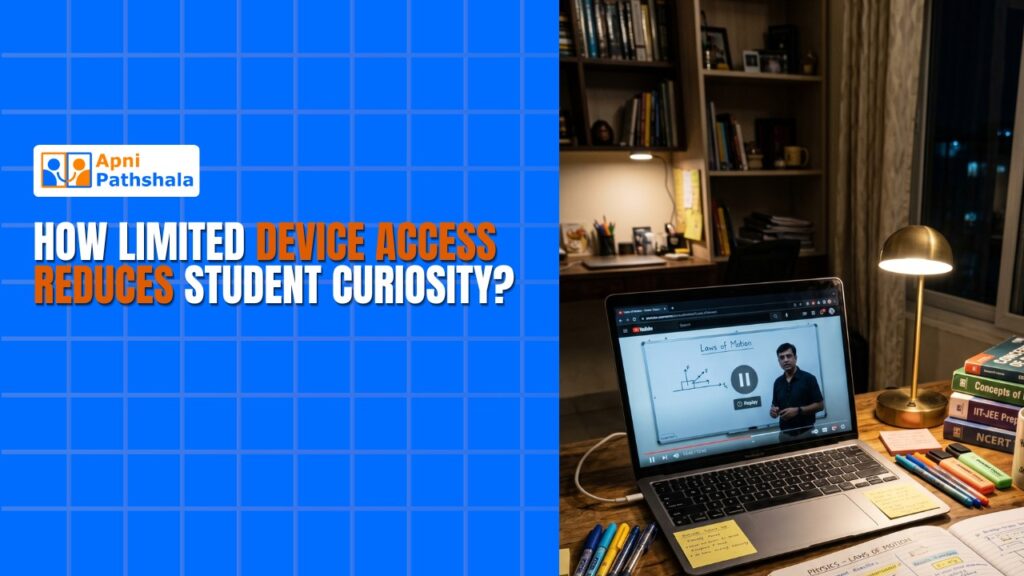
Curiosity doesn’t disappear on its own. It fades when a child asks a question and finds no way to explore the answer. In today’s world, technology in education has made it possible for students to look up almost anything, pursue their interests, go deeper, and discover connections they never expected. But that possibility only exists for students who have regular, personal access to a device. When that access is limited or shared, curiosity quietly shrinks, and with it, a student’s natural relationship with learning.
What Curiosity Actually Needs to Grow?
Curiosity in students isn’t simply about wanting to know things. It works as a cycle: a question appears, the student looks for an answer, the answer leads to another question, and learning deepens on its own. No teacher needs to push it. It moves on its own, as long as the student has the tools to follow where it leads.
Digital learning for students supports this cycle in a way that no textbook alone can. When a student wonders why earthquakes happen, she can watch an animation, read an explanation, find a live map of seismic activity, and revisit it the next day. That layered exploration is how surface-level curiosity becomes real understanding.
But this cycle depends entirely on access. A student who borrows a phone for twenty minutes can check one thing and put it down. A student with a personal device can follow a question wherever it goes, for as long as her curiosity holds. According to the UNICEF India education report, children with regular access to digital tools at home show stronger academic engagement and develop broader learning interests over time. Curiosity, it turns out, is not just a personality trait. It is an outcome of having the right environment.
What Happens When Students Cannot Explore Freely?
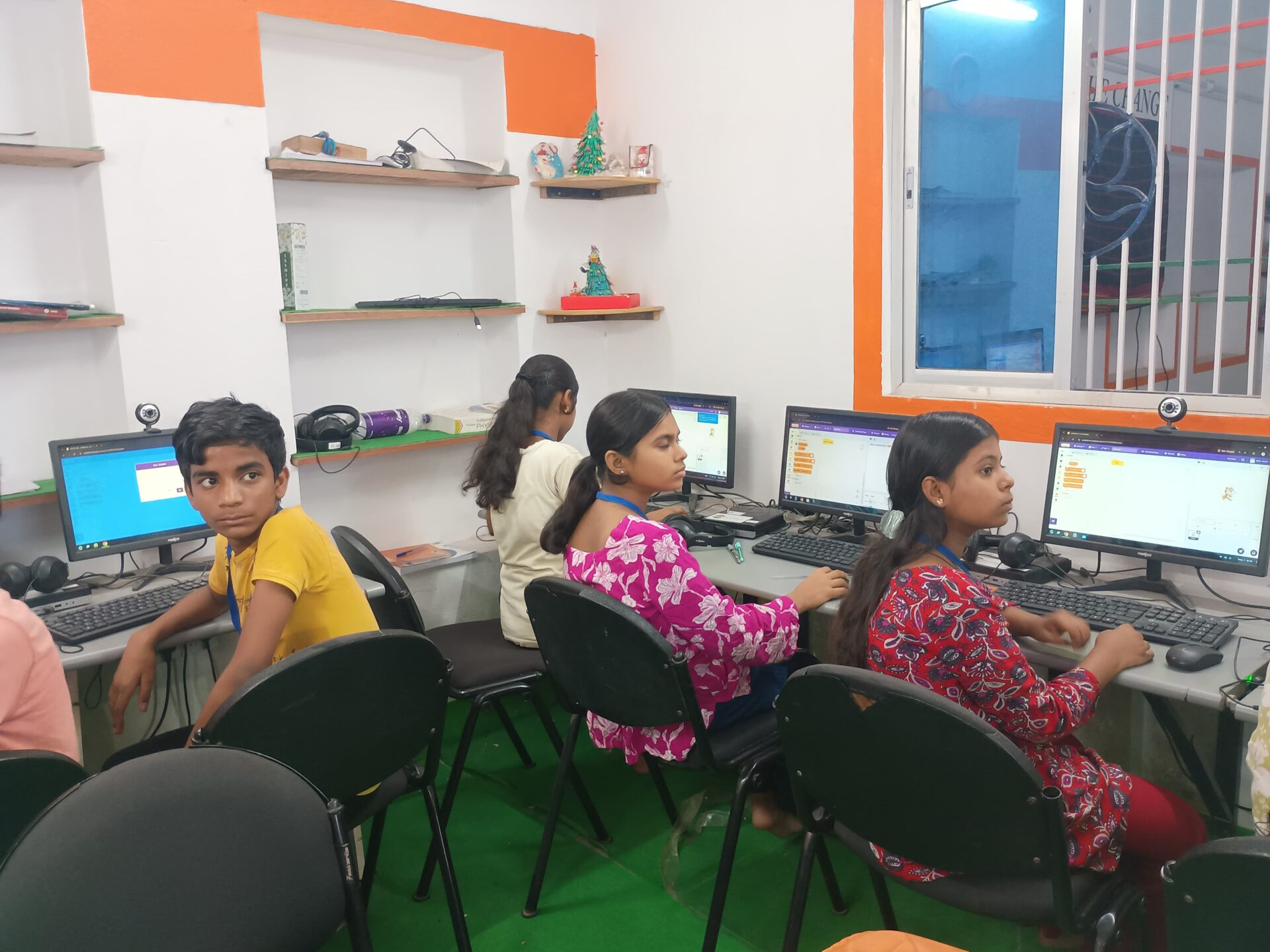
When a student must ask permission to use a shared phone, knowing it may be taken back at any moment, he doesn’t explore. He looks up the one thing he needs and stops. The question that came after it goes unanswered.
Over time, this trains a very specific habit. Student engagement in learning gradually narrows from “I want to understand this fully” to “I need just enough to get by.” Students stop asking follow-up questions. They stop wondering what exists beyond the chapter. They lose the instinct to dig deeper because digging deeper has always cost them something: time, permission, or a conflict over the family’s only device.
This is not laziness. It is a rational response to a constrained environment. And once this habit settles in, it is difficult to reverse. Students who do not develop curiosity in their formative years often struggle to engage with complex material later. They become passive learners, capable of following instructions, but uncomfortable thinking independently or exploring ideas without being told to.
How Technology in Education Supports Natural Curiosity
Learning through technology doesn’t just deliver information. It invites students to interact with it in ways that classroom instruction and printed textbooks genuinely cannot replicate.
A student can watch a chemistry reaction happen in slow motion and understand it visually before the formula makes sense on paper. He can hear a historical period described from multiple perspectives and form his own view. She can attempt a problem, immediately see where her thinking went wrong, and try again, without waiting for the next class, the next teacher, or the next correction.
UNESCO global education research consistently shows that interactive digital learning environments improve both curiosity and long-term retention compared to passive formats. When students can direct their own exploration, choosing what to look at next, how long to stay on a topic, and what angle to approach it from, they stay engaged longer and build a stronger understanding.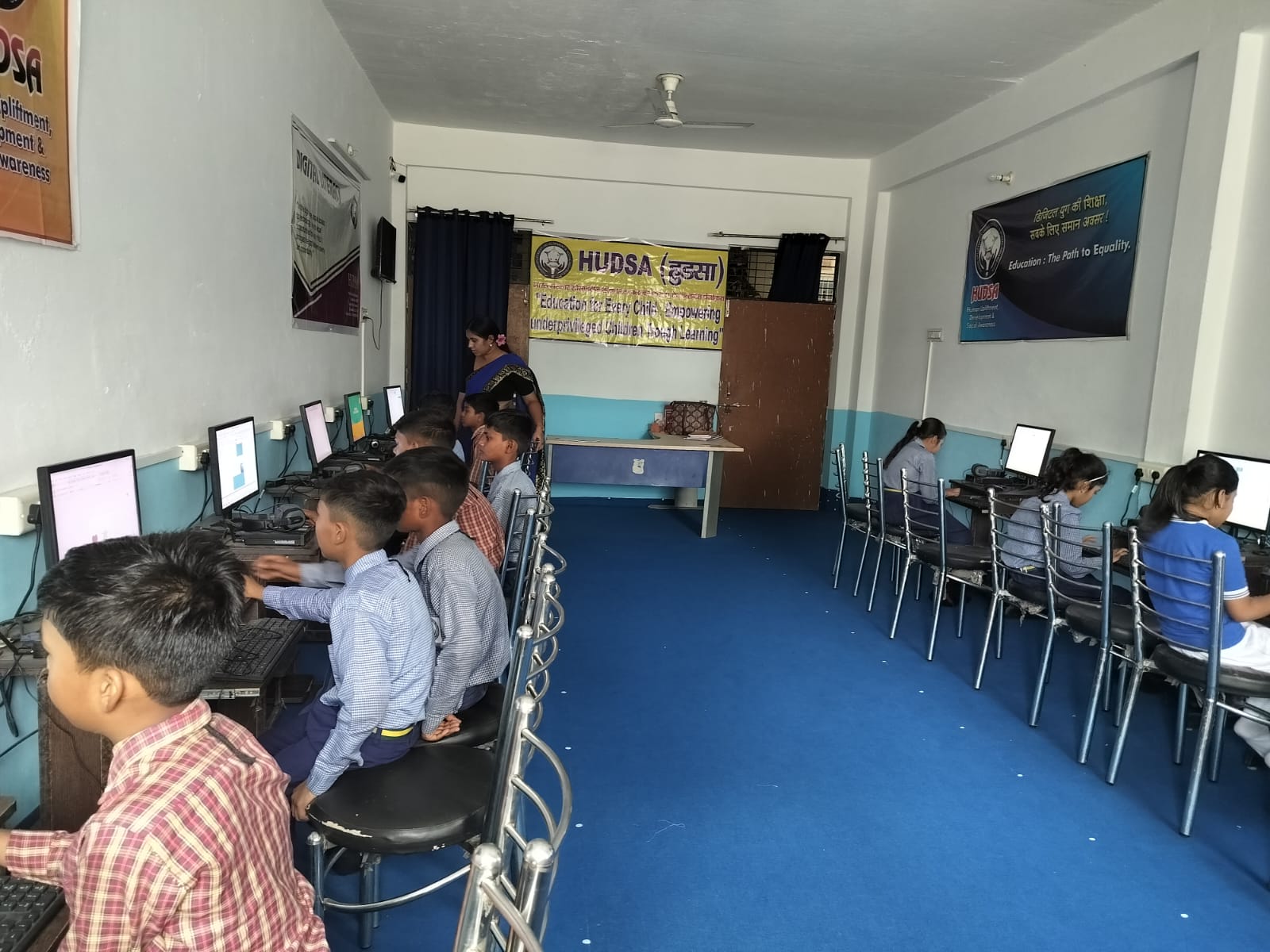
This is what technology in education, used properly, offers: not screens for entertainment, but tools for genuine intellectual discovery. The barrier is not the technology. The barrier is access to a personal, reliable, and always-available device when a student’s mind is ready.
How Apna PC Gives Students the Freedom to Explore
Apna PC was built to remove this barrier. It gives Indian students a personal computer, one that doesn’t need to be borrowed, is always available, and runs every major learning platform without lag or interruption.
When a student gets curious about something at 9 PM, he doesn’t have to wait for the phone to be free. He opens the computer and follows the question wherever it goes. That freedom, to explore on his own terms, at any time, is what builds the habit of learning and keeps curiosity alive through the years when it matters most.
At ₹21,000 (shipping and GST excluded), Apna PC is one of the most affordable personal computers available for Indian families, especially in Tier 2 and Tier 3 cities, where household devices are still shared among multiple members. how the device is designed specifically around student learning, not just general use. And Why Every Indian Student Needs Their Own Computer makes the case for why personal access is the starting point for everything else.
Don’t let a missing device limit your child’s curiosity. Visit apnapc.com