

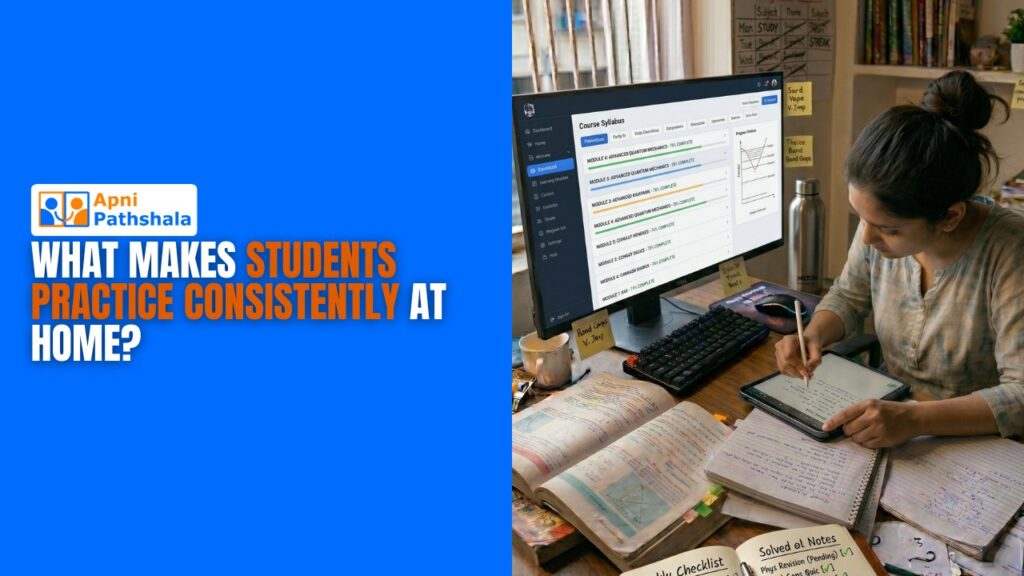
Every parent wants their child to study regularly without being reminded. Every student knows they should sit down and practise, but somehow the day slips by. The real challenge isn’t awareness. It’s consistency. Building strong study habits for students doesn’t happen by setting more rules. It happens when the environment, routine, and tools all work together in a way that makes practising feel natural rather than forced.
Why Consistency Matters More Than Hours?
A consistent study routine beats long, irregular study sessions every time. This is one of the clearest findings in learning research. A student who studies 45 minutes a day retains far more than one who spends 5 hours on the weekend trying to catch up.
The reason is straightforward: the brain needs repetition spaced over time to move information from short-term to long-term memory. When a student studies daily, each session builds on the last. When they study in bursts, much of that earlier learning has already faded by the time the next session begins.
Consistency also removes the anxiety of falling behind. A student who has covered a little every day never faces that panicked feeling before an exam, too much to revise, too little time. That calm confidence is itself a performance advantage on the day that counts.
Home Study Tips That Actually Build the Habit

Most home study tips focus on what to study, but where and how a student studies matters just as much as the content itself.
Set a fixed time. The mind responds to predictability. When a student studies at the same time each day, even for just 30 to 40 minutes, sitting down at that hour eventually feels automatic. The daily resistance slowly disappears.
Create a dedicated space. Studying at the dining table while siblings watch TV, or in a room full of distractions, makes deep focus nearly impossible. A specific, quiet spot, even a simple corner of a room, trains the brain to associate that space with concentration.
Start small and build. One of the biggest reasons students abandon study routines is that they begin with unrealistic targets. A student who commits to 20 focused minutes every evening is far more likely to continue than one who plans 3 hours but gives up after a week.
End with a quick recall. Before finishing each session, spend 5 minutes writing down the main points from that day without looking at notes. This single habit, done consistently, improves what students remember by a significant margin.
What Effective Study Habits Actually Look Like?
Talking about effective study habits is easy. Putting them in place is harder, especially in homes where study time, space, and tools are inconsistent.
Research highlighted in the UNICEF India education report notes that access to a consistent learning environment at home supports better academic outcomes for children. Environment shapes habits, and habits shape results over time.
But the environment is about more than quiet. It is about having tools that are ready when the student is. A student who has to wait for a parent’s phone, share a device with siblings, or work on a slow, laggy device will always struggle to build a real routine. The moment they sit down to study becomes a negotiation, and that friction kills consistency before it even starts.
The Central Board of Secondary Education (CBSE) structures its curriculum around regular, distributed practice across the academic year, not last-minute cramming. Students who align their home study habits with this structure, reviewing weekly topics and practising previous questions consistently, perform significantly better than those who only open their books before tests.
The Role of a Personal Device in Sustaining the Routine
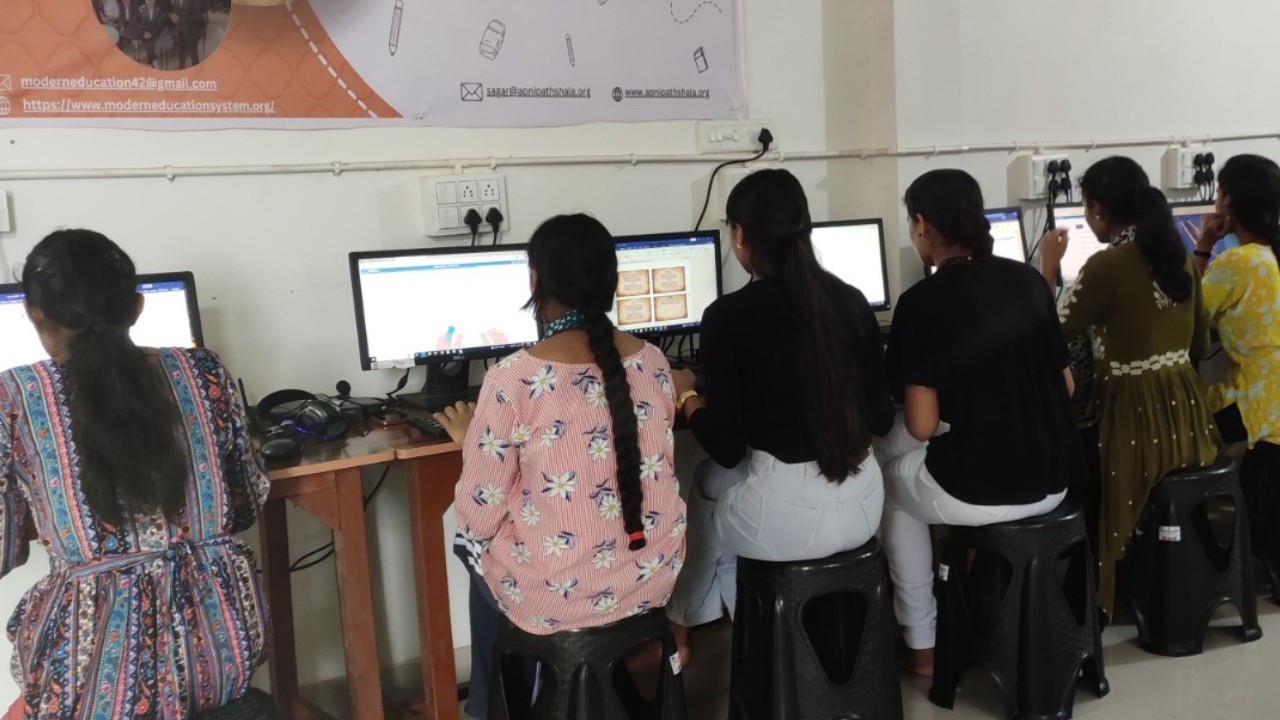
The single most practical step a family can take to help a student build lasting study habits is to give them their own device.
When a student knows their computer is always available, always charged, and only theirs, study time becomes non-negotiable. There is no one to borrow from, no waiting, and no excuse to delay. That removal of small daily friction is more powerful than any number of reminders or discipline charts.
A student with a personal computer can set daily study reminders, save notes, revisit video lessons, download practice papers, and use structured learning apps, all in one place. The device becomes part of their daily rhythm, not an obstacle to it.
To understand how a personal device changes a student’s day-to-day learning, read Why Every Indian Student Needs Their Own Computer and The Biggest Advantage a Student Can Have Today.
Apna PC at ₹21,000 (shipping and GST excluded) is built exactly for this purpose, a dedicated learning device for Indian students that supports consistent daily habits without the distractions that come with shared family devices.
Consistency doesn’t come from discipline alone; it comes from the right environment. Give your child the conditions they need to show up every day. Visit apnapc.com to learn more.