

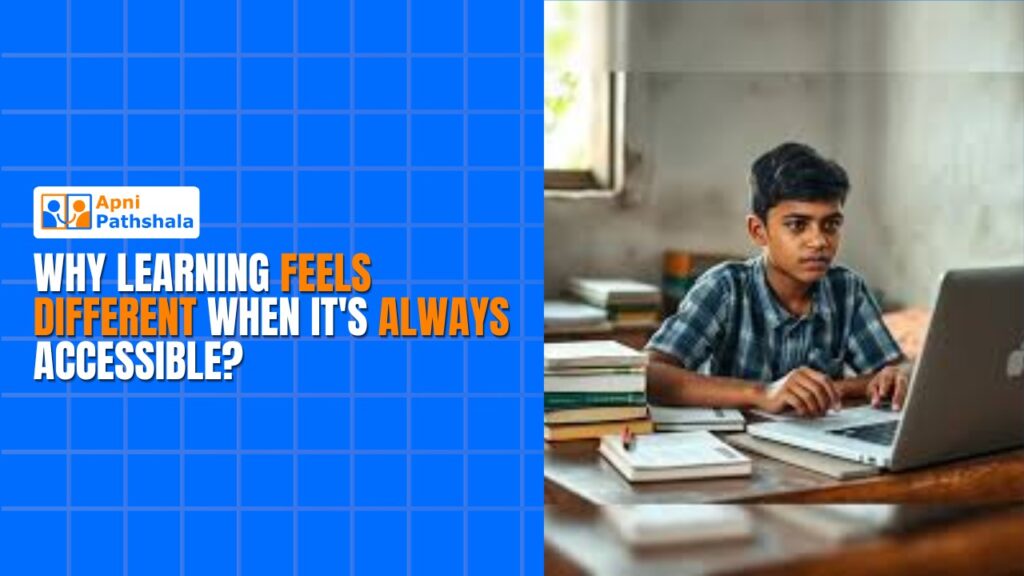
Many Indian students study only when the school says so, when a teacher is present, when a tuition class is scheduled, or when someone at home has time to help. But flexible learning for students completely changes this. When learning becomes something a child can access any time, at any pace, from any place, the entire experience of studying transforms. It stops being a burden and starts feeling like something the student actually controls.
What “Always Accessible” Learning Really Means
The idea of anytime learning benefits isn’t just a trendy phrase for most Indian families; it’s deeply practical. Think about a Class 9 student in a small town who misses a concept in school. If she has access to a computer at home, she can revisit that topic at 9 PM after dinner, after chores, without depending on anyone else.
Accessible learning means:
- No waiting for the next class to understand something that wasn’t clear
- No missing out because the teacher moved ahead too quickly
- No extra money spent on repeated tuition sessions for the same topic
- No stress about falling behind while others move forward
This kind of freedom doesn’t just change what a student learns; it changes how confident they feel about learning. A child who can revisit a topic without shame or pressure starts to see themselves as capable. That shift in mindset is worth more than any single lesson.
The Real Advantage of Learning at Your Own Pace
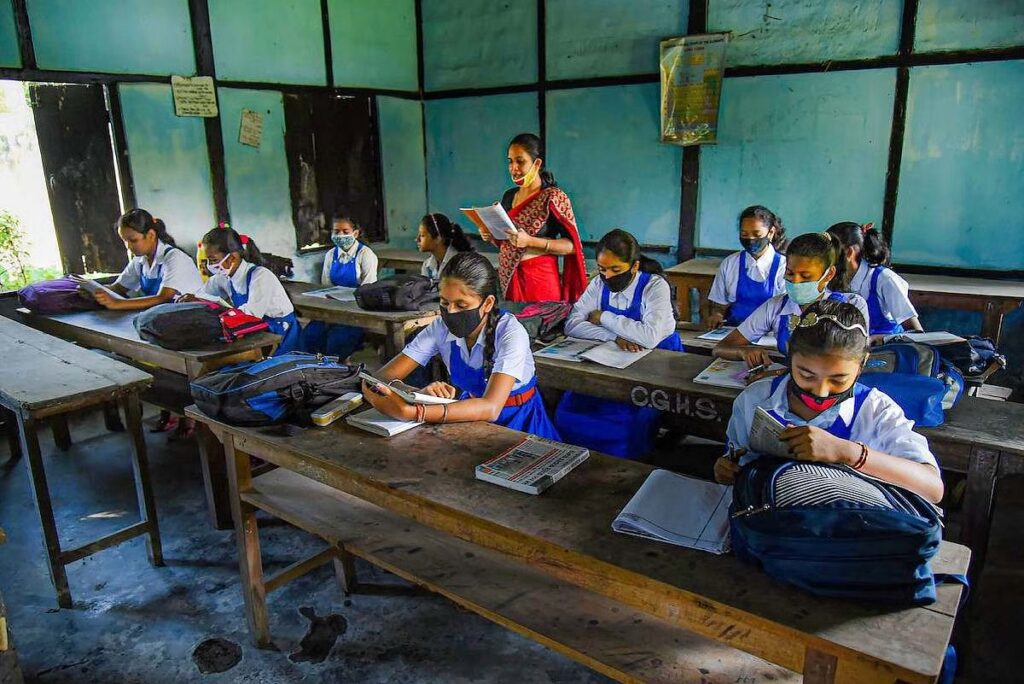
Every child learns differently. Some pick up concepts quickly. Others need to hear or see something three or four times before it truly clicks. The challenge with traditional classrooms is that they can’t always adjust to every student’s natural pace.
That’s exactly where self-paced learning advantages become visible. A student using a computer to study can pause a video midway and re-watch it without embarrassment. They can practice the same problem five times in a row. They can skip topics they already understand and spend extra time on concepts they find difficult. This isn’t just convenient; it builds the habit of taking ownership of your own education.
According to the UNICEF India education report, students who engage with learning at their own pace show stronger retention and more consistent academic progress. When learning adapts to the child rather than the other way around, the results are genuinely different.
How a Personal Computer Helps Students Learn beyond the school curriculum becomes possible only when students have reliable, daily access to a device they can call their own.
Why This Matters Especially for Indian Students
India’s education system is evolving rapidly, but large classrooms, teacher shortages, and uneven access still create real gaps for millions of students. The online learning flexibility available today through platforms like DIKSHA, YouTube, Khan Academy, and countless free resources is genuinely remarkable. But all of that potential is locked away if a student doesn’t have a device to access it.
This is where the family’s choice of tool becomes critical. A shared mobile phone works for basic browsing, but it’s not sufficient for focused study sessions, typing practice, project work, or coding. Switching between family members, running out of battery, or dealing with a small screen breaks the flow that deep learning requires.
A personal computer at home changes the equation entirely. According to the Digital India initiative, bridging the device gap is one of the most important steps in making quality education truly universal. When a student has a computer they can use freely, not waiting for a parent to finish work on it, not sharing time with siblings, learning stops being an event and becomes a habit.
Why Every Indian Student Needs Their Own Computer is about more than convenience; it’s about making independent, self-directed learning genuinely possible for children across the country.
Apna PC was built with exactly this in mind. At just ₹21,000 (shipping and GST excluded), it offers Indian families an affordable, dedicated computer their child can use freely for school subjects, creative projects, skill-building, and exploring what actually interests them.
If you want your child’s learning to feel less like a daily struggle and more like something they genuinely choose to do, consistent access is the first step. Visit apnapc.com to learn more.