

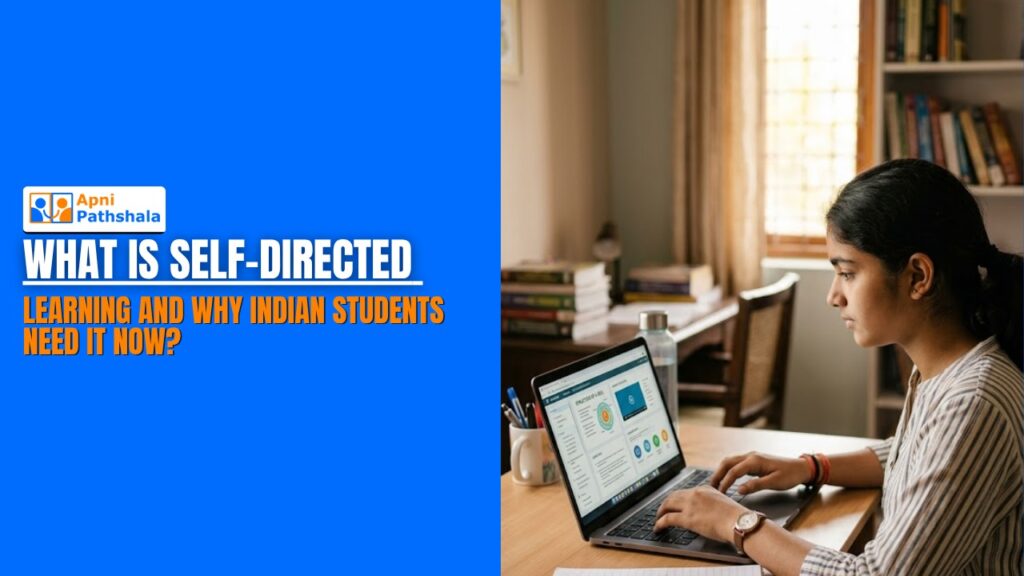
Karan is in Class 9 and scores decent marks, but only when someone is sitting next to him, guiding him every step of the way. The moment his tutor leaves, or his teacher moves on to the next topic, Karan is lost. He knows how to follow instructions. He does not know how to learn on his own. This is one of the most widespread but least discussed problems in Indian education. Our system excels at teaching children to receive information, but rarely teaches them how to seek it themselves. Self-directed learning for Indian students is not a luxury for gifted children. It is a fundamental skill every student needs, and the time to build it is now.
What Is Self-Directed Learning and How Is It Different From Regular Studying?
Self-directed learning is the ability of a student to take ownership of their own education, to identify what they need to learn, find the right resources, study at their own pace, and evaluate their own progress, without waiting for a teacher to tell them what to do next.
This is very different from the way most Indian classrooms operate. Traditional schooling is teacher-directed; the teacher decides what is taught, when it is taught, and how it is assessed. Students are passive receivers. This model works for delivering a standardised curriculum, but it leaves students without the most important skill of all: knowing how to learn independently.
Independent learning, in which Indian students develop through self-directed practice, is the foundation of every successful career. Engineers, doctors, lawyers, and entrepreneurs must continually learn throughout their working lives. The students who thrive are those who have learned how to teach themselves. According to UNESCO’s global education research, self-directed learners consistently outperform teacher-dependent learners in higher education, career adaptability, and lifelong skill development.
Why Indian Students Specifically Need Self-Directed Learning Skills?
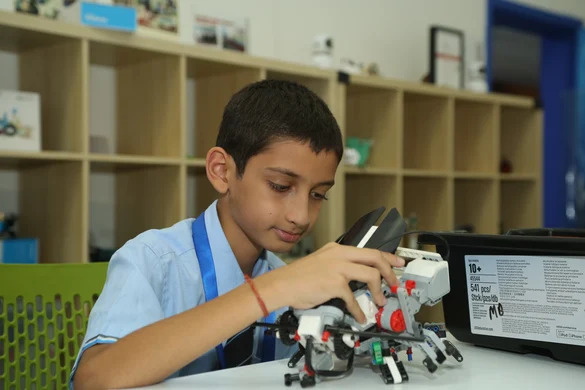
India’s education system is changing rapidly. NEP 2020 emphasises critical thinking, creativity, and independent problem-solving. Competitive exams like JEE and NEET reward deep understanding, not just memorised answers. College admissions increasingly look at projects, portfolios, and independent initiatives alongside marks. The student who can only follow instructions is becoming less competitive, not more.
Building self-study skills that Indian students need also directly addresses one of the most pressing problems Indian families face: dependence on coaching classes. A child who knows how to direct their own learning can use free platforms, practise past papers independently, identify weak areas, and seek targeted help, without a tutor for every subject and every topic.
Here is how parents and students can start building self-directed learning habits today:
- Let the child choose where to start: Instead of always assigning what to study, give your child one session per week in which they choose the subject and approach. This small act of choice builds ownership and initiative, the first building blocks of self-directed learning.
- Teach them to use free learning platforms independently: DIKSHA, Khan Academy, and YouTube EDU have everything a student needs for every subject. But they need to know how to navigate these platforms, search for specific topics, and evaluate which explanations are clearest. Spend one session showing your child how, then step back and let them explore.
- Encourage question-asking over answer-seeking: Self-directed learners are driven by questions, not tasks. When your child encounters something confusing, instead of immediately explaining it, ask: “What do you think it means? How would you find out?” This simple shift trains curiosity over dependence.
- Build a daily independent study block: Even 20–30 minutes per day where the child decides what to review, practise, or explore, without instruction, builds the habit of autonomous learning over time. Start small. The goal is consistency, not duration.
- Use a dedicated computer as the self-learning hub: Autonomous learning children in India develop most effectively when they have a focused, distraction-free device to explore on their own. Apna PC, with preloaded learning tools, safe browsing, and no entertainment distractions, creates the ideal environment for independent study. There is no risk of the child drifting to YouTube or social media. Every session stays productive.
Learn how Apna PC supports independent, student-led learning at home on our How a Personal Computer Helps Students Learn Beyond the Curriculum page.
How the Right Tools Make Self-Directed Learning Natural
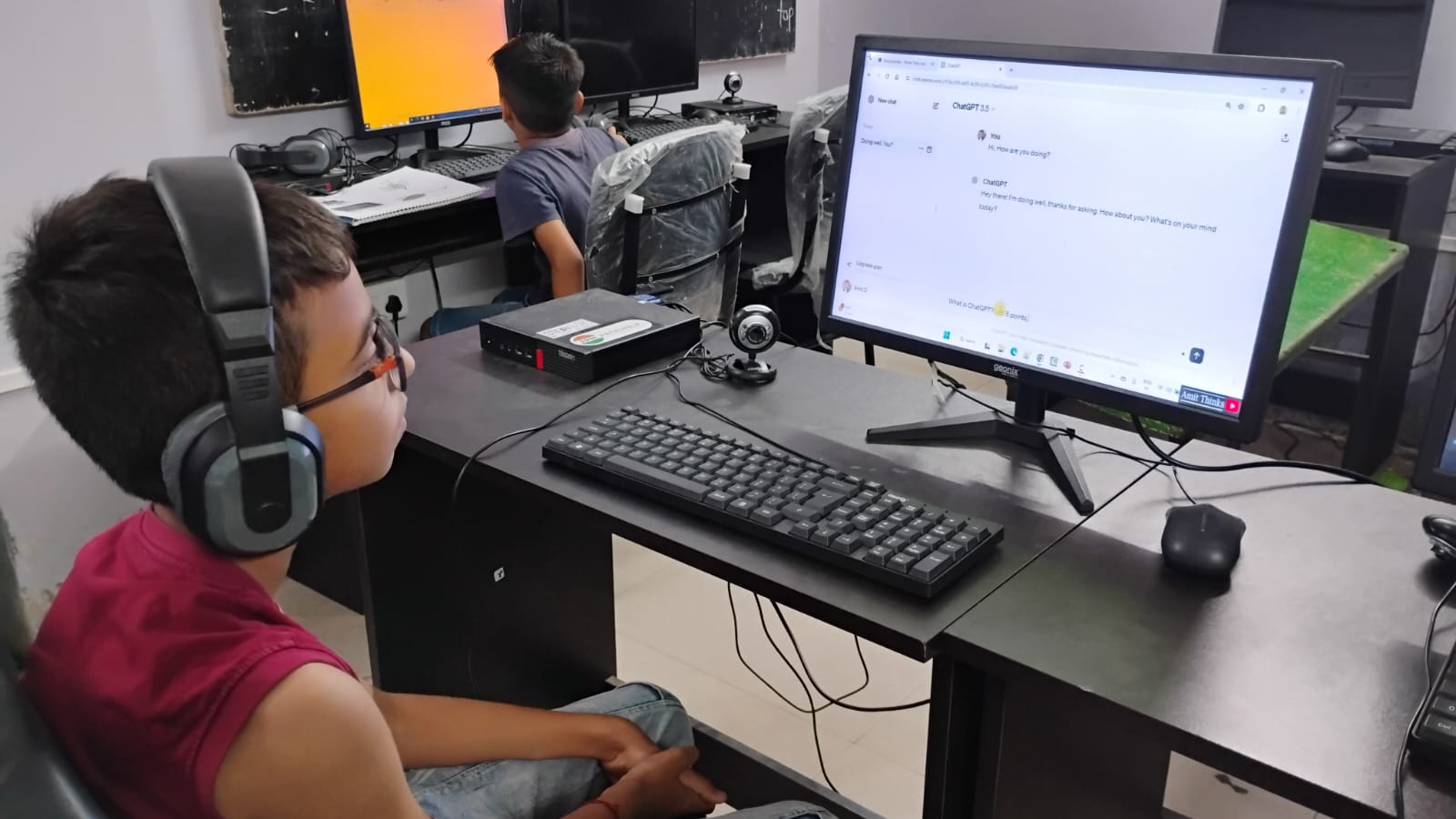
Self-directed learning does not happen by accident. It happens when the environment makes independent exploration feel natural, safe, and rewarding. Two things matter most: the right habits and the right tools.
On the habits side, parents and teachers play a crucial role by gradually stepping back, not abandoning the child, but creating space for them to take initiative. Praise the effort to figure something out independently. Ask “how did you work that out?” instead of just “did you get the right answer?”
On the tools side, the device a student uses shapes how they learn. A cluttered, distraction-heavy general laptop pulls students toward passive consumption, watching, scrolling, and playing. A purpose-built educational computer like Apna PC encourages active engagement, searching, practising, creating, and discovering.
NCERT’s updated learning framework under NEP 2020 explicitly prioritises self-directed, inquiry-based learning as a core outcome of modern Indian education, recognising that the ability to learn independently is as important as any specific subject knowledge.
Apna PC at Rs. 21,000 (shipping and GST excluded) provides the ideal foundation, preloaded with India’s best free learning platforms, built to work offline, and designed to keep every session focused on learning. It is the tool that makes self-directed learning a daily habit rather than an occasional aspiration. Read more about why the right device transforms how students learn on our The Hidden Cost of Not Having a Computer in 2026 page.
The most important thing you can give your child is not a tutor for every subject; it is the confidence and skill to learn without one. Start building that today. Visit apnapc.com to learn more.