

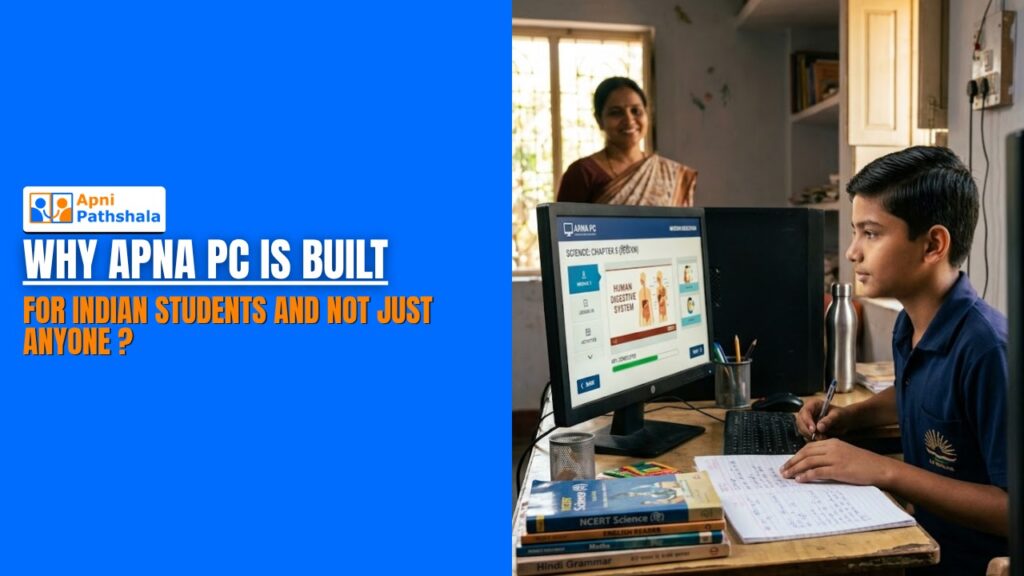
Walk into any electronics store, and you will find rows of laptops, all designed for office workers, gamers, or business travellers. Now try finding one designed for a Class 7 student in Jaipur who needs to practise maths, type Hindi assignments, and access DIKSHA on a device that does not distract her with social media. You will not find one. Because most computers are built for everyone, and when something is built for everyone, it truly serves no one. That is why Apna PC, designed for Indian students, is not a marketing line. It is a design philosophy, every feature, every tool, every decision was made with one specific person in mind: the Indian school student.
What Does “Designed for Indian Students” Actually Mean?
It means the device was not adapted from a Western product or repurposed from a corporate laptop. It means the team behind Apna PC studied how Indian students learn, the textbooks they use, the exams they prepare for, the platforms their schools rely on, the connectivity challenges their homes face, and the budgets their families work with. Then they built a computer around those realities.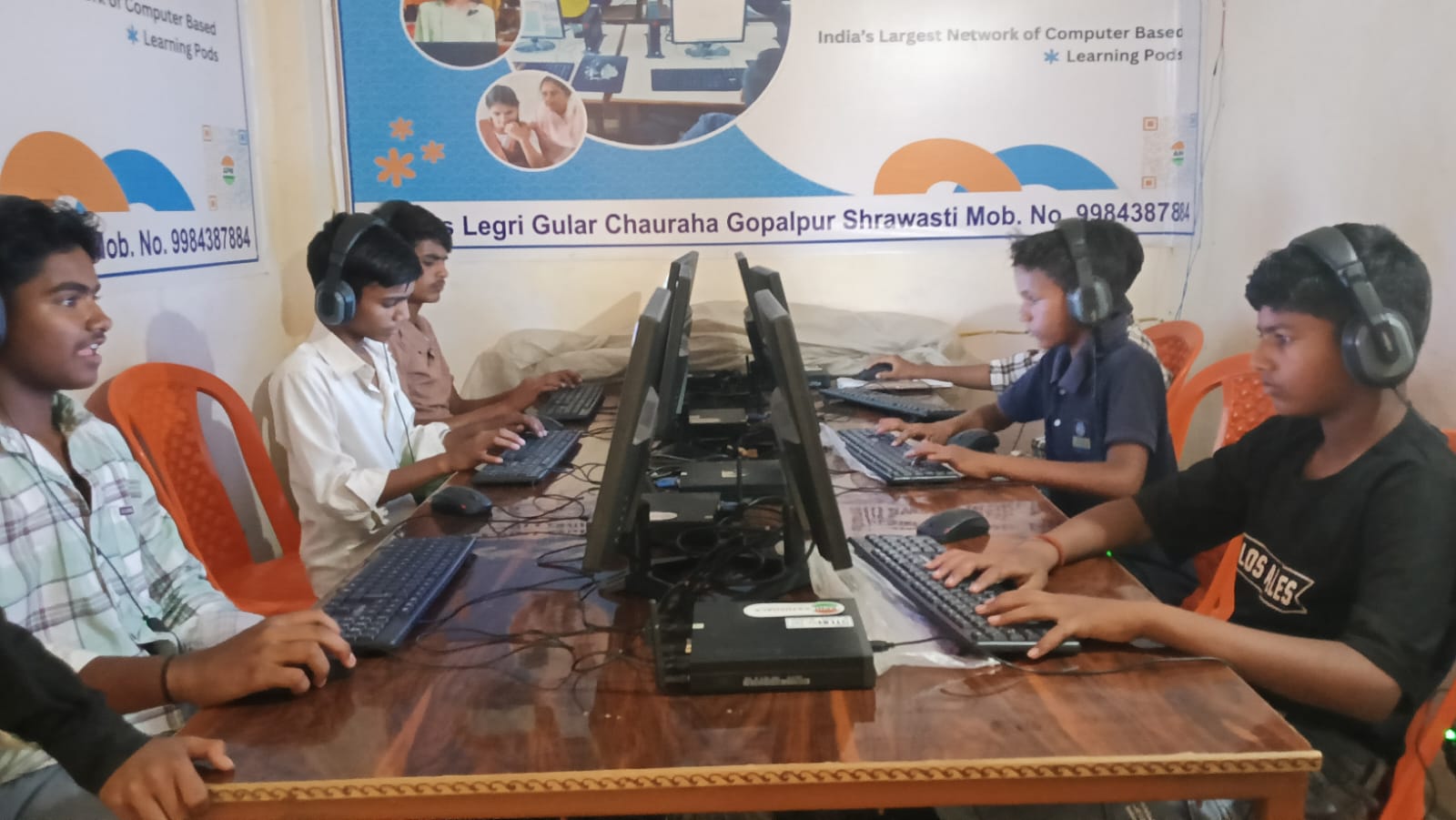
An India-specific education computer needs to handle conditions that a general-purpose device never considers:
- NCERT-aligned content, not generic international material: Indian students study from NCERT textbooks, prepare for CBSE and state board exams, and use platforms like DIKSHA and e-Pathshala. Apna PC comes preloaded with tools and resources aligned to these specific curriculums, not generic Western educational content that does not match what Indian children are actually tested on.
- Hindi and regional language support: Most budget laptops are optimised for English-language software and interfaces. Indian students, especially in Tier 2 and Tier 3 cities, often study in Hindi or their regional language. Apna PC is built with multilingual support that reflects how Indian children actually learn.
- Offline-first design: A student PC in the United States assumes high-speed broadband. A student PC India requires assumes the opposite, that the internet may be slow, intermittent, or unavailable for days. Apna PC’s preloaded learning tools work fully offline, so a child’s education never depends on whether the Wi-Fi signal is strong enough.
- Safe browsing for Indian family values: Indian parents have specific concerns about the content their children encounter online. Apna PC’s built-in safety filters are calibrated for the Indian context, blocking the types of content that Indian families find most concerning, without over-filtering legitimate educational material.
- A price that matches Indian family budgets: A device built for Indian students must be affordable for Indian families, not just tech professionals in metro cities. At Rs. 21,000 (shipping and GST excluded), Apna PC is within reach of families who need it most.
Explore every feature built specifically for Indian learners on our What Is Apna PC page.
How Apna PC Addresses Real Indian Learning Needs
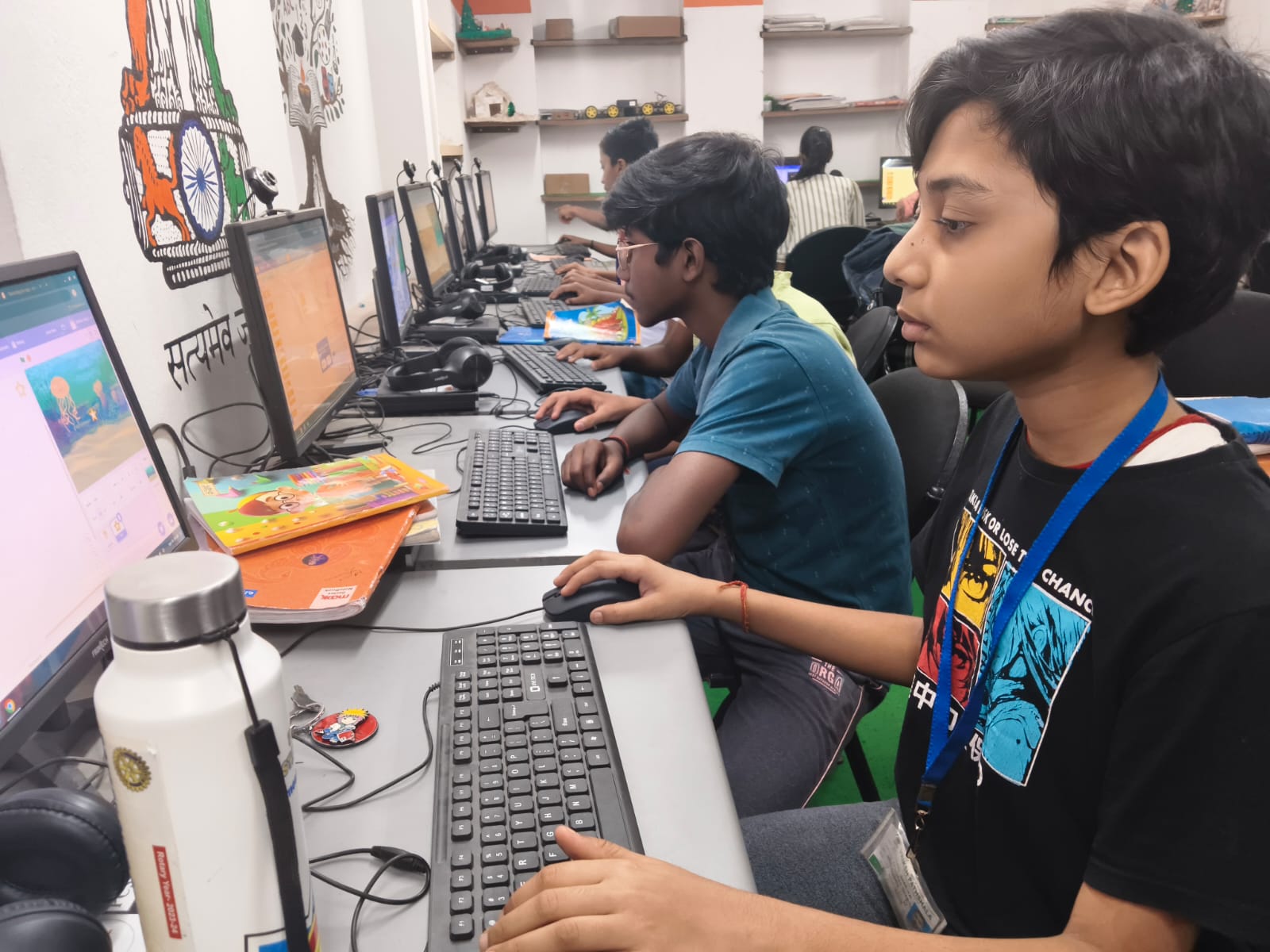
Designing for a specific audience means solving their specific problems, not offering generic features and hoping they are useful. Here is how Apna PC addresses the real learning needs Apna PC India review readers consistently highlight:
Indian students often share devices with siblings or use them in shared family spaces. Apna PC is designed for this, simple enough that multiple students can comfortably use the same device, with individual progress tracked on educational platforms. No complex user account management. No risk of one child’s work interfering with another’s.
Indian schools increasingly assign digital homework, typed documents, online research, and presentation preparation. But most families lack a device suited for these tasks. A smartphone is too small. A shared family laptop is too cluttered. Apna PC provides a clean, focused, education-only environment that makes completing school assignments straightforward and efficient.
Indian competitive exams, JEE, NEET, Olympiads, NTSE, and state entrance tests are all moving to computer-based formats. Students need regular practice navigating digital test interfaces, managing time on screen, and solving problems on a computer. Apna PC gives them the daily device familiarity that builds this confidence naturally over time.
According to UNICEF India’s education research, localised technology tools that align with a country’s curriculum, language, and cultural context produce significantly better learning outcomes than generic international solutions, because they reduce friction between students and the content they need to learn.
Why Generic Computers Fall Short for Indian Students?
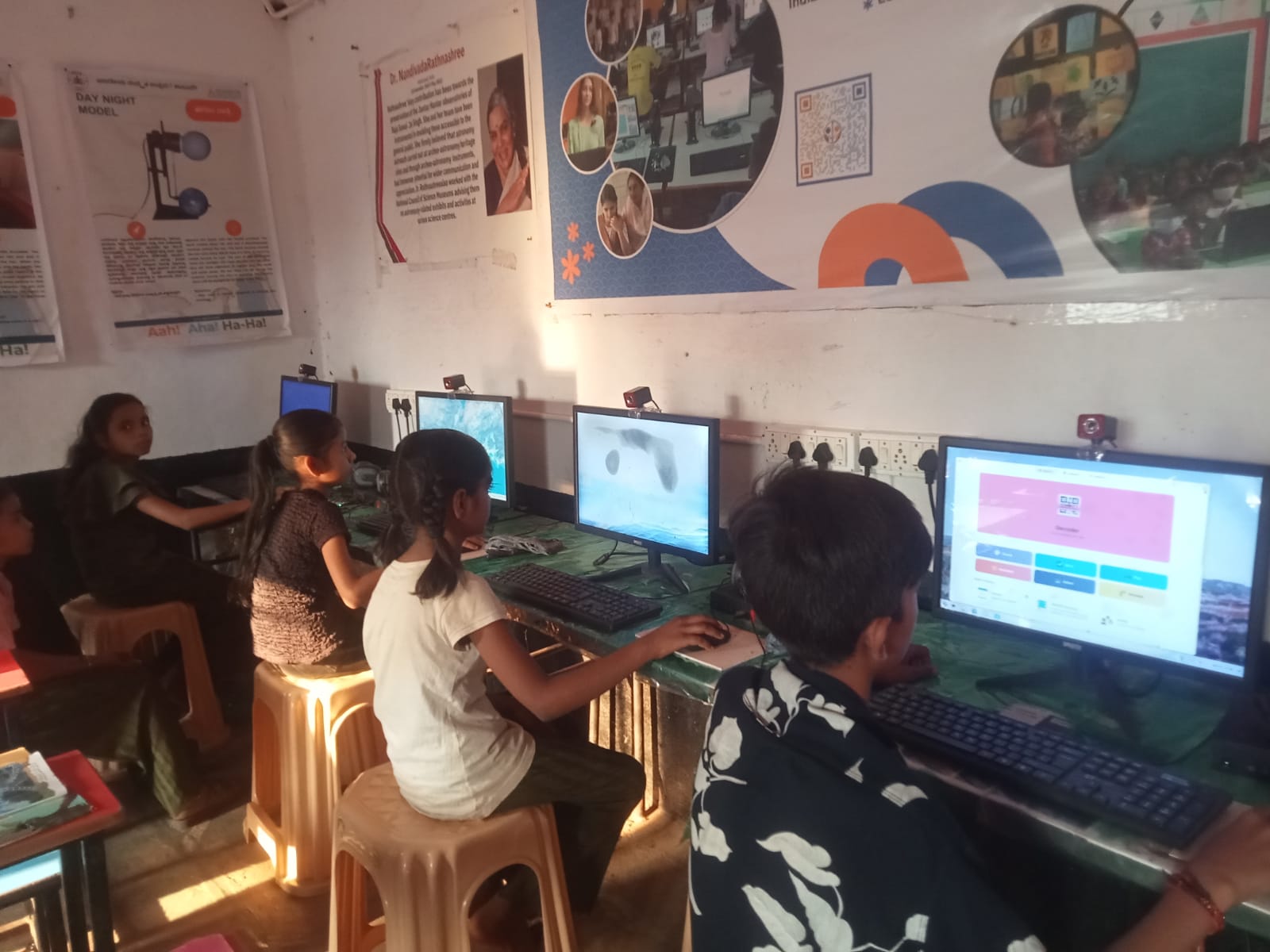
A regular budget laptop, even a good one, was designed for a general user, not a student. It arrives empty. It has no educational content. It has no safety features for children. It comes loaded with trial software, entertainment apps, and notification systems designed to capture attention, the exact opposite of what a student needs.
Parents then spend weeks trying to transform this general device into something child-appropriate: installing parental controls, downloading educational apps, removing distractions, and configuring safe search. Most Indian parents, especially those who are not tech-savvy, never complete this process. The computer remains a source of conflict: the child wants to use it for entertainment, the parent wants it used for education, and neither side is fully satisfied.
The NCERT framework for digital learning in Indian schools emphasises that the effectiveness of educational technology depends heavily on its alignment with the local curriculum and learning context. A device that requires extensive modification to become education-ready is already starting from behind.
Apna PC eliminates this entire struggle. It arrives education-ready. It stays education-ready. No modification needed. No ongoing configuration. No parent-child battles over screen time versus study time, because the device is built to serve one purpose from the moment it is switched on.
Read why having the right device, not just any device, changes everything on our The Biggest Advantage a Student Can Have Today page.
Apna PC was not built for the world. It was built for India, for the student in Jaipur, the teacher in Patna, the parent in Nashik, and the school principal in Indore who all want the same thing: a computer that truly understands what Indian education demands. Visit apnapc.com to learn more.