

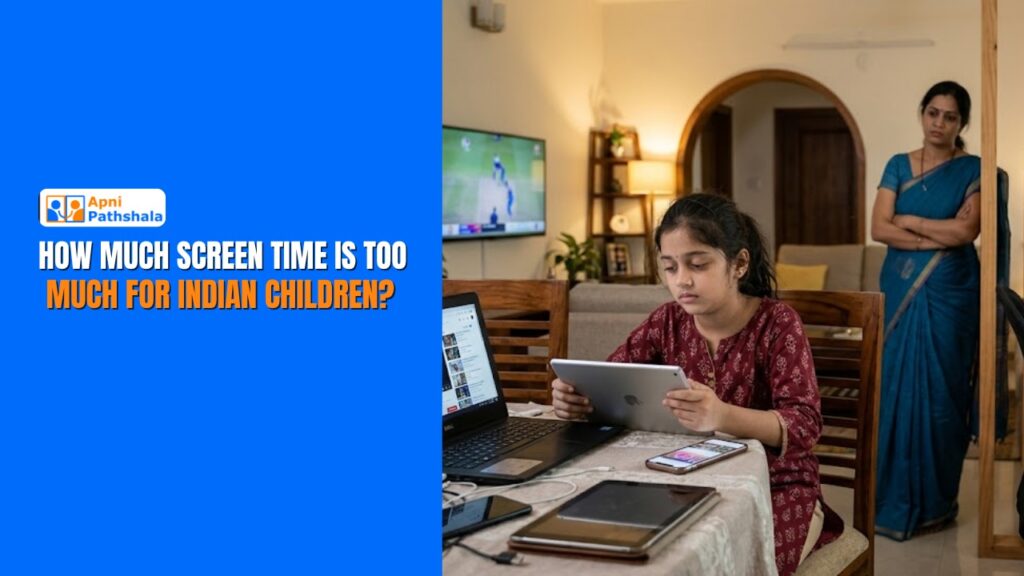
Riya is in Class 6. After school, she spends nearly three hours on YouTube, another hour on her phone, and then falls asleep watching a show on the family tablet. Her mother is worried, but she is not sure where to draw the line. This is the reality for millions of Indian families today. Understanding the right screen time limit for children in India is no longer optional. It is one of the most important things a parent or teacher can do right now.
What Is a Healthy Amount of Screen Time for Children?
Experts and health organisations broadly agree on age-based guidelines for healthy screen time kids that should follow:
- Under 2 years: No screen time at all, except video calls with family.
- 2–5 years: Maximum 1 hour per day of high-quality, educational content.
- 6–12 years: Up to 2 hours of recreational screen time per day.
- Teenagers: Screens should not replace sleep, physical activity, or face-to-face interaction.
These are not just numbers. They are based on how developing brains process information, form habits, and rest. A child who watches 5 hours of random videos daily is not just losing time, they are forming habits that become harder to break with age.
What Are the Effects of Too Much Screen Time on Children?
The effects of screen time on children go far beyond tired eyes. Here is what research and real classroom experience shows:
- Poor sleep: Blue light from screens suppresses melatonin, making it harder for children to fall asleep and stay rested.
- Short attention span: Fast-paced videos and social media train the brain to expect constant stimulation, making it hard to focus in class.
- Delayed language development: Young children learn language best through real conversations, not passive screen watching.
- Reduced physical activity: More screen time usually means less outdoor play, which affects fitness, coordination, and mood.
- Emotional sensitivity: Children exposed to unfiltered internet content early often show signs of anxiety, comparison, and low self-esteem.
These effects are not scare tactics. Teachers across India report seeing more distracted, restless students in classrooms over the last five years. The pattern is clear. Why This Matters More for Indian Families
In India, screens have become the default babysitter, study tool, and entertainment system, all rolled into one device. For families in Tier 2 and Tier 3 cities, where structured after-school activities may not be available, children often fill free time with screens.
Digital wellness for children India requires a different approach than simply switching off the Wi-Fi. Children need guided screen time, content that teaches, tools that help them grow, and limits that protect their health.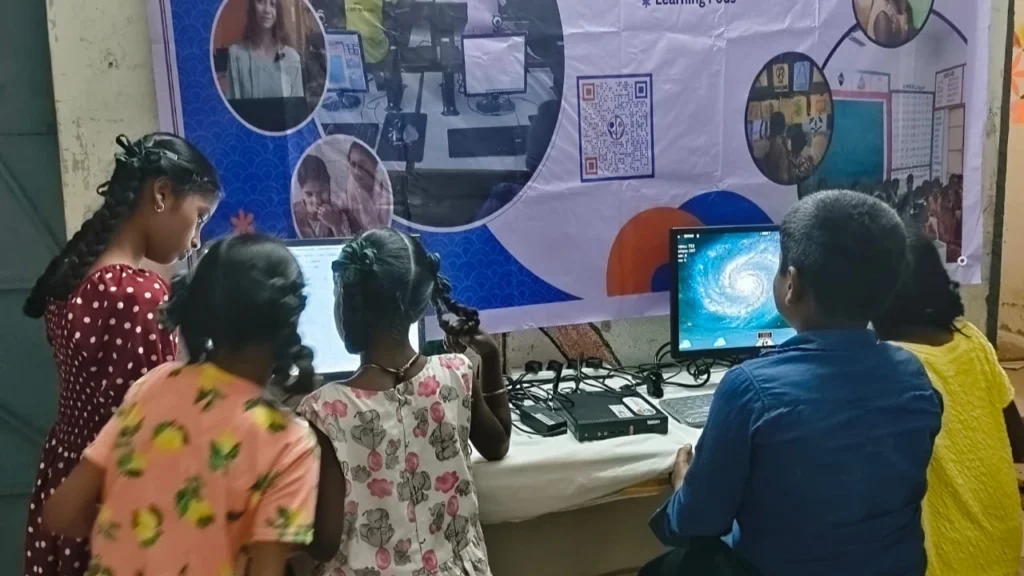
This is where purpose-built devices like Apna PC make a real difference. Unlike a regular smartphone or a shared family tablet, Apna PC is designed for educational use, with safe browsing, preloaded learning tools, and no access to addictive entertainment apps. At Rs. 21,000 (shipping and GST excluded), it gives families a device that works for the child, not against them.
Who Needs to Act on This?
- Parents: Set clear screen time rules at home. Create phone-free meal times and screen-free bedrooms. Know what your child is watching.
- Teachers: Talk openly about screen habits in class. Assign offline activities. Encourage reading and hands-on projects as alternatives.
- Schools and NGOs: Build digital literacy into the curriculum, not just how to use devices, but how to use them wisely and safely.
Hours of studying isn’t the problem. The way we learn is. See what needs to change.
Screen time is not the enemy, unguided, unlimited screen time is. With the right tools, clear boundaries, and a little awareness, parents and teachers can help children build healthy digital habits that last a lifetime.
Visit apnapc.com to learn more.