

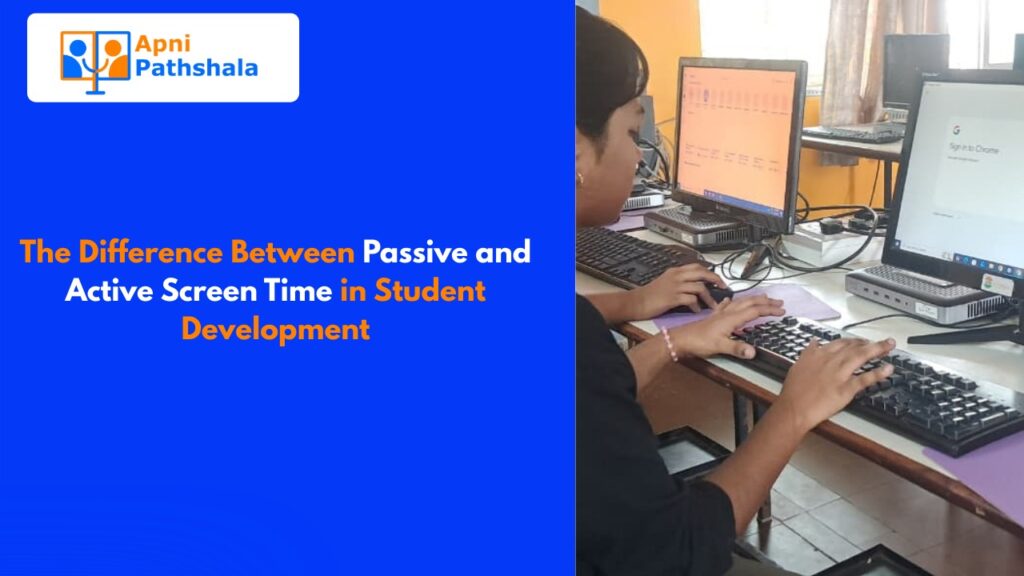
Ask most parents how they feel about their child’s screen time and you’ll get a worried look. “Too much,” most of them say. And they’re probably right that the quantity is worth watching. But here’s what often gets missed in the screen time conversation: not all screen time is equal. A child spending two hours solving math puzzles is having a fundamentally different experience from one spending two hours watching autoplay videos.
Understanding the difference between passive and active screen time and being able to see which one your child is doing is one of the most practical things a parent can know. Tools like Apni Prerna help parents make that distinction clearly.
What Passive Screen Time Actually Means
Passive screen time is consumption without engagement. It’s watching videos that autoplay, scrolling through content feeds, or playing games that require minimal thinking. The defining characteristic is that the child is mostly receiving taking in content without actively producing, solving, or creating anything.
This isn’t necessarily harmful in small doses. Everyone needs downtime, and entertainment has its place. But extended passive screen time especially the kind designed to keep children engaged through endless content loops can crowd out the kinds of activities that actually develop skills.
Research on passive entertainment consumption consistently shows it does very little for cognitive development, academic skills, or creative thinking. The brain isn’t being challenged. It’s being entertained. That’s fine occasionally. It’s a problem when it dominates a child’s digital time.
What Active Screen Time Looks Like
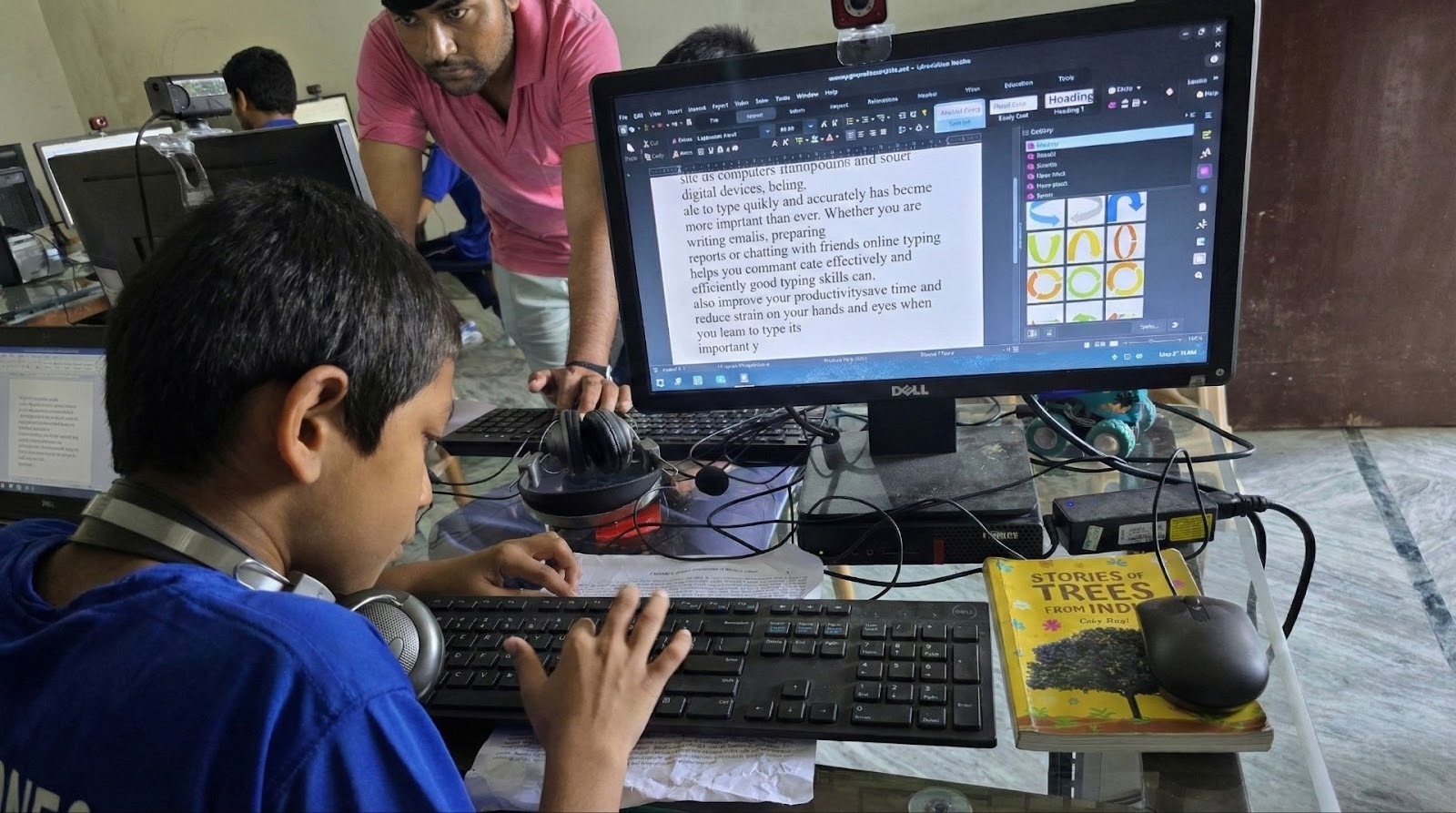
Active screen time requires the child to think, create, decide, or solve. It includes working through an educational module, writing a story or report, coding, creating a drawing or presentation, practising typing, researching a topic they’re curious about, or working through a puzzle or educational game that requires genuine thinking.
The difference is engagement. In active screen time, the child isn’t just watching or scrolling they’re doing something. Their brain is working. They’re building skills or knowledge, even if it doesn’t feel like “school.”
According to UNICEF’s report on children in the digital age, active forms of digital engagement creating, exploring, communicating purposefully are associated with positive developmental outcomes, while excessive passive consumption is linked to reduced attention spans and lower academic engagement. The distinction isn’t just academic; it has real consequences for children’s development.
How Apni Prerna Helps Parents See the Difference
One of the most useful things Apni Prerna does is help parents see not just how long their child was on a screen, but what they were doing. Was the time spent in a learning application? Working through exercises? Exploring educational content? Or was it mostly entertainment?
This visibility changes the conversation parents can have with their children. Instead of “you’ve been on the computer too long,” the conversation becomes “I can see you spent a lot of time on science today what were you learning about?” Or: “I notice you haven’t opened any learning apps this week. Let’s talk about that.”
That kind of informed conversation is far more useful than time-based rules alone. Two hours of active learning time is worth more than twenty minutes of passive consumption. Apni Prerna helps parents see the reality of which category their child’s screen time falls into.
Teaching Children to Choose Active Over Passive
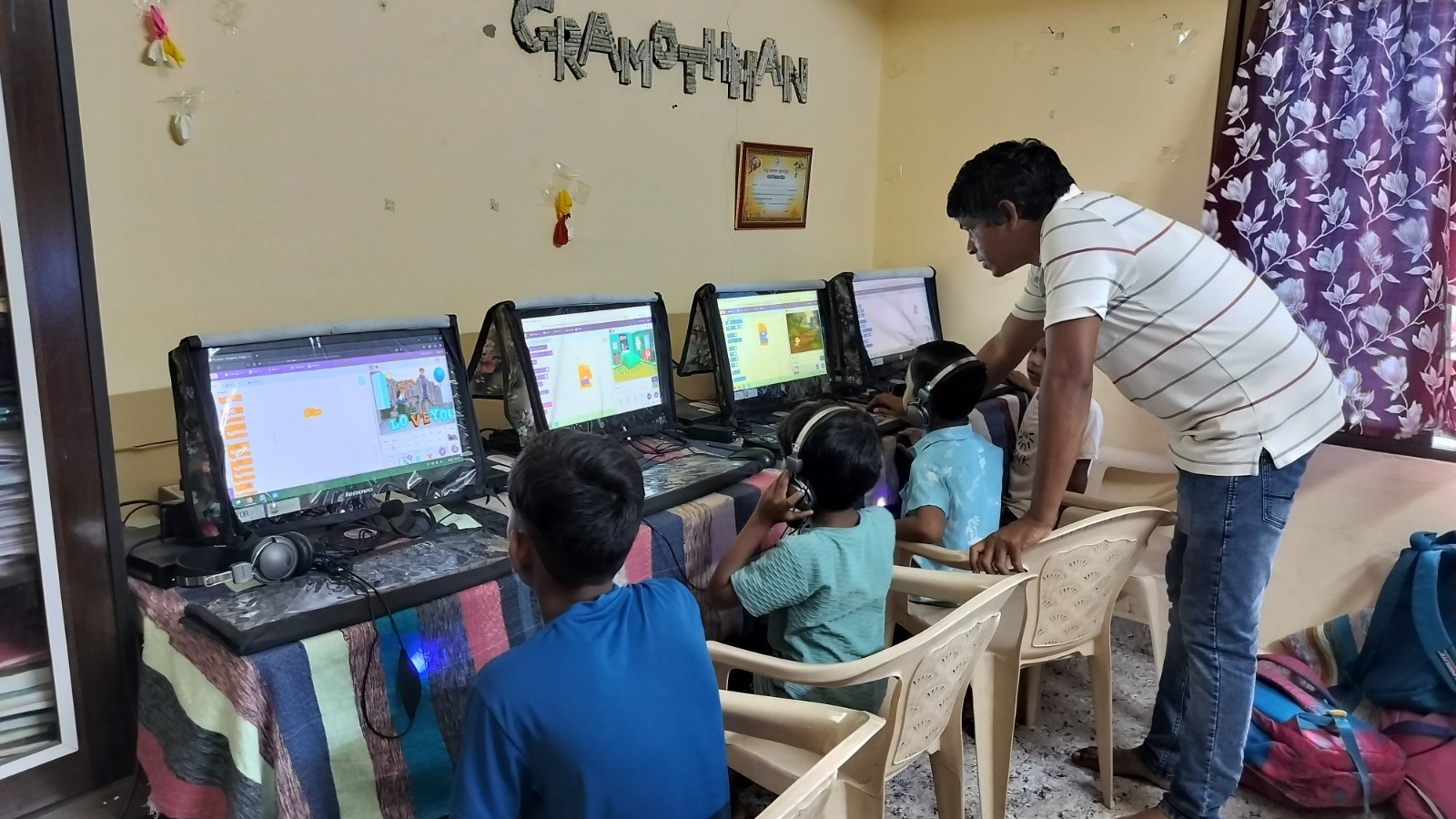
The goal isn’t to ban passive screen time entirely that’s both impractical and unnecessary. The goal is to help children develop awareness and preference for active engagement. When children understand the difference and start to notice how they feel after different kinds of screen time, many of them start making better choices on their own.
A child who finishes a challenging educational game feeling proud of what they figured out has a different relationship with their device than one who spent the same time watching videos and feels vaguely empty afterward. That self-awareness takes time to develop, but parents and tools like Apni Prerna can nurture it.
The Ministry of Education’s digital wellness guidelines encourage educators and parents to focus on quality of digital engagement rather than just quantity. That principle is at the heart of what makes Apni Prerna useful it shifts the frame from “how much” to “how well.”
See how screen time vs skill time works in practice and what parents are often getting wrong in this conversation. The distinction between passive and active engagement is the starting point for a much healthier relationship with digital learning.