

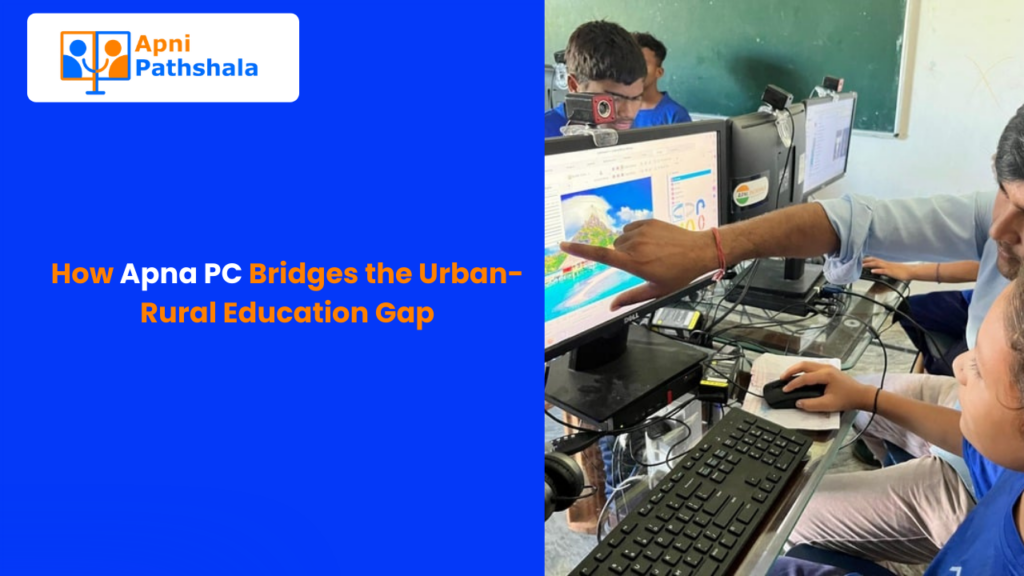
For decades, the conversation around education in India has circled back to the same uncomfortable truth: the quality of learning a child receives often depends more on where they were born than how hard they work. A student in Mumbai has access to a computer lab, high-speed internet, and digital resources that a student in a small village in UP or Bihar could only dream of. Apna PC was created to challenge that reality, one refurbished computer at a time.
The Real Cost of the Digital Divide
When we talk about the education gap between urban and rural India, we usually frame it as a problem of schools, teachers, or curriculum. But underneath all of that sits something more fundamental: access to technology. According to UNESCO’s ICT in Education initiative, digital literacy is now considered a core skill, as essential as reading and writing, for participating in the modern economy.
Yet millions of rural students complete their schooling without ever touching a personal computer. They learn about spreadsheets from a textbook. They read about the internet in classrooms that have no connection to it. By the time they reach higher education or the job market, they are already behind peers who have spent years getting comfortable with technology at home.
This is not a problem of effort or intelligence. It is a problem of access, and access is something that can be fixed.
What Apna PC Actually Does
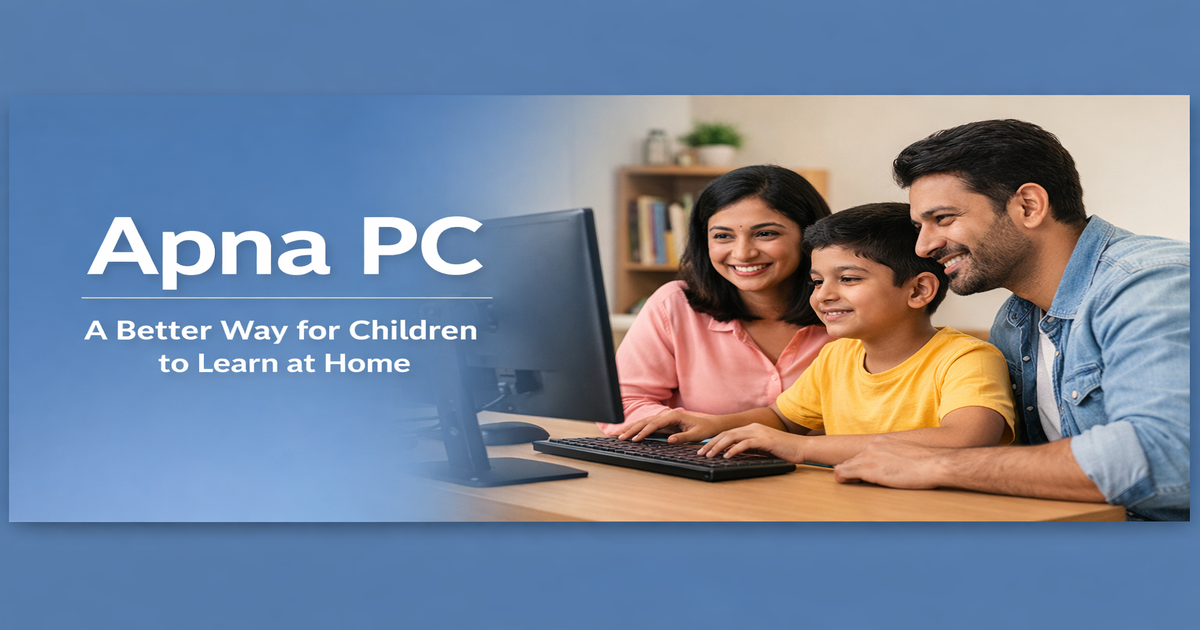
Apna PC sources, refurbishes, and distributes computers to students and families who need them most. The machines are fully functional, tested, and come with the software students need to study, explore, and grow. The goal is simple: make sure that a child in a rural district has the same basic tools as a child in any city. As we explore in our post on making digital access real for every learner, the impact goes far beyond just owning a device.
But the work goes beyond just handing over a device. Apna PC also ensures that families understand how to use what they receive. For many households in rural areas, this is the first computer to ever come through the door. That moment matters. It shifts what a child believes is possible for themselves.
When a student can research their homework, practice typing, watch educational videos, and explore topics that genuinely interest them, learning stops being something that only happens inside a classroom. It becomes a habit they carry everywhere.
Changing What Rural Students Believe About Themselves
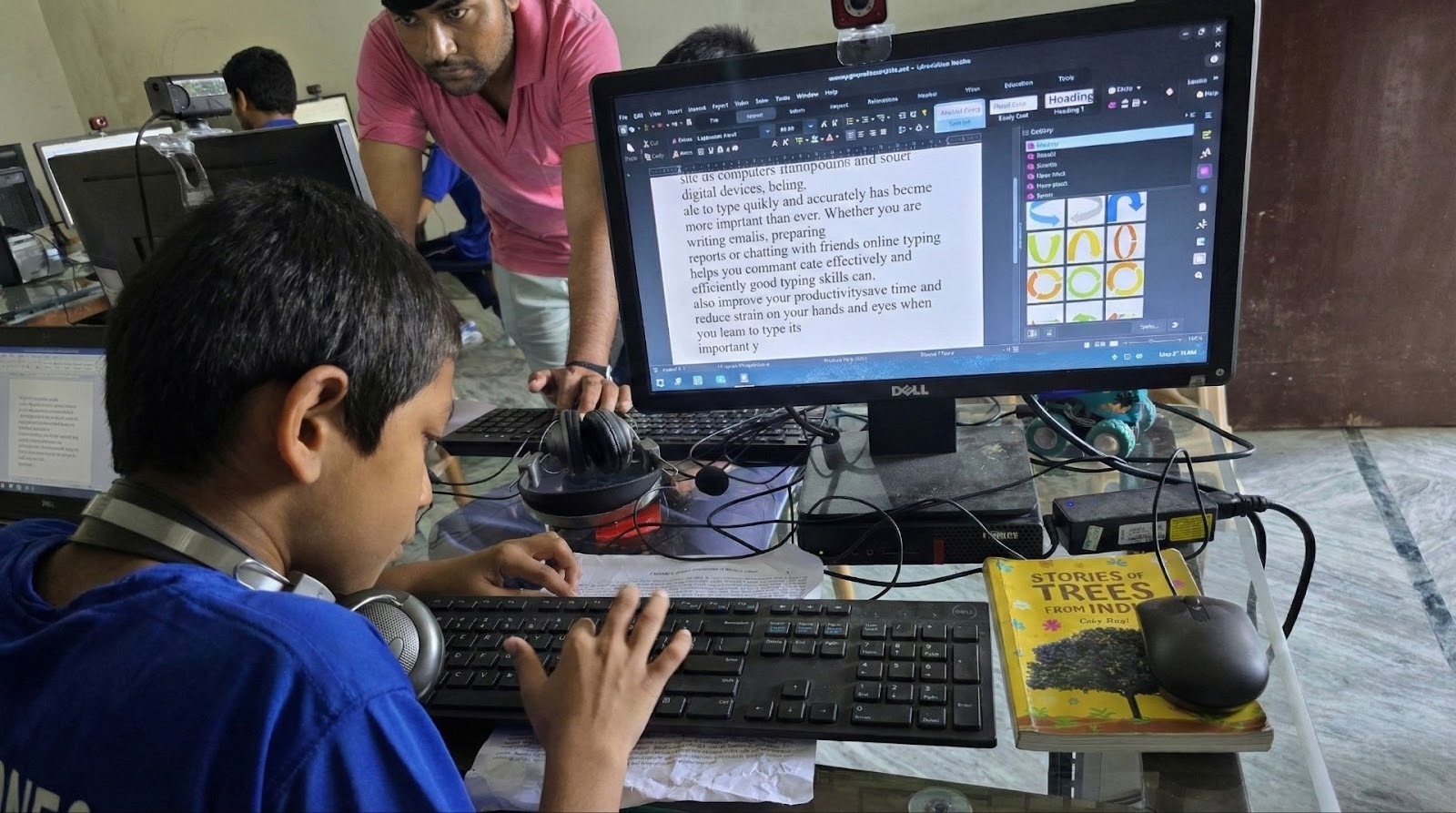
One of the less talked about effects of the digital divide is how it shapes ambition. When a child grows up never seeing certain tools, they tend not to imagine futures that require those tools. They do not picture themselves as engineers, designers, or developers, not because they lack ability, but because nothing in their environment has shown them that those paths are available.
Apna PC addresses this quietly but powerfully. When a student from a small town sits down with a computer and starts building something, figuring something out, or simply exploring freely, it changes their frame of reference. Suddenly, the futures they allow themselves to imagine grow larger.
Teachers and parents in communities where Apna PC has worked have noted shifts in how students talk about their goals. The confidence that comes from digital competence bleeds into everything else.
A Long-Term Investment in Equity
Bridging the urban-rural education gap is not a short-term project. It requires sustained effort, the right partnerships, and tools that actually reach the people who need them. Refurbished computers are one of the most cost-effective ways to accelerate that effort. India’s Ministry of Education has consistently highlighted digital equity as a national priority, recognising that technology access is foundational to achieving learning outcomes across every district.
New devices are expensive and often out of reach for government programmes running on thin budgets. Refurbished machines, properly restored and distributed, can reach three to four times as many students for the same cost. That math matters when you are trying to move the needle at scale.
Apna PC is part of a broader shift in how we think about educational equity. The idea that quality technology has to be new, expensive, and concentrated in cities is outdated. What matters is that students have something that works, that they can learn on, and that opens doors rather than closing them.
Conclusion
The education gap between urban and rural India is real, but it is not inevitable. Every computer that reaches a student who would otherwise go without is a small act of equity with long-term consequences. Apna PC is doing that work steadily, making sure that geography stops being destiny.
If you believe every student deserves a personal computer, the work Apna PC is doing is worth knowing about, worth supporting, and worth spreading.