

Every parent has had that moment. Your child comes home with a poor score, or seems confused about something that should be straightforward, and you realise you are not entirely sure how long the problem has been there. Learning gaps in children are remarkably common, and they are also remarkably easy to miss until they compound into something bigger. Apni Prerna helps parents catch those gaps early, before they turn into a pattern of falling behind.
What Learning Gaps Actually Look Like
Learning gaps are not always obvious. A child with a gap in foundational mathematics might do fine for a while by memorising procedures, until the class reaches a topic that requires genuine understanding of the concept they missed. A child who has not solidified reading comprehension might keep up in early grades but struggle sharply when texts become more complex.
The tricky thing about learning gaps is that children often develop workarounds that hide them from parents and teachers. They copy from friends, focus on parts of a subject they do understand, or rely on rote memory to get through tests. By the time the gap becomes visible, it has usually been growing for months. NCERT’s foundational learning frameworks stress that competency-based assessment tracking whether students truly understand rather than just recall is essential to identifying such gaps before they widen.
Early identification is the only reliable way to address this, and that requires parents to have better information than just a report card.
How Apni Prerna Surfaces What Is Being Missed
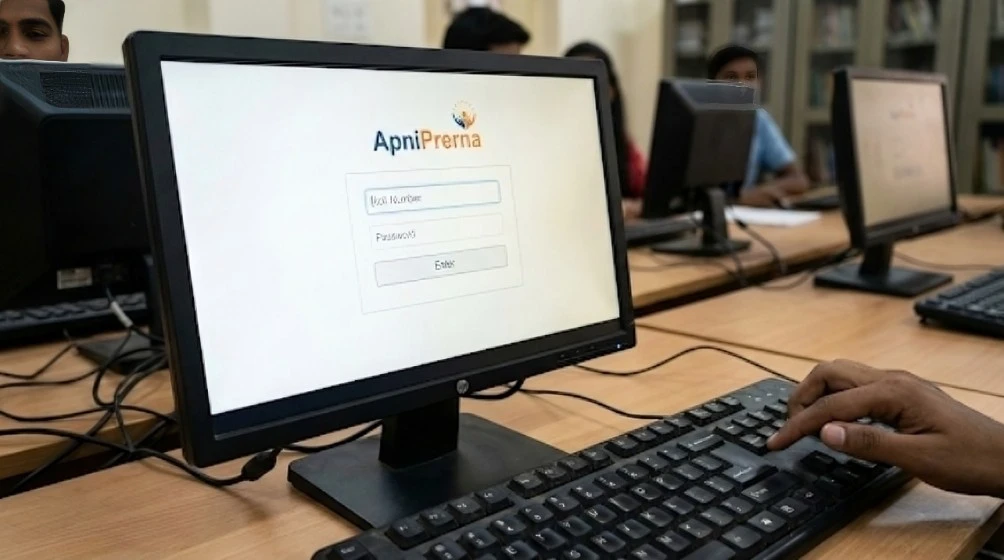
Apni Prerna gives parents structured ways to observe and assess their child’s learning on an ongoing basis. Rather than waiting for formal assessments, parents are guided through simple activities and conversations that reveal what a child genuinely understands versus what they can reproduce on demand.
The platform helps parents ask better questions. Instead of asking a child what they learned in school today and accepting “nothing much” as an answer, parents are shown how to probe specific areas gently, in ways that feel like conversation rather than examination. A child who can explain a concept in their own words has understood it. A child who hesitates or retreats to memorised phrases probably has not.
Apni Prerna also helps parents track patterns over time. A single bad day tells you very little. A consistent pattern of confusion around a particular type of problem tells you a great deal. The platform makes it easier to see those patterns. This is the principle behind our deeper look at Apni Prerna’s unified learning dashboard — making invisible learning visible so parents and students can act on real information.
The Role of Parents in Spotting What Schools Miss
Schools are managing large groups of students with a single teacher. It is structurally very difficult for a teacher to catch every learning gap in every student, especially in classes of thirty or forty. Parents have something teachers cannot: one on one time with their child and intimate knowledge of how their child behaves when confused, frustrated, or simply going through the motions.
Apni Prerna bridges the gap between home and school by helping parents become more informed observers of their child’s learning. This is not about turning parents into teachers. It is about helping them notice when something seems off and then have more productive conversations with teachers about it.
When a parent walks into a parent-teacher meeting with specific observations rather than general concerns, the conversation is more useful for everyone. The teacher can target their support more effectively. The child gets addressed directly rather than lost in a general assessment.
From Identification to Action

Spotting a learning gap is only the first step. Apni Prerna also helps parents understand what to do once they have identified an issue. The platform suggests resources, activities, and approaches that are appropriate to a child’s age and the specific nature of the gap.
In many cases, small consistent interventions at home can close a gap before it becomes a serious problem. Fifteen minutes of focused practice on a weak area, done regularly and gently, can produce remarkable results over a few weeks. Parents do not need to be subject matter experts to facilitate this. They need the guidance to know what to work on and the patience to do it consistently.
Apni Prerna provides that guidance in a form that is accessible to parents regardless of their own educational background. It treats parents as capable partners in their child’s education rather than passive spectators waiting for school to handle everything. UNICEF’s research on family engagement in education consistently shows that active parental involvement in learning, especially at the early stages, is one of the strongest predictors of long-term academic success.
Conclusion
Learning gaps are not a reflection of a child’s potential. They are a reflection of information that was missed or not fully absorbed, usually through no fault of anyone. What matters is how quickly they are caught and addressed. Apni Prerna gives parents the awareness and the tools to do that catching before gaps become crises.
If you have ever felt unsure about whether your child is actually understanding their schoolwork or just getting through it, Apni Prerna is the perfect solution for meaningful learning and is worth exploring today.