

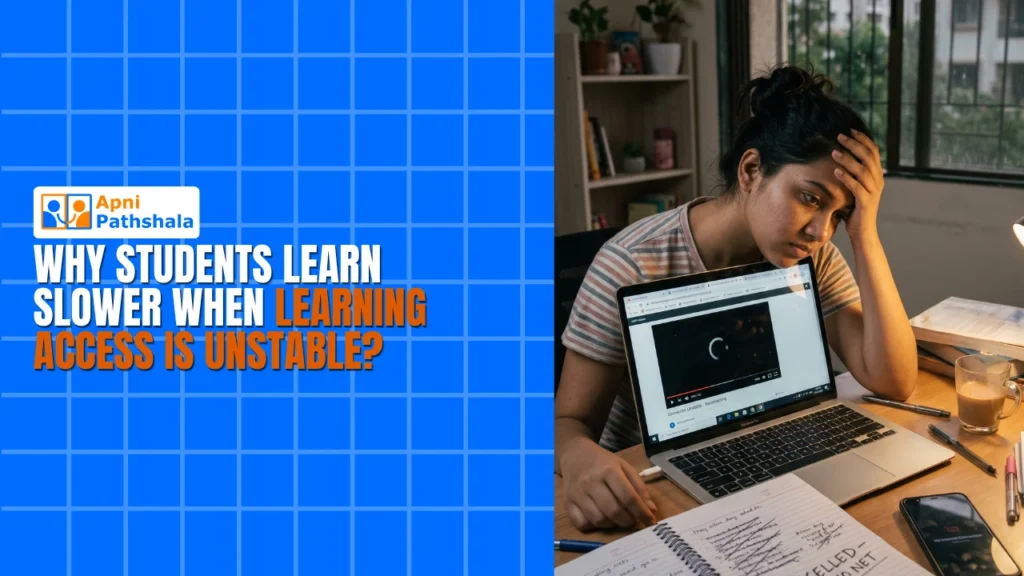
Many Indian students sit down to study, and within minutes, something goes wrong. The shared tablet runs out of charge. The internet drops. The downloaded lesson didn’t finish loading. They try to move on, but the moment is already gone. This is what unstable digital access for students looks like in practice: not a dramatic crisis, but a quiet, daily disruption that slows down learning in ways most people don’t notice until the damage is already done.
What “Unstable Learning Access” Really Means?
In India, students don’t always face learning challenges because of a lack of effort or poor teaching. Often, the problem is much more practical and much more fixable. Unstable learning access means a student does not have reliable, independent access to the tools they need to study consistently.
That could look like the following:
- Sharing one smartphone between three siblings
- Borrowing WiFi that stops working after 9 PM
- Using a school lab that locks up after the bell rings
- Watching a lesson that freezes mid-explanation because of a slow connection
- Losing a full study session because someone else in the family needed the device urgently
These are not rare situations. For millions of students across Tier 2 and Tier 3 cities in India, this is everyday reality. And the damage doesn’t announce itself. It builds quietly, a missed concept here, a skipped chapter there, until the gap becomes too wide to ignore.
Data from the UNICEF India education report confirms that children without reliable learning infrastructure fall behind not because they lack ability, but because inconsistent access breaks the rhythm of learning before it ever has a chance to build.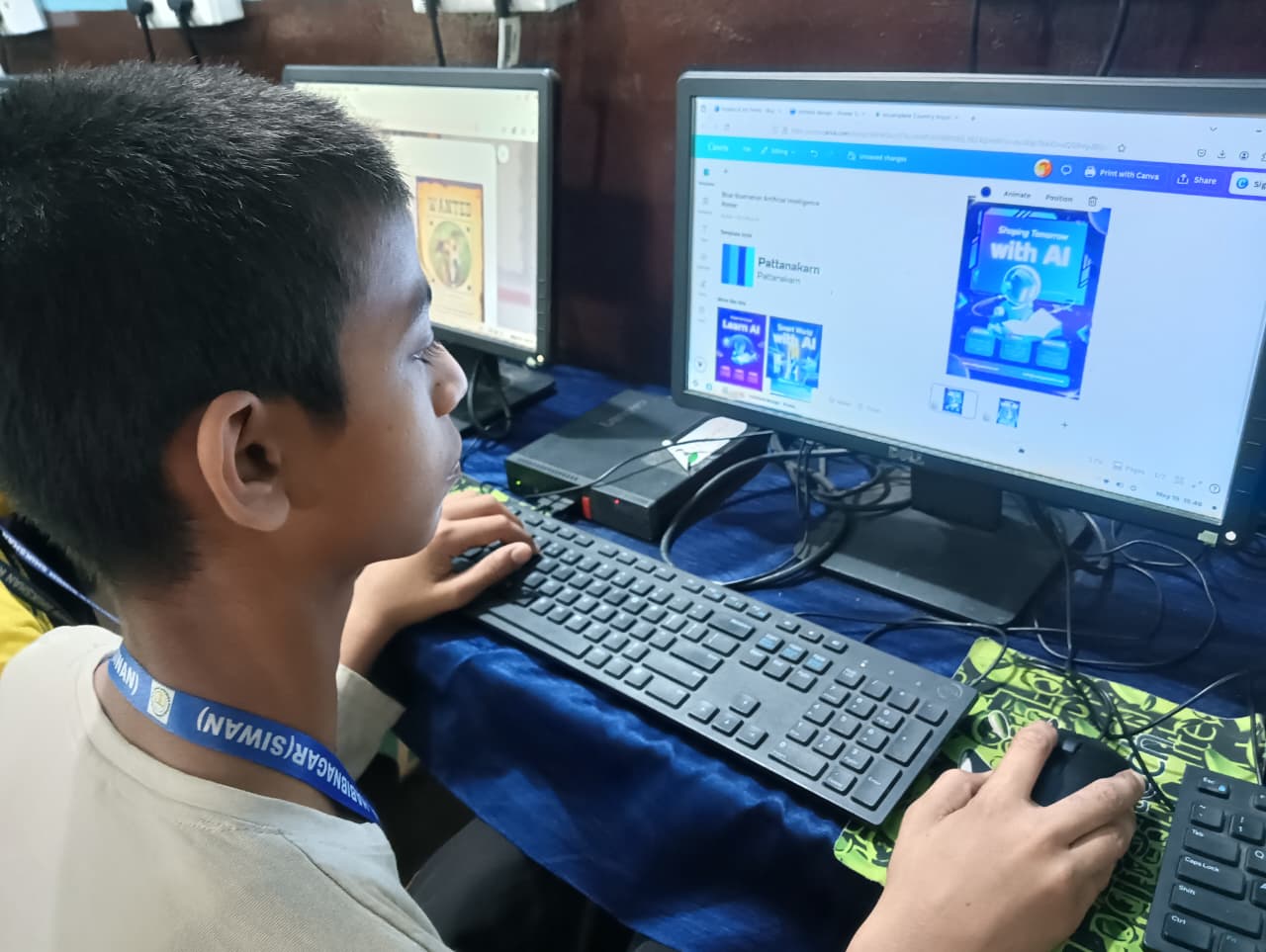
How Interrupted Access Disrupts the Way Students Learn
Learning is not just about how many hours a student sits with a book. It is about consistency, momentum, and repetition. When online learning problems interrupt a student’s study routine, the effects go far deeper than a single missed lesson.
Focus breaks are expensive to recover from. When a device dies mid-session, or the internet drops while a concept is being explained, a student doesn’t just lose time. They lose the thread of thought. Research suggests it takes 15–20 minutes to return to the same level of concentration after an interruption. Multiply that by daily disruptions across weeks and months, and you begin to see how much productive study time simply disappears.
Concepts don’t stick without repetition. A student who can watch an explanation once, on a borrowed phone in a limited window, is not learning the same way as a student who can pause, rewind, and revisit until the concept makes sense. Repetition is how short-term memory becomes long-term understanding. Unstable access interrupts that process.
Self-paced learning becomes impossible. NCERT (National Council of Educational Research and Training) consistently emphasizes the value of self-directed study for students. But self-directed study requires self-controlled access. A student who depends on a shared device cannot set their pace. They study on someone else’s schedule, and that is a fundamental disadvantage.
Over time, these small daily gaps compound. What starts as a missed explanation becomes a missing foundation, and a missing foundation makes every next chapter harder to build on.
Why Technology Access in Education Cannot Wait
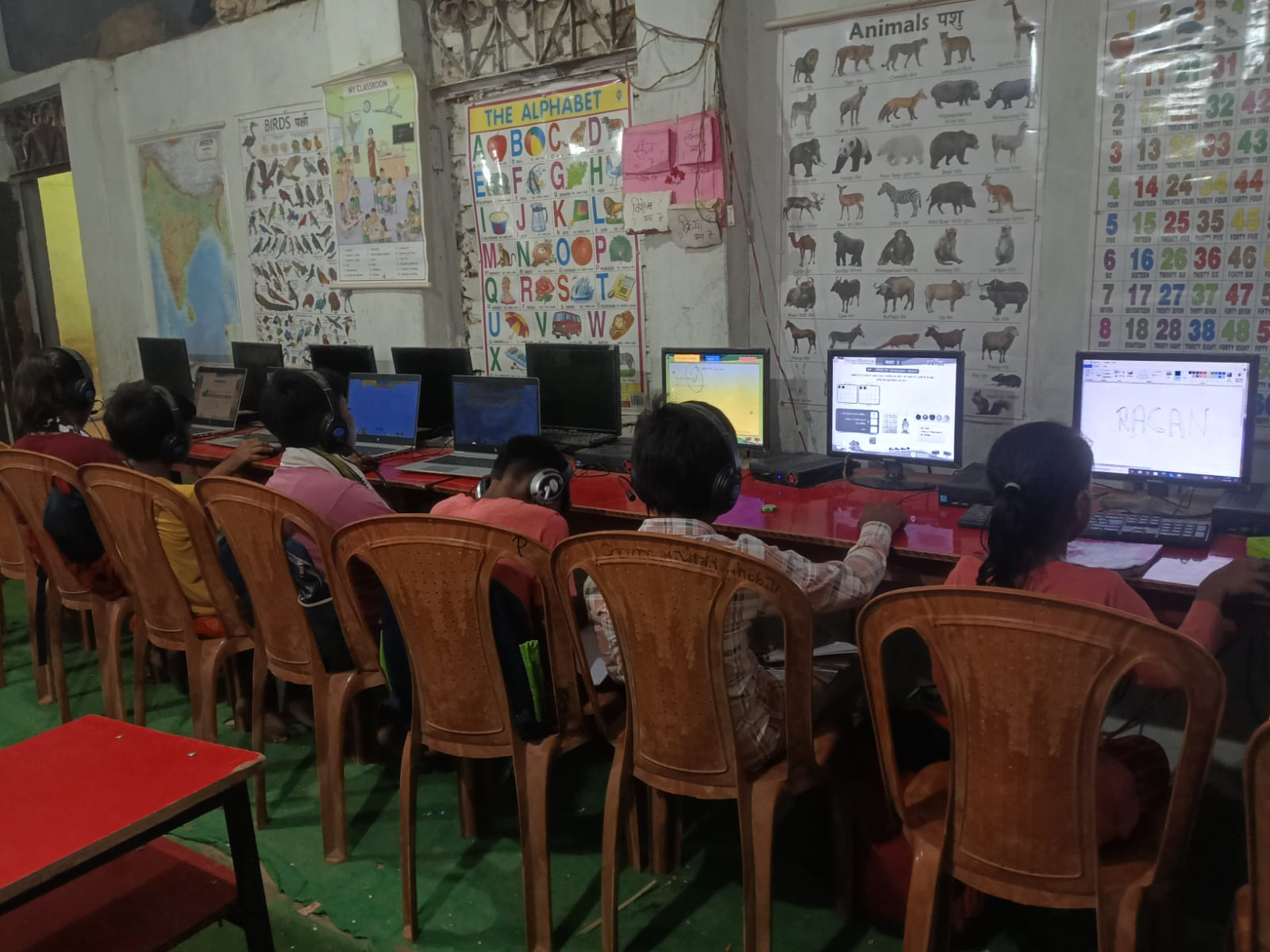
Stable technology access in education is often talked about as a future goal, something India is working toward. But for students who are already using digital tools every single day, it is an urgent present reality.
India’s education system has shifted fast. Assignments arrive on WhatsApp. Notes are shared as PDFs. Exams have online components. Teachers post explanations on YouTube. Yet for many families, device access has not kept pace with these new demands.
When a student has to wait for a sibling to finish using the phone, or when a data pack runs out before the chapter ends, the student isn’t just inconvenienced. They are quietly falling behind while shouldering the entire burden of a curriculum that assumes connectivity.
This is precisely the problem that What Is Apna PC addresses. A dedicated personal computer gives a student stable, consistent access, no sharing, no waiting, and no sessions dropped at the worst moment. At ₹21,000 (shipping and GST excluded), Apna PC is designed for Indian families where every rupee is carefully considered and every study hour matters.
The cost of unstable access doesn’t appear on any bill. It appears in exam results, a student’s confidence, and the gap between what they could have learned and what they actually did. Explore more in Why Every Indian Student Needs Their Own Computer; it explains clearly why shared devices are no longer enough for serious students today.
If your child is working hard but not getting the results you both want, the issue may not be their study habits but their access to study materials. Visit apnapc.com to learn more.