

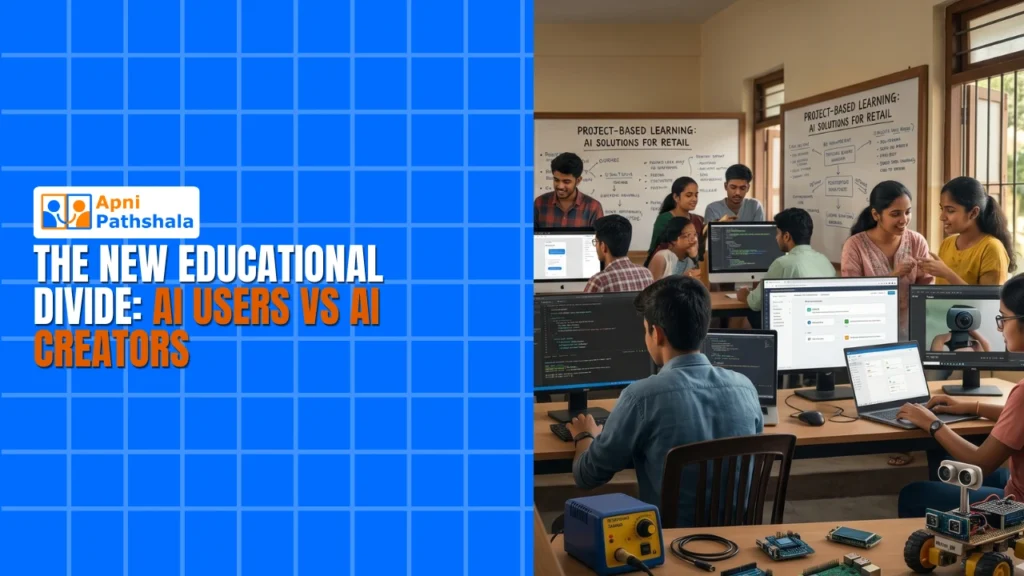
The difference between AI users and AI creators is how a student uses the tool. An AI user asks for finished answers to skip the thinking, while an AI creator uses AI to understand ideas, test their own work and build something new.
For example, one student types “Write me a summary of Chapter 5.” Another asks AI to explain photosynthesis step by step and then quiz them on it. Both use AI, but only the second is building real AI skills.
What separates AI users from AI creators?
AI users treat AI as a shortcut, and AI creators treat it as a learning partner. That quiet split is already happening in Indian classrooms.
On one side are students who generate answers, skip thinking and finish assignments faster. On the other side are students who use AI to learn more deeply, ask better questions and make things that did not exist before.
AI literacy means more than knowing what ChatGPT is. It means interacting with AI thoughtfully, checking its outputs, guiding its direction and using it to support your own thinking rather than replace it. A student who only uses a calculator depends on it, while a student who understands mathematics uses the calculator to go further. AI works the same way.
Why is AI literacy not taught in most schools yet?
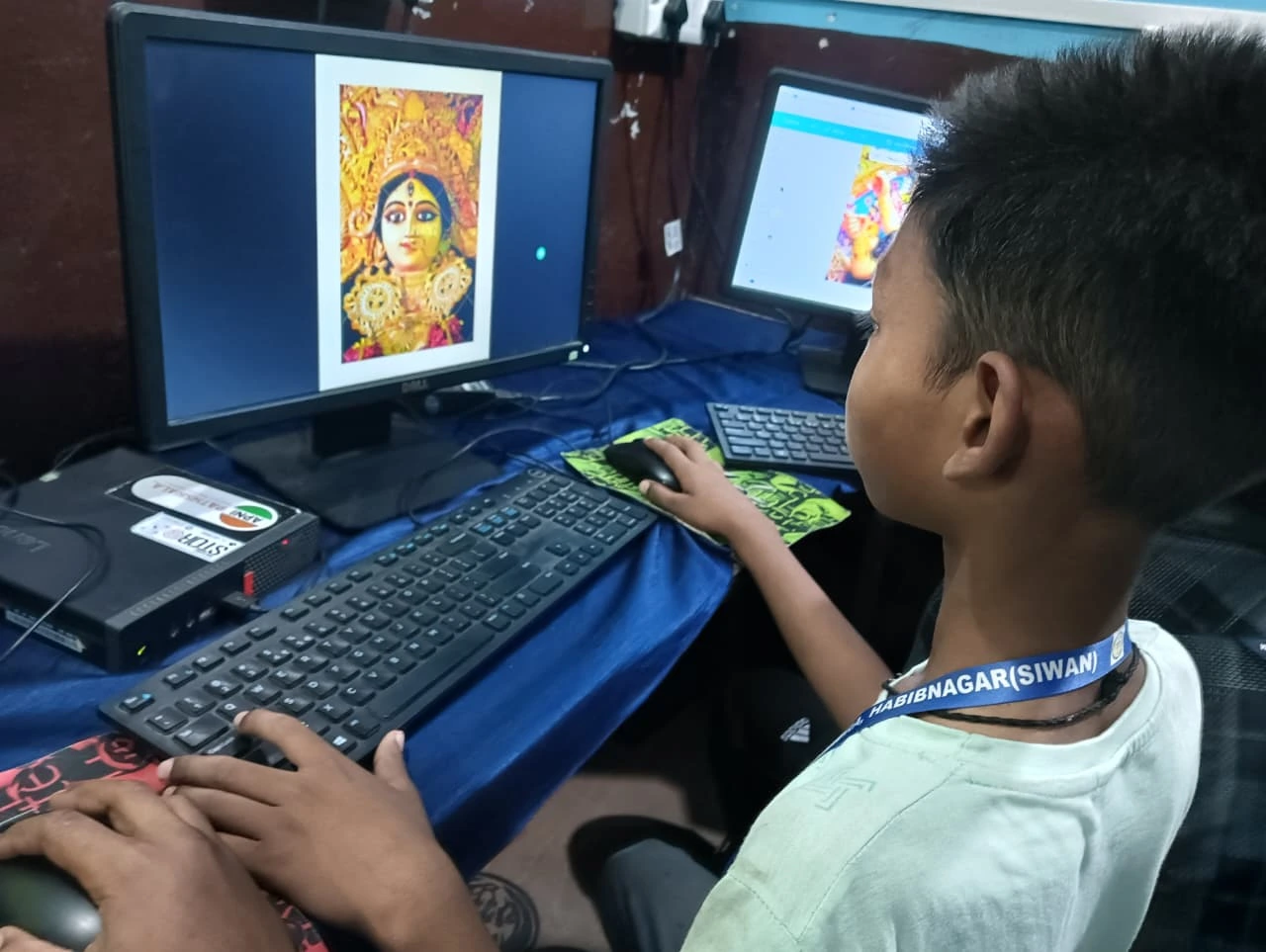
Most schools have not caught up, so curious students usually discover these skills on their own. They learn through trial, error and asking the right questions, and that experimentation is a skill that grows over time.
The UNICEF India education pages give useful background on how many Indian students still lack basic digital skills. AI literacy is quickly becoming the next gap in that same story, which is why it matters at home as much as at school. You can read more about whether AI will widen the digital divide.
How are AI tools for education already changing learning?
AI tools for education are multiplying fast, and many are free. Platforms like Khan Academy, Google tools for students and open AI assistants are available to anyone with a computer and internet, so the divide is about how students use them.
Passive users ask AI to do the work. Active creators ask AI to help them think. A student writing an essay does not ask AI to write it. Instead, they ask it to critique the draft, point out weak arguments or suggest a better structure, and that back-and-forth is where real learning happens.
- AI user: asks for the answer, copies it and moves on.
- AI creator: asks for an explanation, checks it, and asks follow-up questions.
- AI creator: spots what the AI got wrong and corrects it.
Students who learn this approach build stronger reasoning, sharper writing and the confidence to tackle open-ended problems. Tools will keep changing, and students who understand how to work with AI will adapt quickly. Our guide on how students can use AI to understand explains this habit in more detail.
Why does the future of learning depend on AI skills?
The future of learning is moving toward skills AI cannot easily replace: creativity, critical thinking and the ability to work with intelligent systems. Students who build these early will have an edge in almost every field.
NCERT (National Council of Educational Research and Training) is updating curriculum guidelines to include computational thinking and digital skills, and AI literacy is the next step in that direction. The National Education Policy (NEP 2020) also recognises the need for digital literacy from an early age.
Doctors who understand AI tools can work better. Teachers who use AI thoughtfully can reach more students. Entrepreneurs who know AI can build faster and cheaper than those who do not.
Why does having a computer at home matter for AI skills?
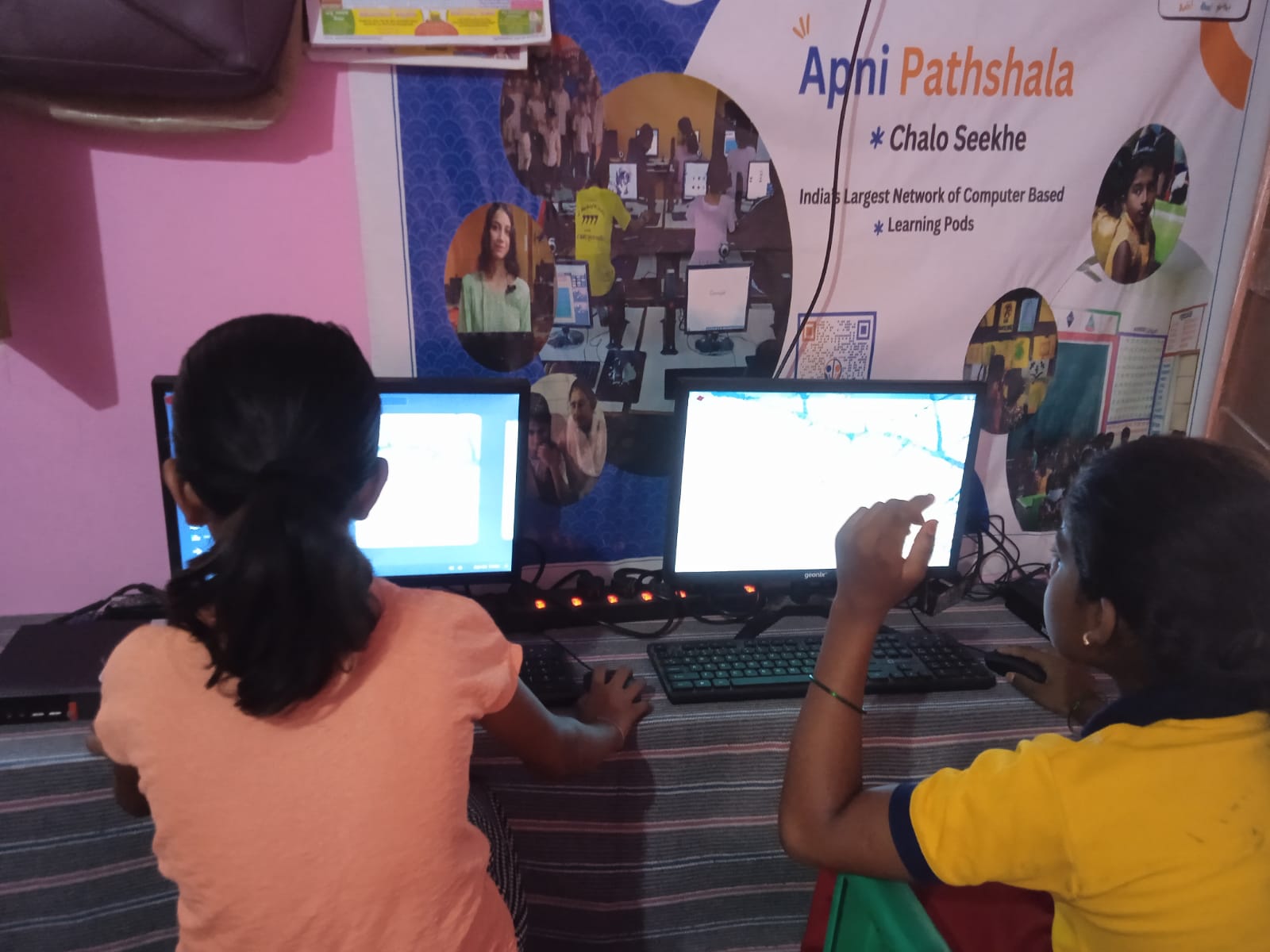
Daily practice at home is what turns AI use into AI skill. India has many talented students who lack only one thing, which is access.
Students with a computer at home can practise every day, not only when the school lab is open. Over time, that daily practice becomes a real advantage. This is why access is exactly where the divide begins, as we explain in The Hidden Cost of Not Having a Computer in 2026.
How can Indian students start building AI skills at home?
Students can start with a home computer, internet access and the habit of exploring rather than only consuming. No expensive coaching or big-city school is needed.
- Learn the basics first: typing well, using the web confidently, and working with documents and spreadsheets without help.
- Try free AI tools and ask “why” questions instead of “what” questions.
- Notice what the AI gets wrong, not only what it gets right.
- Use AI to check and improve your own work, not to replace it.
Without the basics, AI becomes a crutch rather than a tool for growth. Learn what Apna PC is and how it helps Indian families give their children this foundation.
Frequently Asked Questions
Is using ChatGPT for homework bad for my child?
Not if it is used to learn. Asking ChatGPT to explain a topic, quiz your child or critique a draft builds understanding. Asking it to write the answer for copying skips the thinking, and that is the habit parents should gently discourage at home.
What basic skills should come before AI skills?
Typing, browsing the web confidently and using documents and spreadsheets come first. These basics let a child use AI as a tool for growth. Without them, AI tends to become a crutch that does the work instead of helping the child think more clearly.
Does my child need coaching classes to learn AI?
No. Children can start at home with a computer, internet access and free AI tools. What matters most is the habit of exploring, asking why, and checking what the AI gets wrong. Regular practice on a personal computer builds these skills over time.
Apna PC is an affordable computer built for Indian students, starting at ₹30,000 (shipping and GST excluded). It comes ready for learning, so your child can move from passive AI user to confident AI creator. Visit Apna PC to learn more.