

The world of work is changing faster than schools. Jobs are disappearing, not because humans are becoming useless, but because the architecture of work is being rebuilt by technology and AI. In this new world, students cannot afford to be passive learners. They must become independent, self-directed, lifelong learners who can adapt, think, and create value continuously. Let’s explore the most important questions every student must understand today.
Q1. Why are jobs disappearing in the AI age?
Jobs don’t disappear because tasks vanish. They disappear because the system around those tasks changes. AI doesn’t just automate individual tasks it restructures entire workflows.
For example, calculators didn’t eliminate arithmetic. But they eliminated many jobs built around manual calculation. Similarly, AI is redesigning how work happens.
Students must stop preparing for fixed roles and start preparing for adaptability.
Q2. Is reskilling enough to survive in the future?
Not always.
Reskilling helps only if the system still values those skills. But when AI changes how industries function, entire skill sets can lose relevance. This is why students must focus on learning how to learn, not just learning specific skills.
A self-directed learner doesn’t fear change they adapt to it.
Q3. Can a task survive automation while the job disappears?
Yes and this is already happening.
A task may still require human involvement, but the job built around it may vanish. For instance, AI can assist doctors, teachers, designers, and writers but it changes how their roles are structured.
Students must stop thinking in terms of “jobs” and start thinking in terms of value creation.
Q4. How does AI change economic value?
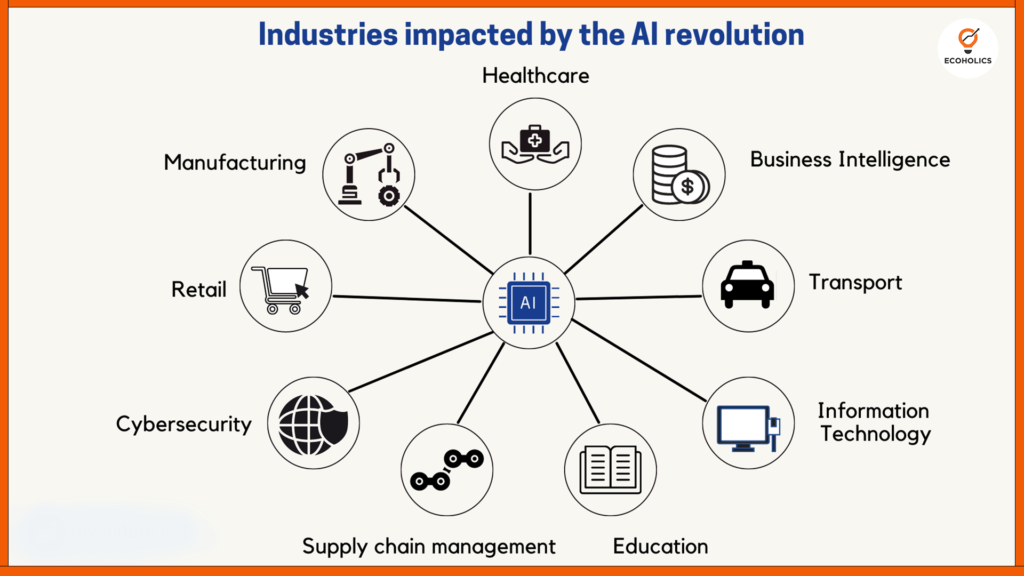
AI reduces scarcity. When something becomes abundant, its economic value drops.
Information used to be scarce now it’s everywhere. Routine skills used to be valuable now machines can perform many of them.
In the future, value will come from:
- Creativity
- Problem-solving
- Contextual thinking
- Human judgment
- Learning agility
Marks won’t matter. Mindset will.
Q5. What is “contextual value,” and why does it matter?
Not all tasks are equally important. Some tasks shape outcomes more than others.
Contextual value means understanding:
- Which problems matter most
- Where decisions create impact
- How systems work together
Students must learn to see the big picture, not just complete assignments blindly. Independent learners don’t just follow instructions they understand why things matter.
Q6. Why do productivity gains not always increase wages?
For decades, we believed that working harder and becoming more productive would automatically increase income. AI challenges this assumption.
When productivity becomes cheap and common, only those who operate at higher levels of thinking and system design capture value.
Students must aim to work above the algorithm, not below it.
Q7. What does it mean to operate “above the algorithm”?
Operating below the algorithm means:
- Following instructions
- Doing repetitive tasks
- Being replaceable
Operating above the algorithm means:
- Designing systems
- Asking better questions
- Making decisions
- Creating new solutions
- Understanding context
Education must help students become architects of systems, not workers inside them.
Q8. How is AI reshaping power and opportunity?
AI reorganizes workflows and shifts leverage. It creates new “choke points” places where value concentrates.
Those who understand systems, connect ideas, and think independently gain influence. Those who only follow routines lose relevance.
The future belongs to curious, adaptable, self-directed learners.
Q9. What kind of learning prepares students for this world?
Not passive learning. Not memorization. Not exam obsession.
Students must learn through:
- Exploration
- Projects
- Problem-solving
- Reflection
- Collaboration
- Independent study
Learning must become self-driven and lifelong.
The best students are not those who finish the syllabus fastest but those who never stop learning.
Q10. How can students become independent learners starting today?
Start with small shifts:
- Ask one meaningful question daily
- Learn concepts deeply, not superficially
- Build real-world projects
- Use technology wisely
- Learn beyond textbooks
- Reflect on mistakes
- Seek understanding, not marks
- Teach others what you learn
- Stay curious
Self-directed learning is not a talent it is a habit.
Q11. What is the role of autonomy and agency in education?
When students are controlled, they memorize.
When students are trusted, they think.
Autonomy builds:
- Confidence
- Responsibility
- Motivation
- Ownership of learning
Agency transforms education from compulsion to curiosity.
Students who control their learning control their future.
Q12. What is the ultimate goal of education in the AI era?
Not degrees. Not jobs. Not marks.
The real goal is to help students become:
- Independent thinkers
- Adaptive learners
- Problem-solvers
- Creators
- Lifelong learners
Because the future is unpredictable. The only lasting advantage is the ability to learn continuously.
Final Thought
AI will not replace students who think.
It will replace students who only follow.
Education must move from instruction → exploration,
control → autonomy,
memorization → understanding,
schooling → lifelong learning.
The question is not whether the future will change.
The real question is: Will students stay passive, or will they take control of their learning? Independent, self-directed learners don’t wait for the future.
They create it.