

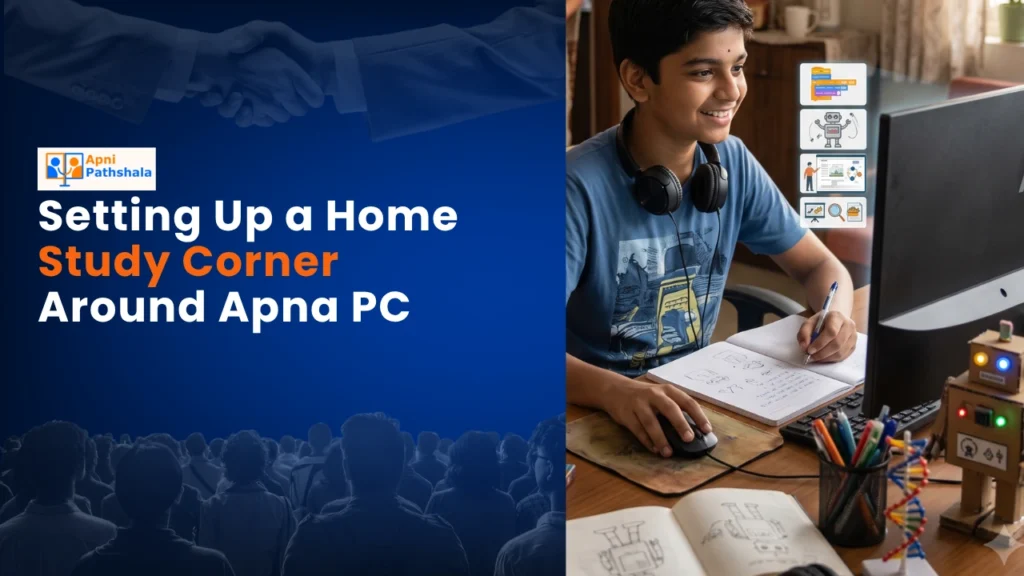
To set up a home study corner, pick a quiet spot with natural light, place the computer on a sturdy desk at the right height, add a back-supporting chair and keep phones and clutter away. You do not need a separate room; a well-planned corner in a bedroom or living room is enough.
For example, a child studying at the dining table, with books scattered and a phone buzzing, struggles to focus. A dedicated corner around a study computer changes that.
Why does a child need a dedicated study space?
A fixed study spot signals that it is time to concentrate, not play or relax. At the dining table or on the bed, distractions multiply and focus scatters.
Your study setup does not need to be fancy or expensive. It just needs to be intentional and belong to your child. For general background on schooling here, see Education in India.
Where should you put the study corner?
Choose a spot with natural light, away from TV noise and kitchen sounds. A small corner of a bedroom or living room works well.
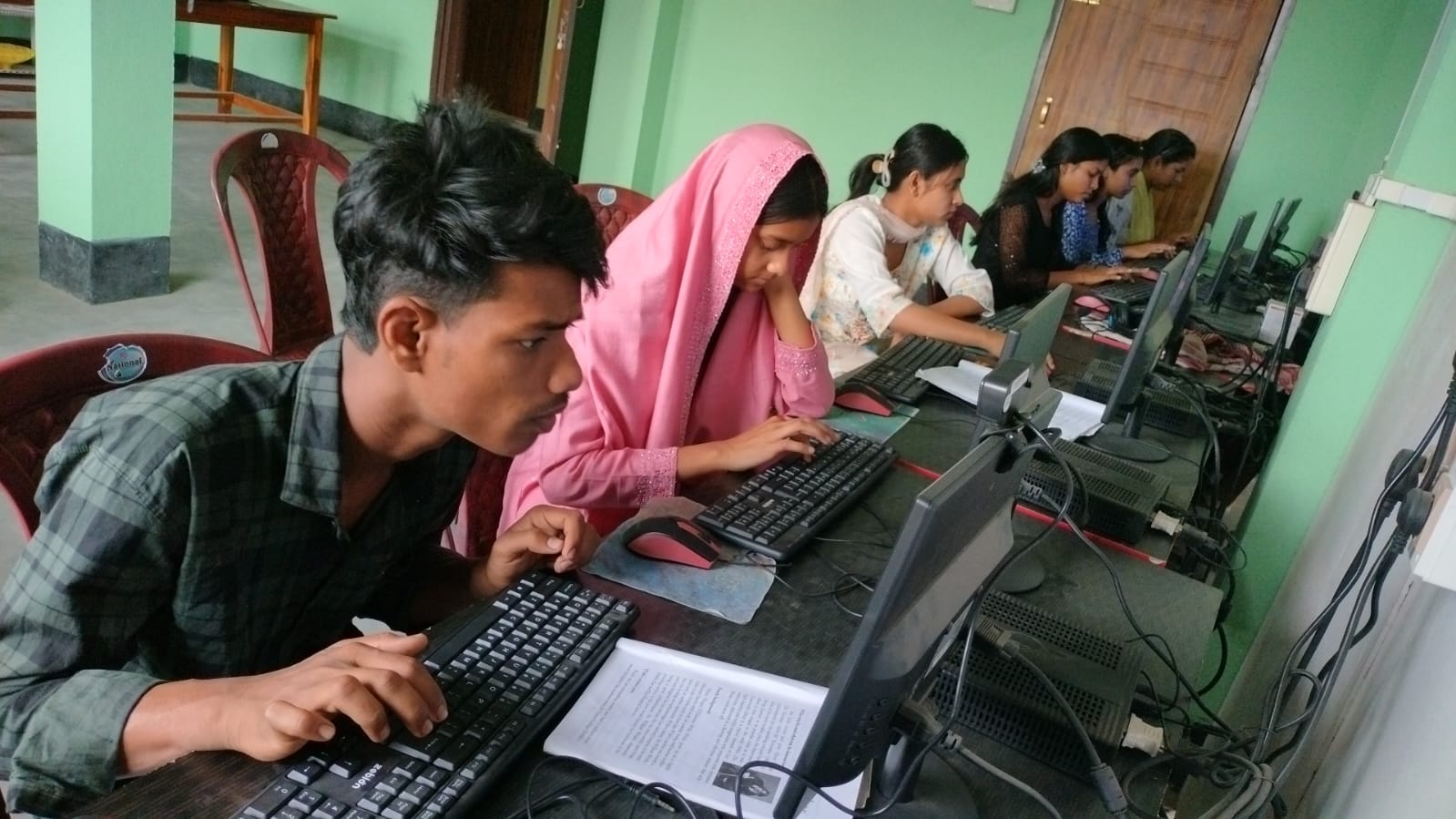
Apna PC costs just Rs.30,000 (shipping and GST excluded) and comes pre-loaded with what your child needs: Zorin OS, Apni Prerna for student monitoring, LibreOffice for documents and Scratch for coding. With 8GB RAM and 128GB SSD, it handles schoolwork, online classes and creative projects smoothly. For more layout ideas, see how to build a productive study corner.
How should the desk, screen and chair be arranged?
Place the computer on a sturdy desk at elbow height when your child sits, with the screen at a level where their eyes look slightly down. Avoid screens that make them look sharply up or down, which strains the neck.
Add a comfortable chair that supports the back, at a height that lets their feet rest flat on the floor. Our guide on desk and chair height covers this in detail.
- Lighting: combine natural light with a desk lamp and avoid harsh shadows on the screen.
- Organisation: keep books, notebooks and pens on a small shelf or in a drawer nearby.
- Minimal distractions: keep phones and toys away from the desk.
- Air flow: make sure the space is well ventilated, as a stuffy corner makes children sleepy.
How do you make the space work for online classes?
Keep the background tidy and essentials within reach. A study computer handles video calls, online tests and interactive lessons, but the space around it matters too.
Position the desk so the background looks clean on video calls, or hang a simple cloth or poster. Keep a water bottle and small snacks nearby so your child can take quick breaks without leaving. Our study time versus screen time guide explains healthy learning patterns.
How do you balance screen time with real learning?
Use the computer for active work and mix in offline study. Your child can code in Scratch, make presentations in LibreOffice and use educational resources, while Apni Prerna helps you follow what they do without hovering.
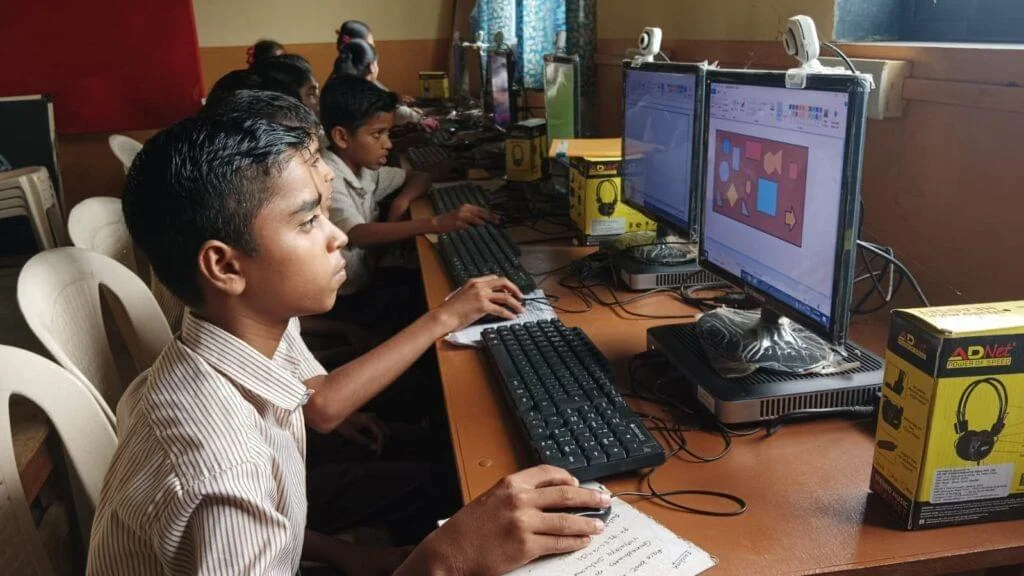
The Apna PC homeschooling programs guide parents on structuring the day. Balance computer time with physical books, handwriting and breaks outside. The Ministry of Education website is a good place to follow official education updates.
How should you get started?
Start small and start now. A corner, a desk, a chair and a study computer are enough, and shelves or decorations can come later.
A good study corner shows your child that you take their education seriously and gives them a space where their mind can grow.
Frequently Asked Questions
Can a study corner work in a small home?
Yes. You only need enough space for a desk, a chair and a shelf or drawer. Pick a quiet spot near natural light, keep it free of clutter, and use it only for study so your child links that corner with focus.
Should the study corner be in my child’s bedroom?
It can be, as long as it is away from the bed and other distractions. Some parents prefer a living room corner because it is easier to keep an eye on study time. Choose whichever spot is quieter and easier to supervise in your home.
What lighting is best for studying on a computer?
Natural light during the day plus a desk lamp in the evening works best. Position the lamp so it lights the desk without throwing glare or harsh shadows onto the screen, which helps your child read comfortably for longer.
Your child deserves a space where they can focus, learn and grow. Visit Apna PC to learn more.