The Sharma Family’s Dilemma: Tuition or Technology?
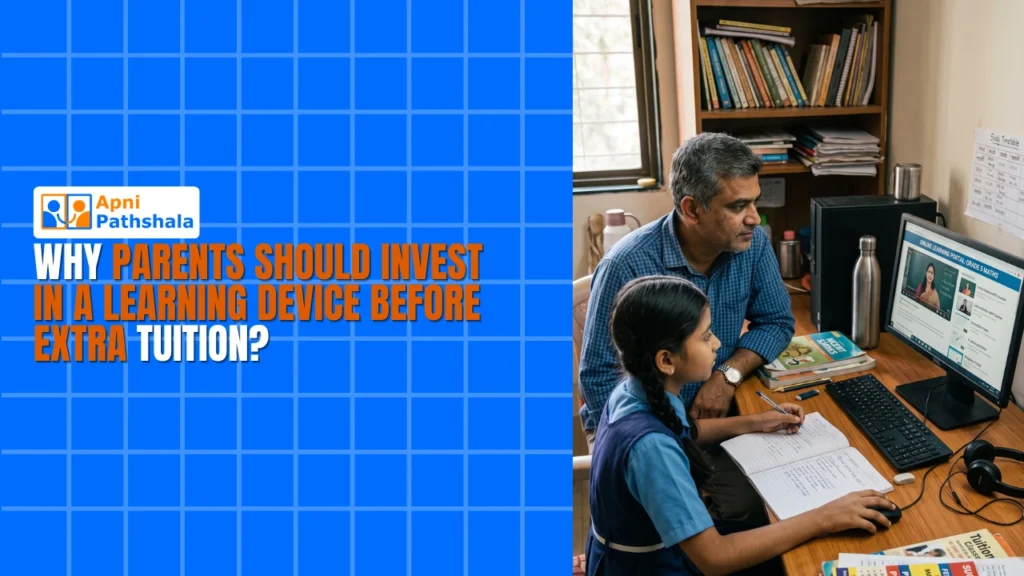
Rajesh Sharma sits in his small flat in Indore, staring at the tuition fee notice. Rs. 8,000 per month for his daughter Priya’s extra classes in Math and Science. His wife, Neha, mentions that her colleague’s son improved his grades after receiving a learning device at home. Rajesh wonders: should he spend on tuition, or invest in a study computer instead? This is the choice thousands of parents in Tier 2 and Tier 3 cities face every school year. A learning device isn’t just a computer. It’s a tutor that works 24/7, a library that fits on your desk, and a tool that can transform how your child learns.
Why Traditional Tuition Isn’t Your Only Option?
Extra tuition classes have been the default choice for Indian parents for decades. Your child sits in a crowded classroom, takes notes at someone else’s pace, and forgets half of it by the time they reach home. The tutor covers the syllabus once, and if your child didn’t understand, there’s no replay button. You’re also paying for travel time, wasted hours waiting for the class to start, and the stress of meeting rigid schedules.
The real problem isn’t that tuition doesn’t work. The problem is that it’s one-size-fits-all. Your child learns at their own pace, not the tutor’s. When your child falls behind, you pay more. When they need help at 8 PM on a Sunday, the tutor isn’t available.
A learning device changes this equation. Your child can study when they’re fresh, pause when they need a break, and revisit topics they didn’t understand the first time. There’s no judgment, no pressure, and no wasted travel time.
The Real Cost of Tuition vs a Learning Device
Let’s do the math. Monthly tuition in most Tier-2 and Tier-3 cities ranges from Rs. 5,000 to Rs. 10,000. Over a year, that’s Rs. 60,000 to Rs. 1,20,000. You’ll pay this every year for multiple subjects over multiple years. Your investment disappears once the tuition stops.
An Apna PC costs Rs. 21,000. It’s a one-time investment that your child can use for schoolwork, competitive exams, coding, and online learning. It comes with Zorin OS (a safe, student-friendly operating system), Apni Prerna (to monitor what your child is studying), LibreOffice (for projects and assignments), and Scratch (for learning the basics of coding). Unlike tuition fees that vanish, this device grows with your child’s learning journey.
Tuition: Rs. 60,000-1,20,000 per year, gone after the year ends
Learning device: Rs. 21,000 one-time, useful for years
Tuition: Fixed schedule, one teaching style
Learning device: Your child’s pace, multiple resources available
Tuition: Travel time, wasted hours, stress
Learning device: Learn at home, on your schedule
What Your Child Can Do With a Study Computer?
A learning device isn’t just for homework. Your child can access DIKSHA, India’s official digital learning platform, which has thousands of lessons aligned with your state’s curriculum. They can watch educational videos on YouTube, practice on Khan Academy, and solve mock tests for competitive exams. They can code in Scratch, create project presentations, and build the digital literacy skills they’ll need for college and careers.
Research on learning shows that when students have control over their learning environment, they retain information more effectively and develop problem-solving skills more quickly. Your child isn’t just consuming information. They’re becoming independent learners.
You’ve probably wondered how a computer helps students beyond textbooks. The answer is simple: it opens doors. Your child can explore topics in greater depth, find answers to questions at 11 PM, and learn skills that tuition never covers. This is the kind of learning that prepares them for real life, not just exams.
Parental Control and Peace of Mind
One concern many parents have is: won’t my child waste time on games and social media? That’s where Apni Prerna comes in. This built-in monitoring tool lets you see what your child is studying, for how long, and which resources they’re using. You’re not spying on them. You’re staying informed about their learning habits.
You can set screen time limits, block distracting websites, and encourage healthy study habits. It’s like having a responsible guardian built into the device. Many parents find this peace of mind worth far more than the device’s cost.
If you’re unsure whether a learning device is right for your family, check out the parents’checklist before buying a student computer. It’ll help you decide what features matter most for your child’s needs.
The Real Question: Can Your Child Afford Not to Have One?
In 2024, digital literacy isn’t optional. It’s as essential as reading and writing. Every competitive exam, from JEE to NEET to UPSC, is moving online. Every college uses online learning platforms. Every job requires computer skills. If your child doesn’t have access to a learning device at home, they’re starting behind.
The gap between students with devices and students without is growing. It’s not just about grades. It’s about confidence, independence, and readiness for the future. Your child’s peers in metro cities already have computers. Your child in Indore, Nagpur, or Lucknow shouldn’t be left behind.
Rajesh Sharma made his choice. He bought an Apna PC for Priya instead of paying for tuition. Three months later, her Math grade improved from 65 to 82. She’s more confident, asks better questions, and studies without being pushed. The device cost Rs. 21,000. The improvement in her confidence and learning? Priceless.
Your Child’s Future Starts With the Right Tools
A learning device isn’t a replacement for good teaching or parental support. It’s a tool that makes both more effective. Your child still needs guidance, encouragement, and someone who believes in them. But with the right device, they have access to unlimited resources, expert explanations, and the freedom to learn at their pace.
The question isn’t whether you can afford to invest in a learning device. The question is whether you can afford not to. Your child’s learning, confidence, and future are worth the investment. Visit apnapc.com to learn more.