

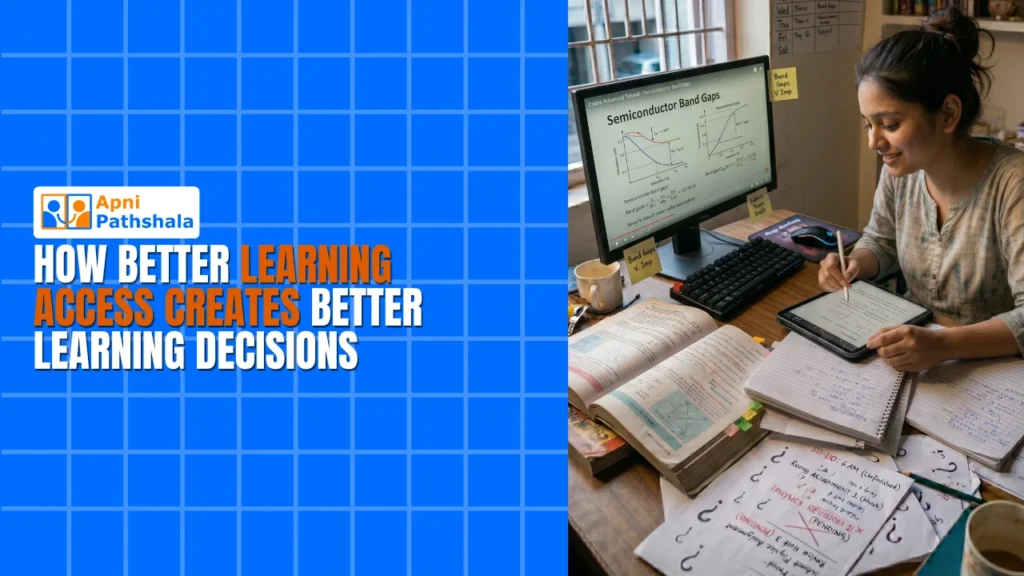
Every student makes hundreds of small learning decisions in a week: what to study, what to skip, what to look up, what to ignore. Most parents never see these decisions, but they quietly shape grades, confidence, and curiosity over time. And the single biggest factor influencing these choices is something almost invisible: access to education. When a student has genuine access to information, tools, and quality material, the decisions they make almost always get better.
What “Access” Really Means in Learning Today?
Access used to mean a textbook, a teacher, and a quiet place to study. That is still true. But in 2026, real access also includes a digital layer, being able to look up a doubt the moment it arises, watching a chapter explained in three different ways, and finding past-year question papers without depending on the senior next door.
This is what we mean by digital access for students. It is not a luxury layer added on top of schooling; it is increasingly the floor below it. A student who can search, watch, replay, and save has a fundamentally different relationship with their syllabus than a student who only sees a topic once in class and then has to manage on memory alone.
The frustrating truth in India is that two students of equal potential can have wildly different outcomes based purely on this one factor. One has a personal device at home; the other doesn’t. Over one academic year, that quiet gap widens into a visible one.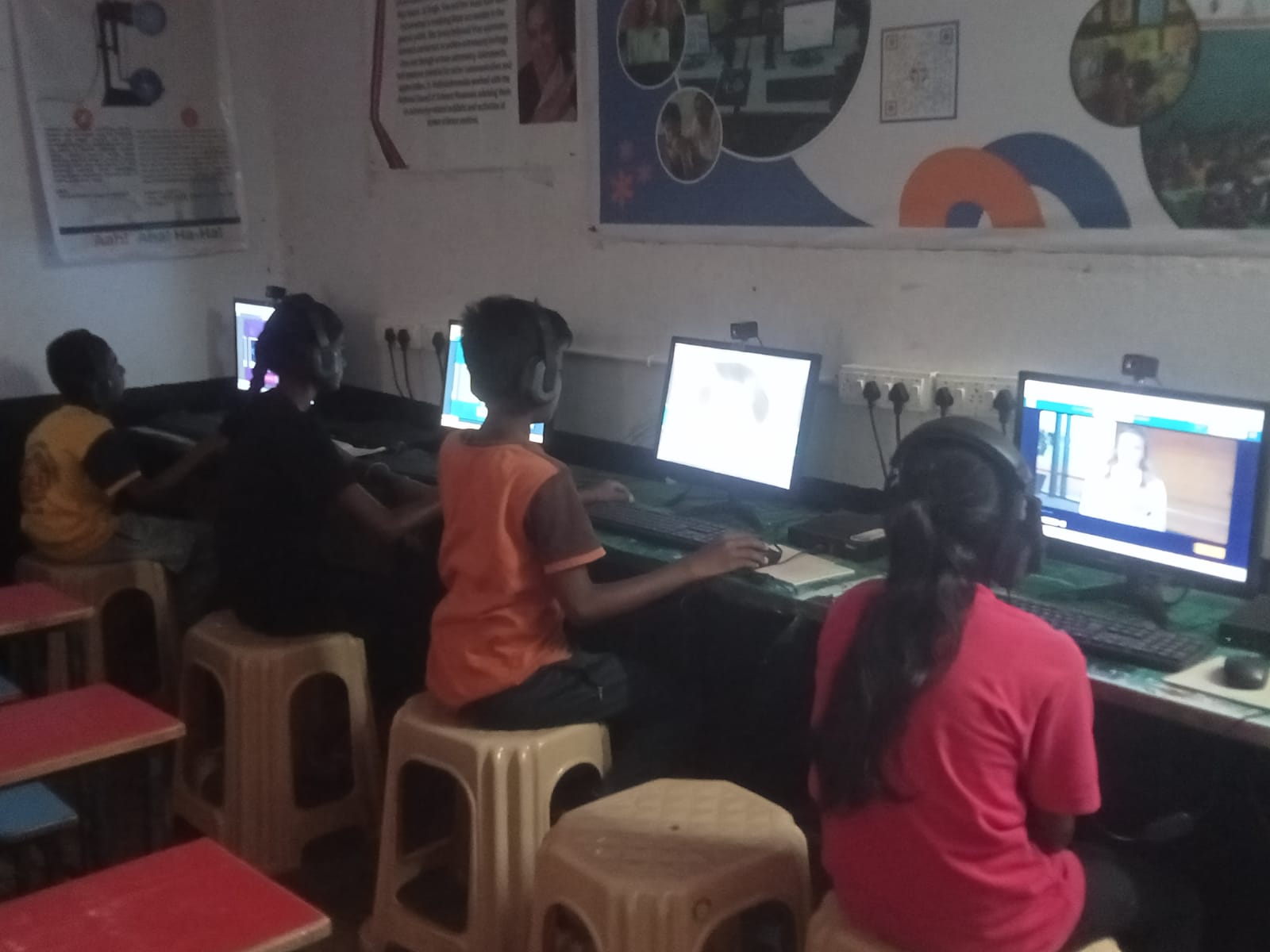
How More Access Changes the Choices Students Make
Give a student more access, and you don’t just hand them more information. You change how they perceive every learning moment.
A student with no access at home will hear a doubt in class and let it pass; there is nowhere to take it. A student with proper access at home will recognize that same doubt and resolve it the same evening. That one habit, repeated across the year, is the difference between a confused student and a confident one.
The same shift happens with learning opportunities for students outside the syllabus. With reliable access, a curious child will look up coding tutorials, explore science experiments, try free certificate courses, and read on topics they actually care about. Without it, those opportunities never enter their world. They don’t reject them; they simply never know they exist. The UNICEF India education report has repeatedly pointed out how unequal device access translates into unequal outcomes, even when school quality is similar.
Better access leads to better decisions because students who can verify, explore, and double-check finally start to trust themselves to choose. They stop waiting for permission to learn. And once a student crosses that line, they almost never go back.
Why This Change Matters for Indian Families Right Now?
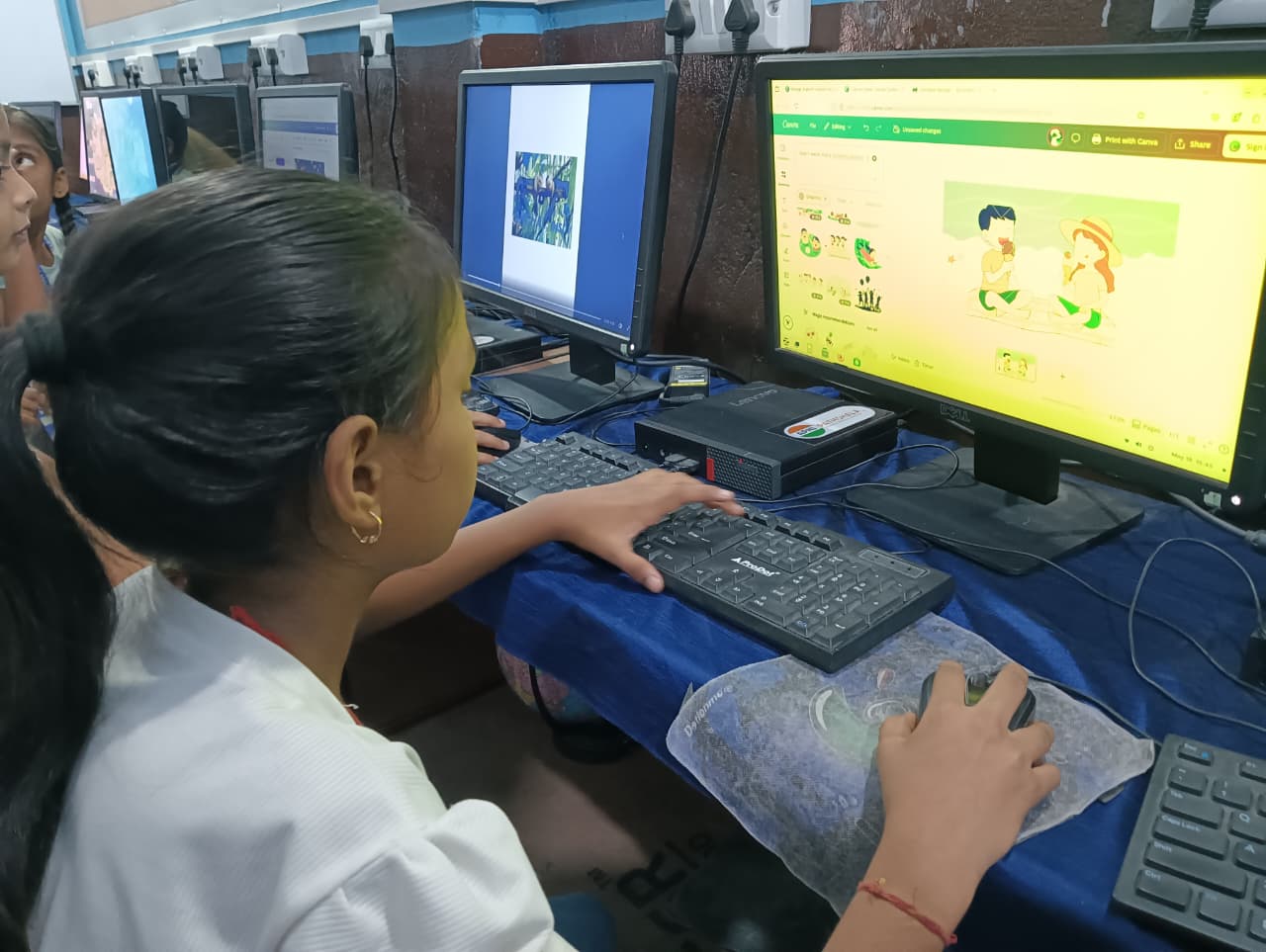
For most middle-class Indian families, the shared family phone is the only digital workspace a child has. It is simply not enough. A phone built for messages and entertainment cannot replace the focus and breadth that a proper computer brings. Real technology in learning needs a real keyboard, a real screen, and uninterrupted study time, none of which a phone genuinely offers. To understand the real long-term cost of this gap, read The Hidden Cost of Not Having a Computer in 2026.
Government efforts like the Digital India initiative have pushed connectivity forward across the country, and platforms for free learning are widely available. The missing piece in many homes is still the device itself, and that single missing piece quietly blocks every other benefit from reaching the child.
This is the gap Apna PC was built to close. A simple, ready-to-use computer designed for Indian students, priced at ₹21,000 (shipping and GST excluded), so parents in Tier 2 and Tier 3 cities don’t have to wait years before giving their child true digital access. To understand why this initiative matters even more than coaching or tuition, read Why Every Indian Student Needs Their Own Computer. When parents close this gap, the child’s learning choices improve almost immediately, and along with them, their access to education quietly becomes the kind that compounds for life.
Better access doesn’t just give your child more information; it gives them the confidence to keep choosing well, day after day. Visit apnapc.com to learn more.