

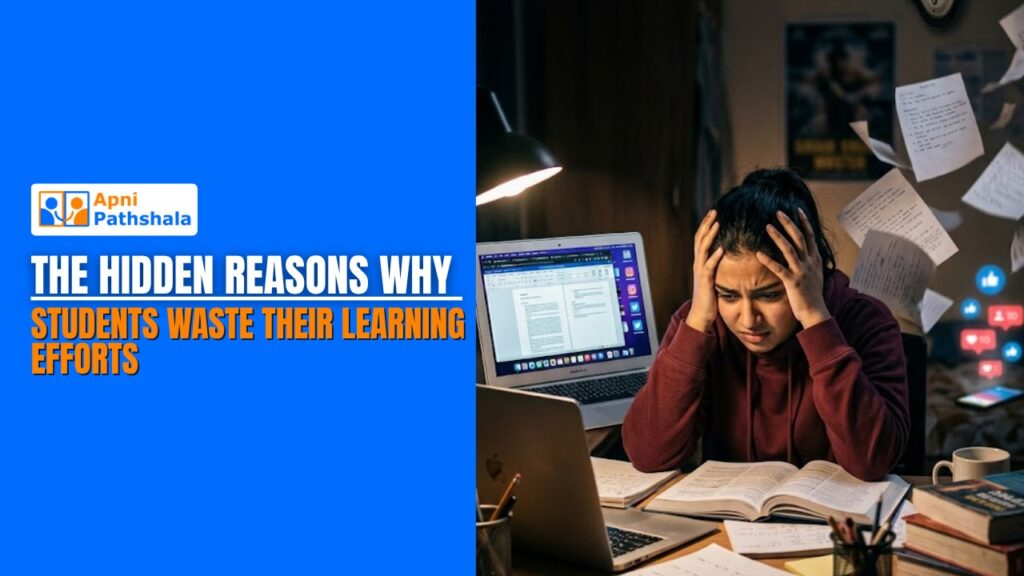
A student studies for three hours every evening. Their notebooks are full. They revise before every test. And yet, their marks barely move. Sound familiar? This is not a story about laziness; it is a story about ineffective learning methods. The effort is real. The hours are real. But the approach quietly works against the student, and nobody points it out.
This post is about exactly that: where the effort goes, and why so little of it sticks.
Why Students Waste Study Time Without Realising It?
One of the hardest things to accept is that being busy is not the same as being productive. Many students feel like they are studying hard, but why students waste study time often comes down to one root cause: passive learning.
Passive learning means reading the same paragraph four times, copying notes without thinking, or listening without engaging. It feels productive because it takes time and energy. But very little actually enters long-term memory.
Here is what passive learning looks like in practice:
-
- Re-reading textbook chapters repeatedly instead of testing recall
-
- Highlighting everything in a chapter rather than identifying what actually matters
-
- Making beautiful, colour-coded notes that are never reviewed again
-
- Sitting at a desk for hours while mentally drifting in and out of focus
-
- Watching video lectures without pausing to apply what was just taught
None of these feels wrong in the moment. They feel like studying. That is exactly what makes them so costly.
The Most Common Study Mistakes That Drain Progress
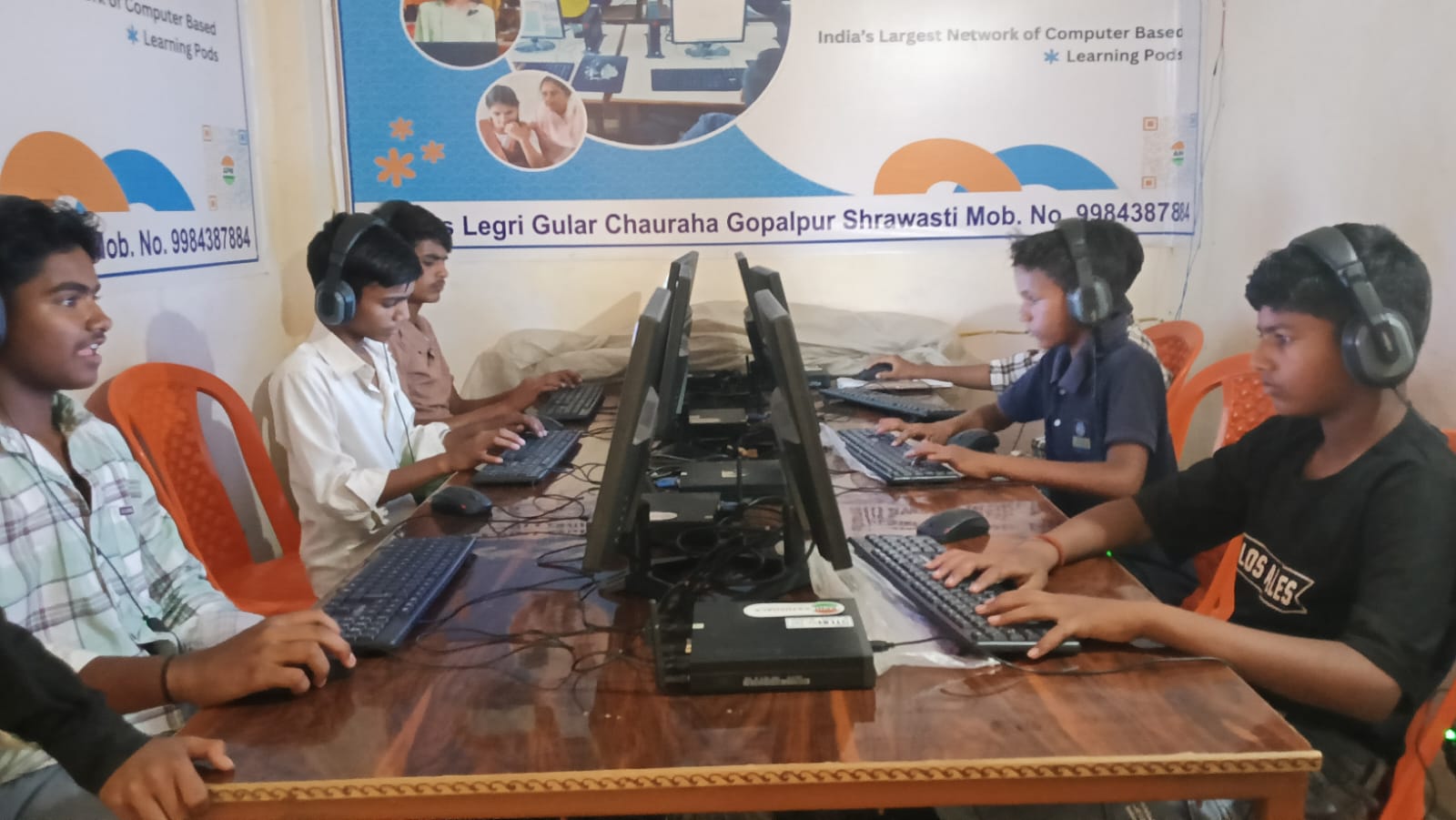
Beyond passive learning, there are common study mistakes that recur across India, particularly among students preparing for board exams or competitive tests.
Studying everything equally. Not all topics carry the same weight. Students who spend equal time on a low-weightage topic and a high-weightage chapter are misusing their most limited resource, time.
No spacing between revisions. Cramming the night before a test is perhaps the most widespread habit in Indian student life. Research consistently shows that spaced repetition, reviewing something across multiple short sessions spread over days, leads to far better retention than a single long session.
Avoiding difficult topics. Most students spend more time on what they already know because it feels comfortable. The chapters they find hard, the ones they actually need, get postponed until it is too late.
No practice of output. Reading about a topic is not the same as solving a problem or writing an answer. Students who only read are preparing to recognise answers rather than reproduce them. Exams require reproduction.
Platforms like DIKSHA India’s national digital learning platform are built around structured, active learning. But even access to good content means little if a student does not have a device they can use consistently and privately at home.
Low Productivity in Students Is a System Problem, Not a Character Flaw
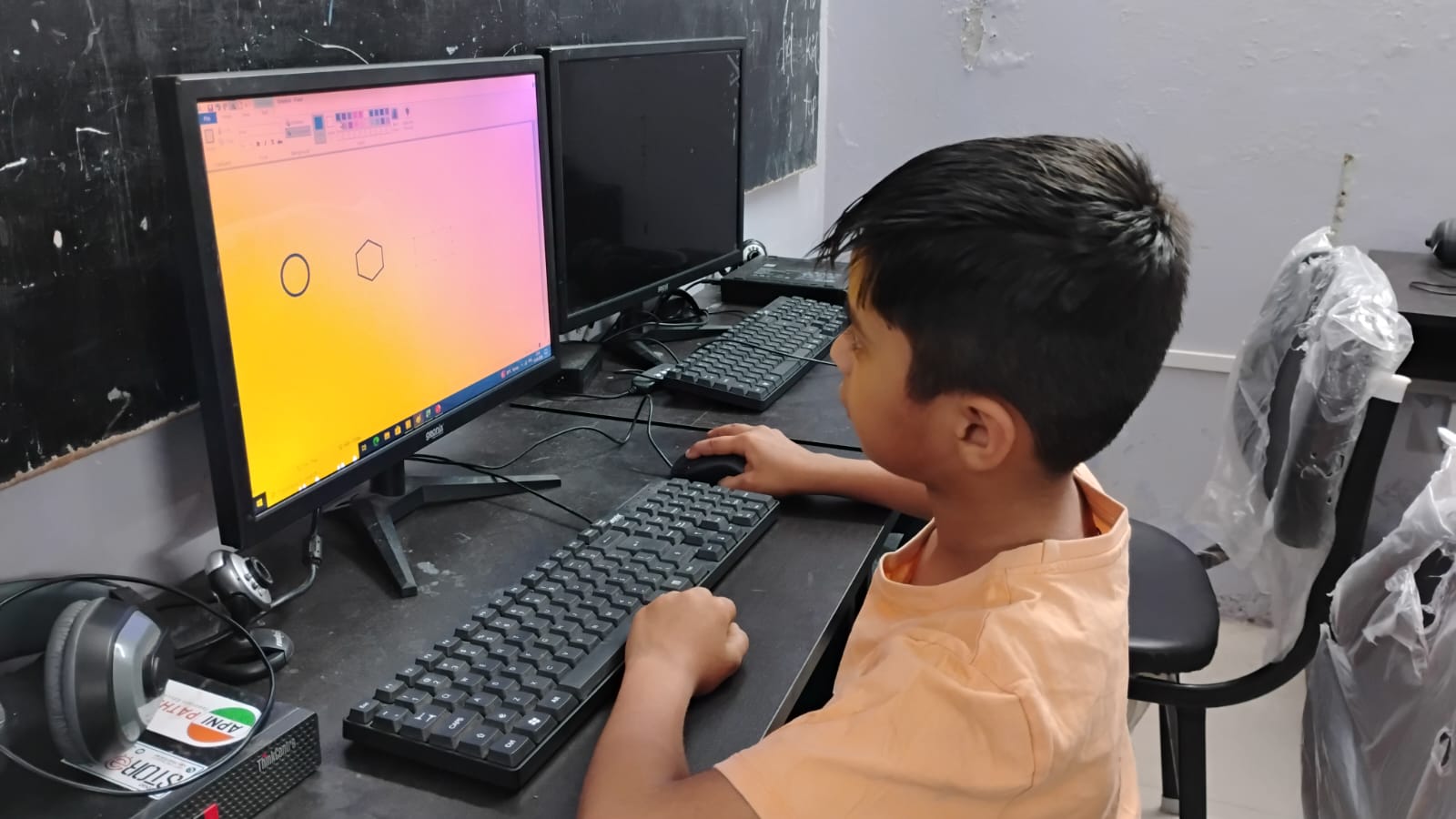
When we see low student productivity, the instinct is to blame the student, their attitude, their willpower, or their phone addiction. But very often, the environment is the real problem.
A student who studies on a shared family phone cannot use spaced repetition tools. They cannot watch a lesson twice without someone needing the phone back. They cannot take a practice test, save progress, and return to it the next day. They are forced into the only form of learning available to them, passive, single-session, text-based reading.
This is not a motivation failure. It is an access failure.
India’s Digital India initiative has worked to bring connectivity to millions of households. But connectivity alone does not solve the problem. Students need a dedicated, personal device, one that is theirs, available when they need it, and suitable for actual academic work.
That is what Why Every Indian Student Needs Their Own Computer comes down to. When a student has a personal computer at home, they can finally use the learning methods that work: spaced revision, active practice, timed tests, and focused, distraction-free sessions. The right method needs the right tool.
And there is a reason families who invest in a personal computer see real academic improvement. How a Personal Computer Helps Students Learn is not just about access to content; it is about giving students the ability to learn actively, independently, and at their own pace.
Apna PC offers exactly this: an affordable educational computer at just ₹21,000 (shipping and GST excluded), designed for Indian students and families who want learning to actually lead somewhere.
Effort should not go to waste. Give it the right direction. Visit apnapc.com to learn more.