

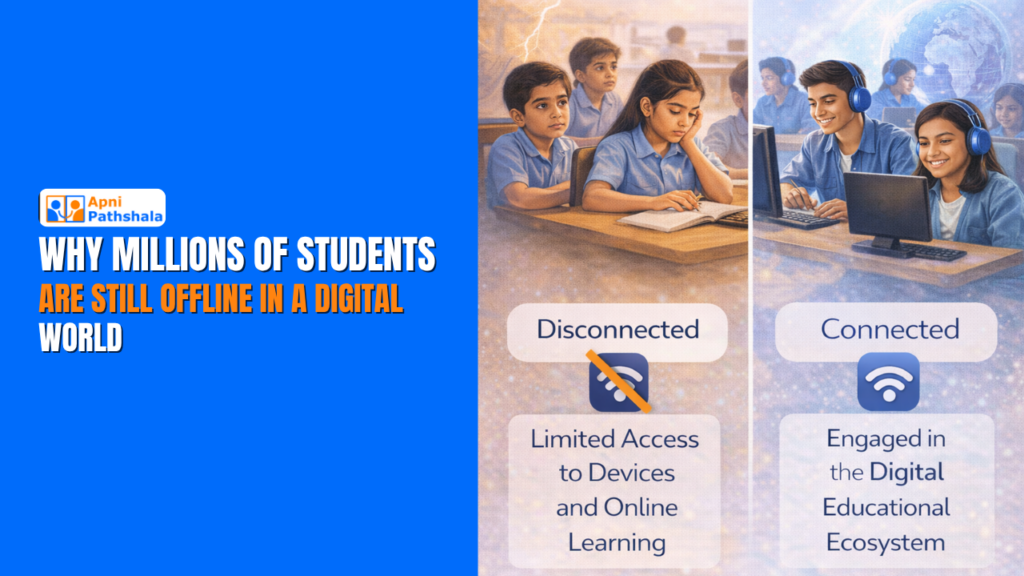
Picture a 14-year-old girl sitting under a single bulb in a village in Bihar. Her school gave her homework that requires online research. Her brother’s phone has 2G. Her family has no computer. She closes her notebook and goes to sleep. This is not a rare story. This is the daily reality for millions of students offline in a digital world that has moved on without them. The gap has a name: the digital divide. And in 2026, it is still very much alive.
The Scale of the Problem
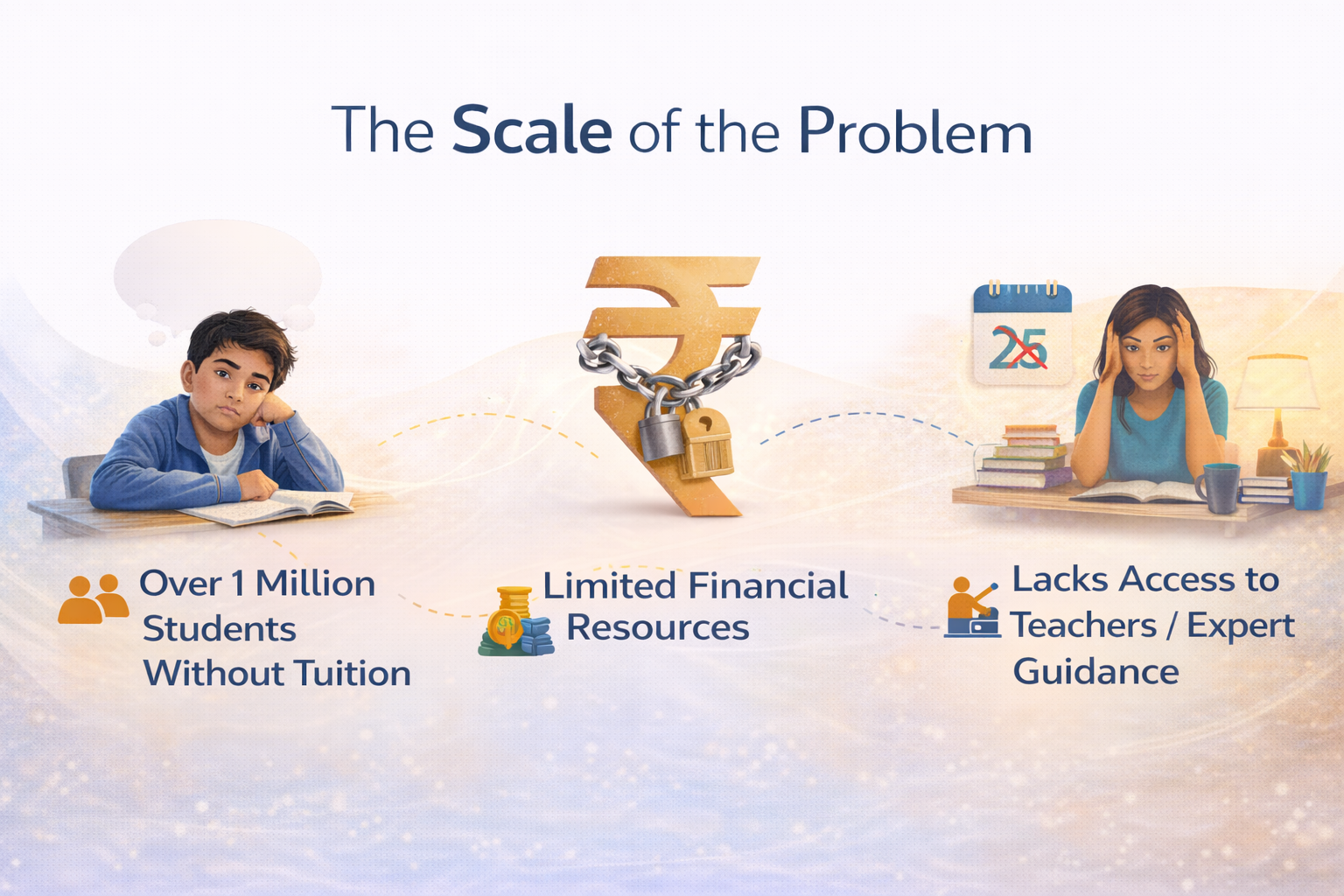
India has over 250 million students enrolled in schools. A large share of them, particularly in rural areas, have no access to a personal computer at home. According to UNESCO’s education reports, digital access gaps between rural and urban learners continue to widen across developing nations. In India, while cities see rising laptop ownership, villages tell a different story. Students in tier-3 towns and rural districts are left without devices, without reliable internet, and without any path into the digital world. The divide is not shrinking. For students offline in the digital world, the clock keeps ticking.
Why Infrastructure Alone Is Not the Answer
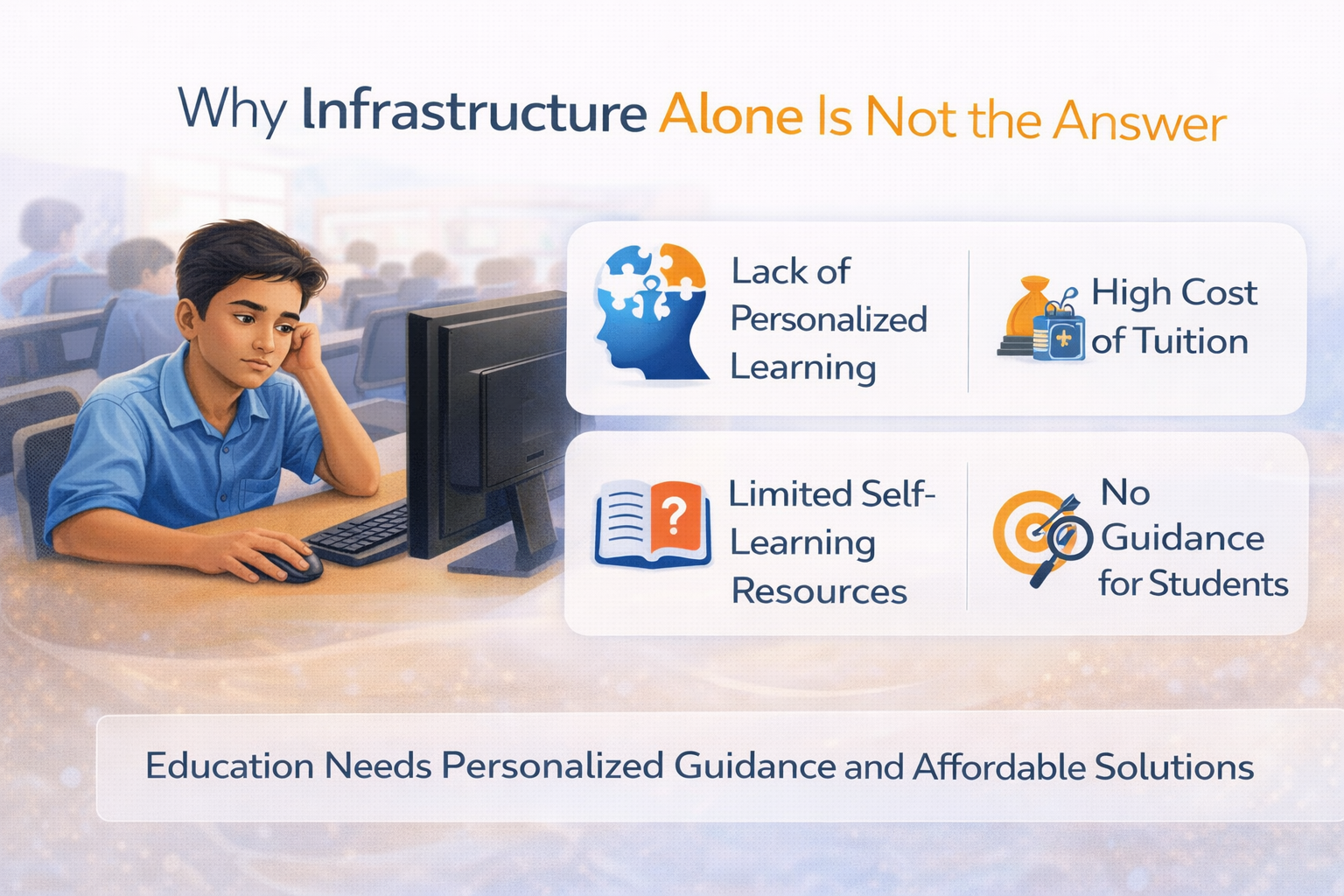
The government has launched programs. Schools have computer labs in some districts. Fiber cables have been laid under various schemes. So why are so many students still offline? Because infrastructure at the school level does not solve the problem at home. A student who can only access a computer for 30 minutes a week in a crowded lab cannot compete with a city student who practices for two hours every evening. The gap between policy and practice is real. Digital India promises are meaningful, but they have not yet reached every family’s living room. Students need a device at home, not just a shared screen in a school hall.
The Cost Barrier Nobody Talks About
A new laptop in India costs anywhere from ₹30,000 to ₹60,000. For a family earning ₹15,000 a month, that is two to four months of income for a single device. Schools remain underfunded. Parents are already spending on tuition fees, uniforms, and books. As we discussed in why parents spend on tuition over technology, the budget often goes to coaching classes, not computers. The result is a digital ceiling: students who want to learn online but simply cannot afford entry. This invisible barrier keeps the digital divide students in India firmly on the wrong side of the screen.
What Happens When Students Stay Offline
The consequences are not just academic. A student who grows up without a computer misses basic digital skills: typing, using spreadsheets, creating documents, browsing safely, and building anything online. By the time they reach college or a job interview, they are already behind. Employers in 2026 expect digital fluency as a baseline. Students offline in the digital world do not just miss assignments. They miss the foundation for an entire career. The gap between those with access and those without keeps widening every year. And unlike a missed lesson, this is not easy to catch up on.
The Affordable Solution That Exists
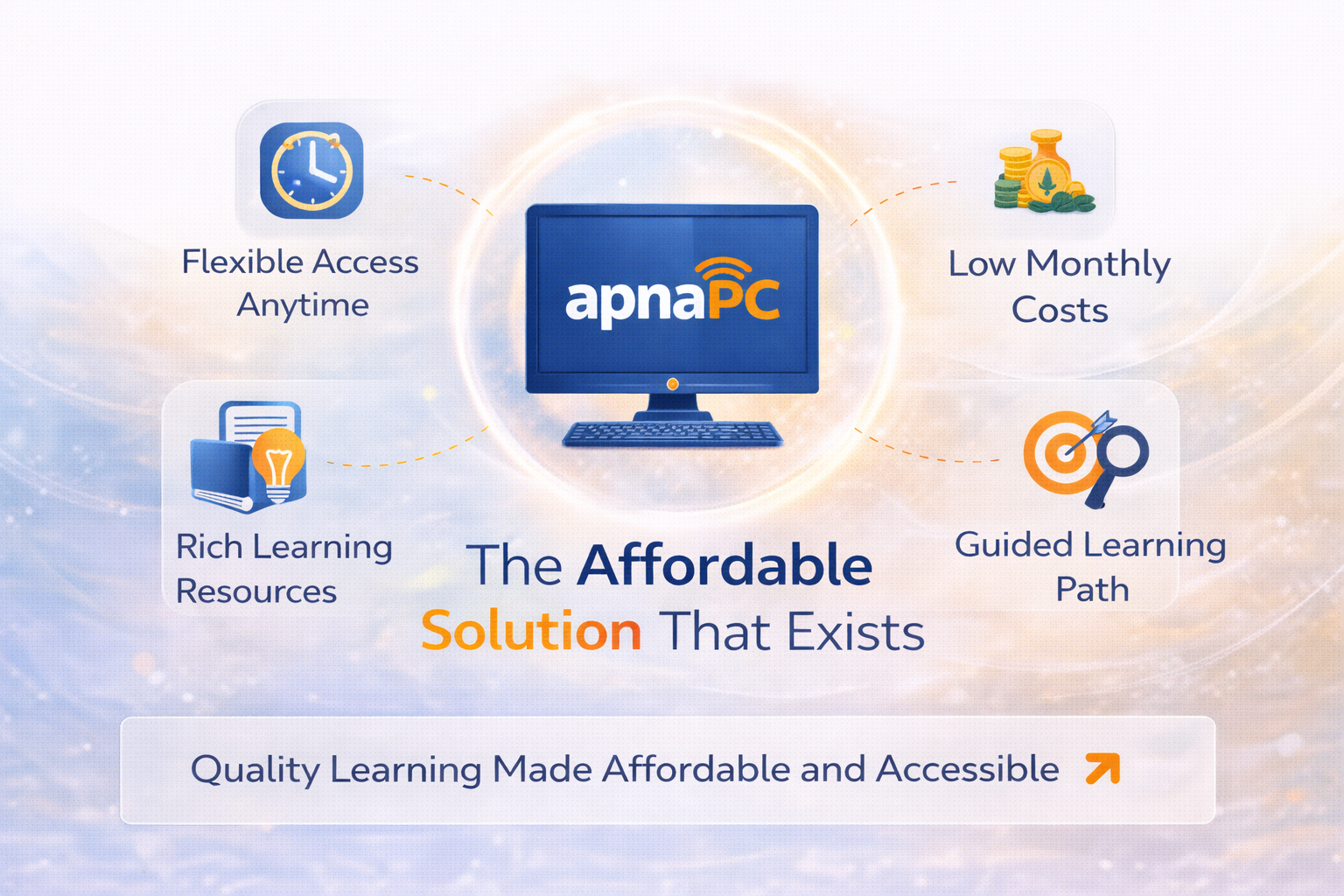
Apna PC offers a refurbished computer at ₹21,000, with a 3-year warranty and tools pre-loaded for learning. It is not a compromise. It is a reliable, tested machine that does everything a student needs: research, assignments, online courses, and more. For families who thought a computer was out of reach, this changes the math. As outlined in do students really need expensive laptops, the answer is no. A capable, affordable device is enough to level the playing field.
How One Computer Transforms a Family
When one student gets a computer, the ripple effect is real. A younger sibling watches and learns. A parent figures out how to pay bills online. A cousin borrows it for a job application. One device, bought once, used by many. Real student stories from Apni Pathshala show exactly this pattern: a single computer changing not just one child’s future but the entire household’s relationship with learning. That is the quiet power of access. It does not stop at one person.
Breaking the Offline Cycle in 2026
Breaking the digital divide students in India face starts with one honest step: affordable access. Not awareness campaigns. Not promises. A real device at a price families can manage. When students have a computer at home, everything else follows. Online courses open up. Skills build. Confidence grows. Opportunities that once seemed out of reach become reachable, one lesson at a time. The offline cycle breaks not with a grand policy but with a simple, working machine placed on a study table.
If your child is one of the millions of students offline in a digital world, do not wait another year. Explore Apna PC today and give them the one tool that actually changes things.