

The Argument Every Parent Has Heard
“But Papa, I can do everything on my phone!”
Sound familiar? If you’ve got a teenager at home, you’ve probably heard this at least a dozen times. And honestly, it sounds reasonable on the surface. Phones today are powerful. They’ve got apps for everything. You can watch lectures, type notes, even edit videos on a phone.
So why bother with a computer?
Because there’s a difference between being able to do something and being able to do it well. And when it comes to learning, that difference matters more than most parents realize.
The Screen Size Problem Is Real
Let’s start with the most obvious thing. A phone screen is five to six inches. A computer screen is at least eleven. That’s not just a comfort issue. It’s a learning issue.
Try reading a two page PDF on a phone. Try writing a 500 word essay using a phone keyboard. Try having a Google Doc and a research page open at the same time.
You can do it. But it’s painful. And when something is painful, kids avoid it.
A student in Bhopal told us she used to do all her homework on her mother’s phone. It would take her two hours to finish what should’ve taken forty minutes. She’d get frustrated, rush through it, and submit half finished work. When she got an Apna PC, she started finishing her homework in under an hour and actually enjoyed the process.
That’s not a small change. That’s a completely different relationship with studying.
Multitasking Isn’t Real on a Phone
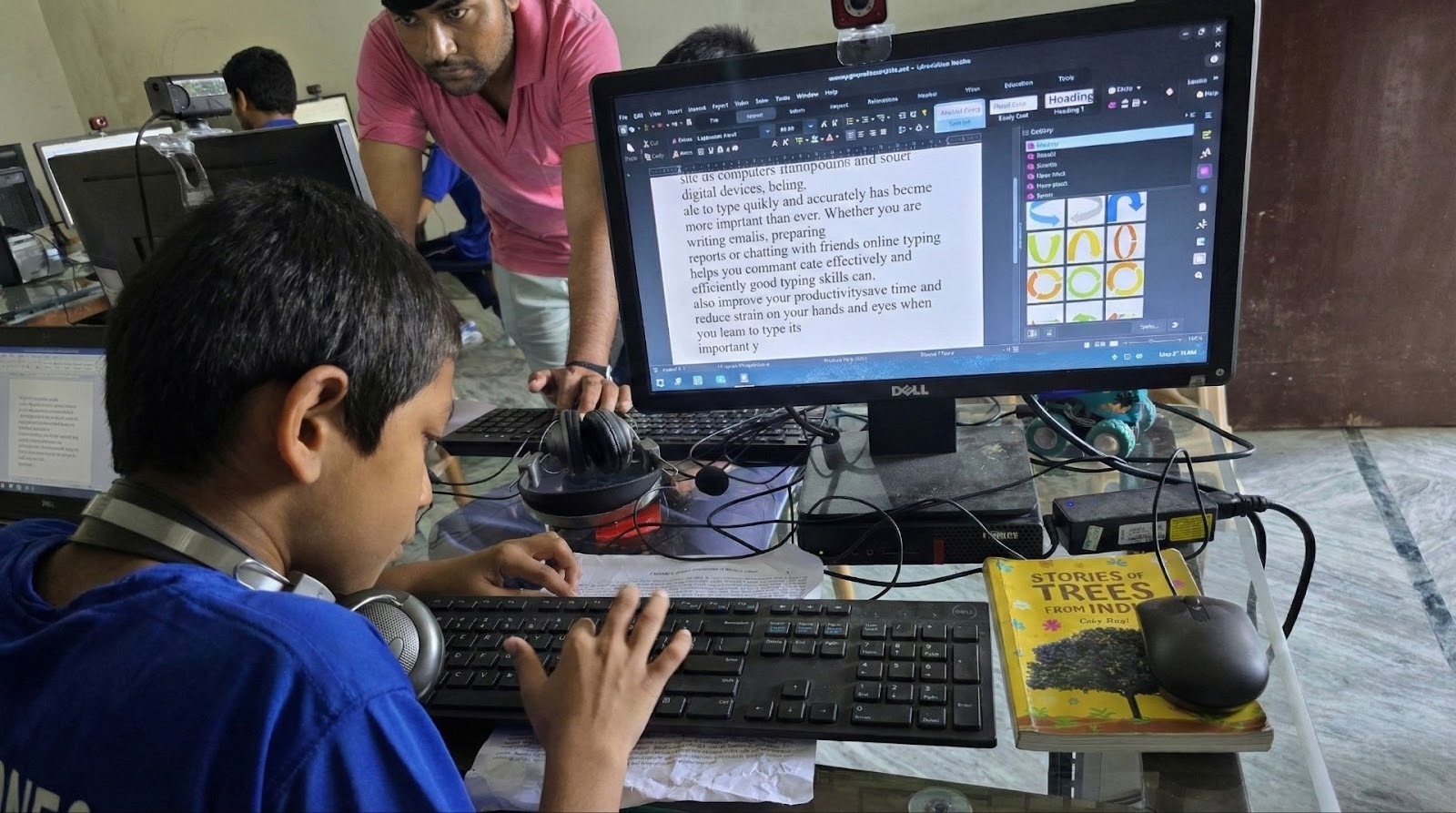
Computers let you work with multiple windows. You can have your notes on one side and a YouTube tutorial on the other. You can copy information from a website and paste it into a document without switching apps fifteen times.
On a phone? Every task is its own island. You switch between apps constantly, lose your place, forget what you were looking for. According to UNICEF’s digital learning guidelines, productive learning requires the ability to access multiple resources simultaneously, something phones simply aren’t designed for.
Tablets Aren’t Much Better
“Okay, what about a tablet then?” Fair question.
Tablets are basically big phones without the calling feature. They’re great for consuming content. Watching videos, reading articles, scrolling through apps. But creation? That’s where they fall apart.
Try coding on a tablet. Try building a spreadsheet. Try using software like Tux Paint or LibreOffice for a school project. The tools either don’t exist on tablets or they’re so stripped down that you can’t do anything meaningful with them.
A computer comes with a proper keyboard, a file system you can organize, software that actually works at full capacity, and the ability to install educational tools that simply don’t run on mobile operating systems.
The Typing Gap Nobody Mentions
Here’s something wild. Kids who grow up typing on phones develop thumb typing skills. Kids who grow up on computers develop proper keyboard skills. Guess which one matters for college applications, competitive exams, office work, and basically every professional task?
A child in Indore who’s been using a keyboard since Class 6 will type 40 to 50 words per minute by Class 10. A child who’s only ever used a phone will struggle to hit 15 on a real keyboard. That gap doesn’t close easily.
NCERT’s ICT curriculum specifically includes keyboard proficiency as a learning outcome. You can’t achieve that on a touchscreen.
The Distraction Factor
Let’s be honest about something. Phones are designed to distract you. Every app is fighting for your attention. Notifications pop up constantly. Instagram is one swipe away from your study app.
A computer, especially one set up for learning, is a different environment. You can configure it so educational tools are front and center. There’s no Instagram app nagging in the corner. The whole experience is built around doing things, not scrolling through things.
That’s one reason parents who understand the difference between passive and active screen time prefer computers for their children’s study sessions.
So What Should Parents Actually Do?

Don’t take the phone away. That’ll just start a war. Instead, create a clear separation. Phone is for chatting with friends, watching something fun, and casual browsing. A computer is for studying, creating projects, and learning new skills.
When kids have a dedicated learning machine, they automatically shift their mindset when they sit in front of it. It becomes their workspace. Their creative studio. Their learning companion.
A phone will always be a phone. But a computer? For a student, it can become something much bigger. And that’s a distinction worth making before your child falls behind classmates who already have one.
The choice isn’t about being anti phone. It’s about being pro learning. Give your kid both, but make sure they know which one is for fun and which one is for building their future. That clarity alone can change their entire approach to studying.