

Sivani S. is 18. She’s studying B.Com at ATMA Gurukulam in Thrissur. And when she first got regular access to a computer, she made a small decision that most people wouldn’t notice: she started saving her work in organized folders instead of the desktop.
Small thing. Didn’t take more than 30 seconds. But it told you something about how she was thinking.
That kind of decision, tiny, repeated, consistent, is what a digital habit actually is. And it’s what makes the difference between a student who uses technology and a student who thrives with it.
Habits vs Skills: What’s the Difference?
Skills are things you know how to do. Habits are things you do automatically.
A student can know how to type properly, fingers on the right keys, correct posture, but if they never practice it consistently, they’re still hunting and pecking when they’re stressed. A student can know that backing up their files is important, but if it’s not a habit, they’ll lose an assignment at the worst possible moment.
Skills need to become habits to be reliable. And habits take repetition, starting young, starting deliberately.
The 5 Habits That Actually Matter
1. Start Every Session With a Plan
This one sounds obvious. It almost never happens.
Most students open a computer and let the device decide what they do, which usually means email, YouTube, or whatever notification appears first. The students who build real digital competence have a different first move: they decide what they’re doing before they open anything.
This doesn’t have to be a formal system. One sentence: “Today I’m going to finish my history notes and then practice typing for 15 minutes.” That’s it. That sentence changes the entire session.
2. Save and Organize Everything
Sivani’s folder habit seems trivial. It isn’t. Students who organize their digital files from the beginning develop a kind of mental clarity about their work. They know where things are. They can find what they need. They don’t lose hours to “where did I save that?”
More importantly, this habit builds a mindset: your digital work has value and deserves to be treated carefully. That mindset shows up everywhere in how you handle data at a job, in how you manage professional files, and in how you approach systems that require organization.
3. Use the Right Tool for the Task
A common mistake early computer users make is using the same tool for everything. Notes in WhatsApp. Research in Google and nowhere else. Documents saved as screenshots.
Students who build lasting digital habits learn to match tools to tasks. Spreadsheets for data. Word processors for writing. Presentation software for obviously presentations. Canva for visual design. Khan Academy for subject-specific learning.
This seems like a small thing. Over time, it’s the difference between a student who knows how to use a computer and one who knows how to use technology strategically.
4. Build a Consistent Study Schedule Around Technology
The students who get the most from a computer aren’t the ones who use it the most hours. They’re the ones who use it at consistent times, for consistent purposes.
A daily routine that includes 45 minutes of focused computer-based studying at the same time every day builds a neural association. Over weeks, the brain starts to prepare for focus when it’s “computer time.” The habit does the work that willpower can’t sustain long-term.
Surendra Kumar Saini didn’t just use a computer when he felt like it. He built something with it, consistently, until it produced results. He now runs an e-Mitra shop not because he had a single brilliant session, but because he showed up repeatedly.
5. Review Before Closing
This is the habit almost no one builds, and almost everyone should. Before closing the computer at the end of a study session, take 2 minutes. What did you do? What did you learn? What do you want to do next time?
This isn’t a journaling exercise. It’s a brain consolidation technique. The act of reviewing what you just did dramatically improves retention. And it takes two minutes.
Students who build this habit don’t just remember more. They develop metacognitive awareness, the ability to understand their own learning process. That’s a college-level skill that most students never develop because no one teaches it explicitly.
Why “Before Age 15” Matters
Habits formed early are habits that stick. This is neurologically true, not just motivationally. The brain’s plasticity, its ability to form strong, automatic pathways, is highest in childhood and adolescence.
A student who builds good digital habits at 11 or 12 doesn’t have to fight bad habits when they’re 18. They start college with systems that work, instincts that are reliable, and a relationship with technology that supports their goals rather than undermining them.
Devendra, who has a 90% hearing impairment, didn’t just learn Canva and video editing. He built a practice. A consistent habit of creating, improving, and expressing himself through digital tools. That habit is what transformed technology from a foreign thing into a natural part of how he engages with the world.
The Device Shapes the Habit
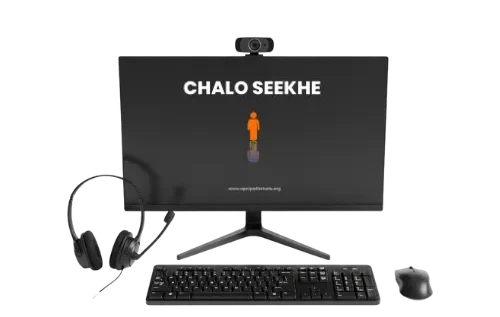
You can’t build good digital habits on a device that fights you. A computer cluttered with games, notifications, and social media apps pulls attention in the wrong direction every single session. Building the habit of focus on such a device is like trying to form a reading habit in a room with a TV on.
The environment matters. The setup matters. A device that’s configured for learning with educational tools front and center, distractions minimized, and a clean interface that doesn’t compete for attention makes habit formation significantly easier.
That’s not restrictive. That’s intentional design. And for children building habits for the first time, intentional design makes all the difference.
Want to give your child a computer that builds the right habits from day one? Visit Apna PC designed to make good digital habits the path of least resistance.