

Meera writes everything the teacher says. Every word. Every example. Every side note. Her notebooks are thick, neat, and full of color. She spends two hours every evening rewriting her class notes. She is the most hardworking student in her class. She also scores average marks.
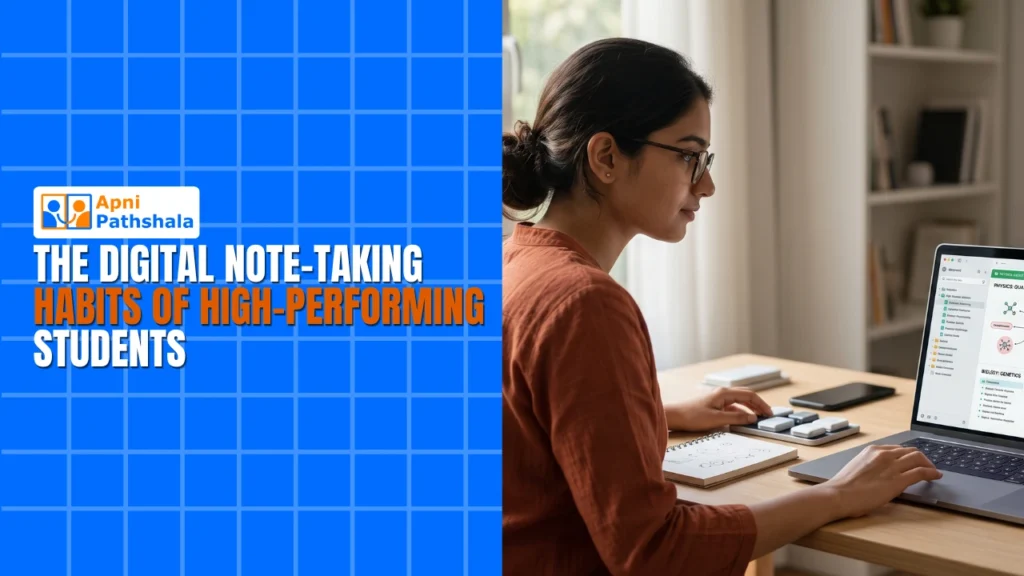
Two rows ahead, Priya types her notes on a computer during class. She does not write everything. She writes the key points, the formulas, and the teacher’s explanations in her words. She spends twenty minutes after class organising her notes into folders. She does not rewrite anything. She scores the highest marks in the class.
Meera works harder. Priya works smarter. The difference is not intelligence. It is the method. Digital note-taking is not about typing faster. It is about capturing the right information in a format that is searchable, organised, and easy to review. High-performing students do not write more. They write better.
Why Handwritten Notes Hit a Ceiling?
Handwritten notes have been the standard for decades. They work for small amounts of information. But as the volume grows, they become a burden instead of a tool.
A Class 12 student has notes from six subjects, each with fifteen to twenty chapters. That is over a hundred pages of handwritten notes. Finding a specific formula or concept means flipping through pages, hoping to stumble on the right one. The time spent searching is time that is not spent studying.
Handwritten notes also cannot be edited efficiently. If a student realizes a concept was explained incorrectly, they should cross it out and rewrite. A student who wants to add a new example has to fit it into the margin. Over time, the notes become messy, confusing, and harder to review.
Effective note-taking is not about writing more. It is about writing in a format that supports learning. Digital notes can be edited, reorganised, searched, and backed up. Handwritten notes cannot. The format determines the effectiveness.
DIKSHA, India’s national digital learning platform offers structured digital content for students. But the content is only useful if the student has a system to capture and organise it. Digital note-taking is that very system.
What High-Performing Students Do Differently?
High-performing students do not take notes the same way as average students. They have three habits that separate them from the rest.
First, they capture it in their own words. They do not copy the teacher’s sentences verbatim. They listen, understand, and type the concept in language they will understand later. This forces them to process the information during the lecture, not just record it. The act of rephrasing is itself a learning exercise.
Second, they organise immediately. After class, they spend fifteen to twenty minutes moving their notes into the right folder, adding headings, and linking related concepts. Average students dump their notes into a single file and never organise them. High-performing students treat organisation as part of the learning process.
Third, they review with a search. Before an exam, they do not reread entire notebooks. They search for specific topics, review the key points, and test themselves. The search function on a computer makes this possible in seconds. A student with handwritten notes cannot do this.
Study notes organisation is not a separate task. It is part of learning. The student who organises while studying retains more than the student who only reads.
What Is Apna PC and How Does It Help Indian Students Learn Better. The tools are simple. The habits are what make the difference.
Why a Computer Is Essential for Digital Note-Taking?
Note-taking apps for students exist on phones. But a phone is not the right device for serious note-taking. The screen is too small for organising notes. The keyboard is too slow for typing during a lecture. The operating system does not support the folder structures and search functions that effective note-taking requires.
A computer solves every one of these problems. The screen is large enough to see your notes and the lecture at the same time. The keyboard is fast enough to type during class. The operating system supports folders, subfolders, and instant search. A student with a computer can take, organise, and retrieve notes faster than any other method.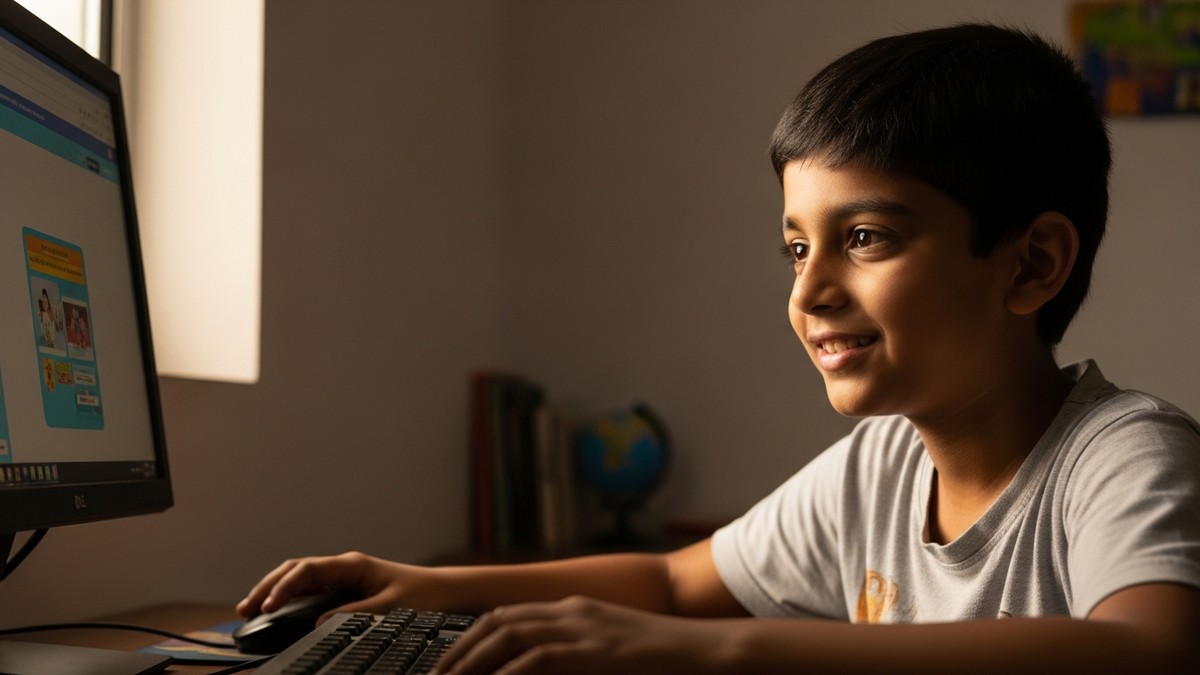
The habits of high-performing students require a computer. You cannot organise notes into folders on a phone. You cannot search through a hundred pages of notes on a phone. You cannot edit and reorganise notes efficiently on a phone. The tool matters as much as the habit.
The Biggest Advantage a Student Can Have Today. But more importantly, it gives them the device that makes high-performing habits possible.
What Parents Should Do?
If your child is still handwriting all their notes, they are working harder than they need to. Give them a computer. Let them start typing their notes, organising them in folders, and searching for information when they need it. The switch from handwriting to digital note-taking is one of the simplest changes that produces the biggest results.
Apna PC, priced at ₹21,000 (shipping and GST excluded), comes pre-loaded with LibreOffice and other tools that make digital note-taking possible. Your child plugs it in and starts building their digital study system from day one.
Digital India initiative is pushing for digital literacy across India. Digital note-taking is the foundation of digital literacy for students. Give your child the tool to build it. Visit apnapc.com to learn more.