

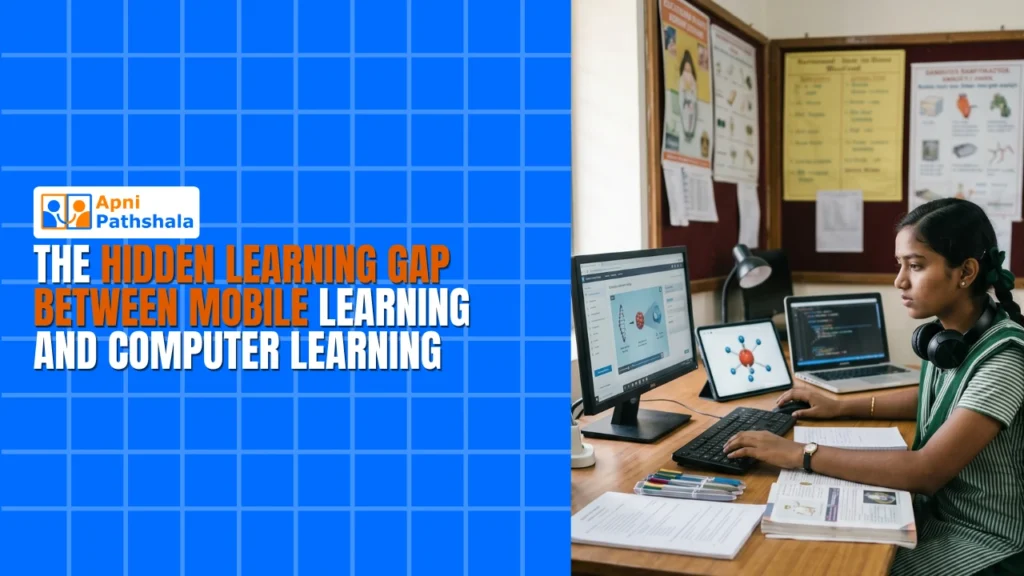
Walk into any Indian home in 2026 and you will see a child studying, usually with a phone in hand. Online classes, YouTube lessons, school groups, doubt-clearing chats, and even exam preparation are all squeezed into a six-inch screen. The setup looks like progress. Underneath, the mobile learning disadvantages quietly stack up, and the gap between a child learning on a phone and one learning on a computer keeps widening week after week.
The Visible Gap Versus The Hidden One
The visible gap is straightforward. A computer has a bigger screen, a real keyboard, and more software. A phone is small and portable. Most parents stop the comparison there.
The hidden gap is where the real damage happens. When you look at computers vs. mobile for students from the angle of how learning actually sticks, the phone falls behind in ways that nobody measures at home. The phone is built for short bursts: swipe, tap, scroll, move on. The computer is built for long-form work, reading, thinking, typing, and building. School learning needs the second pattern, not the first. A child who has only ever practised the first one slowly loses the patience required for the second.
This is why two children with the same teacher, same syllabus, and same hours of “study time” can finish a year at completely different levels of understanding. The device shaped the habit. The habit shaped the outcome.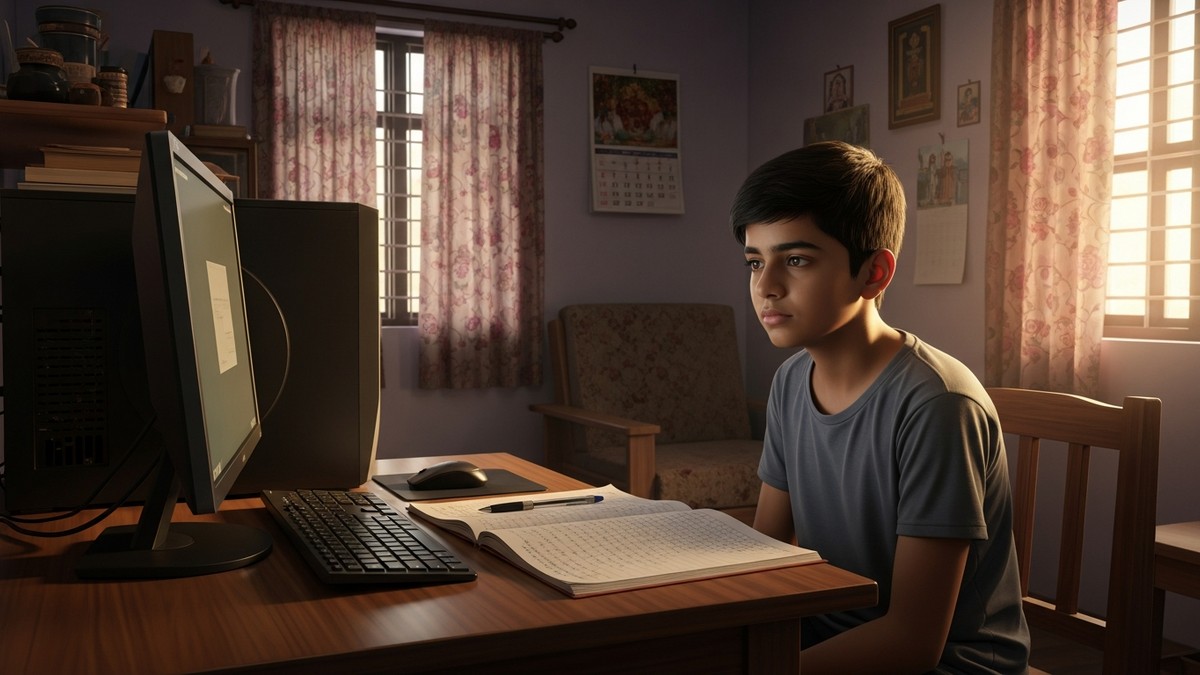
What Does Studying on a Mobile Phone Actually Cost?
Most parents underestimate what studying on a mobile phone takes away from a child’s day. The screen is small, so diagrams need to be zoomed in. Notifications interrupt focus every few minutes. Apps eat memory and crash mid-class. Long-form reading becomes painful, so kids skim instead of studying. Typing on glass kills the patience required for proper assignments.
Then there are the costs that are not academic. The WHO guidelines on children and screen use have been warning for years about how prolonged handheld-screen exposure shapes posture, sleep, and attention spans. A child hunched over a phone for three to four hours a day is not just learning less effectively. They are forming physical and mental habits that follow them into adulthood.
And the phone is rarely “just” a study phone. It is the same device that holds Instagram, WhatsApp, games, and a hundred notifications competing for attention. Every twenty-minute study session incurs a cost in interruptions that the child no longer notices.
The Online Learning Reality Most Indian Homes Face

The pandemic taught India that learning can happen at home. The years since have shown a quieter truth: it cannot happen well on a phone alone. The biggest online learning challenges Indian families face are not about internet speed or course quality. They are about the mismatch between what online learning expects and what a phone can deliver.
An online class assumes the student can see the teacher, the slide, and their notes at the same time. A phone forces a choice between any two. A coding lesson assumes a keyboard. A phone offers a touchscreen. A practice test assumes scratch space. A phone offers a notification bar. The Central Board of Secondary Education (CBSE) has been steadily moving more of its student resources, sample papers, and skill modules online, and the experience of accessing them on a phone is nothing like accessing them on a computer.
For Indian families, the answer is not a premium imported laptop. It is a device built specifically for a student’s study day. That is exactly what Apna PC is, an affordable educational computer priced at ₹21,000 (shipping and GST excluded), designed for online classes, typing, basic coding, project work, and the long-form learning that a phone simply cannot support.
The deeper benefit is not the device itself. The real change occurs in the child’s daily routine when the device finally aligns with their work. Focus stretches. Notes survive. Practice happens daily. Confidence grows because effort actually shows up in results. That shift, from “studying on a phone” to “learning on a computer,” is the real advantage most students never get to experience. We explored this concept further in The Biggest Advantage a Student Can Have Today.
If your child is doing everything right on a phone and still falling behind, the problem is not the effort. It is the tool. Give them the right one and watch how quickly the gap closes. Visit apnapc.com to learn more.