

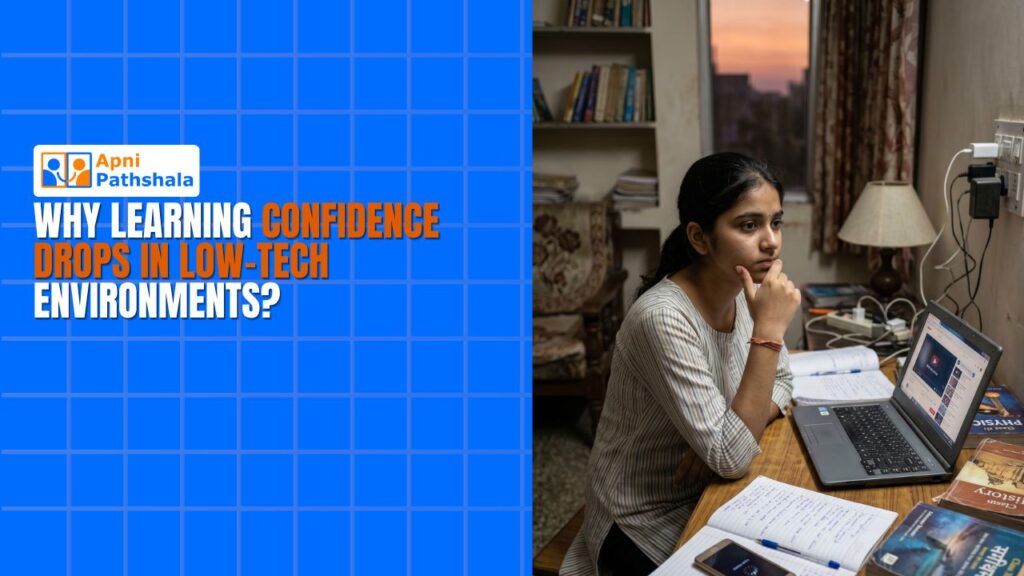
Most parents assume that classroom confidence comes from intelligence, effort, or a good teacher. But there is a quieter force that shapes how a student sees themselves, and it has nothing to do with any of these things. Student confidence is closely tied to the tools available during study. When those tools are missing, outdated, or unreliable, something subtle begins to break down long before the grades do. Understanding why this happens is the first step toward fixing it.
What a Low-Tech Environment Actually Looks Like?
A low-tech learning environment is not always obvious from the outside. It is not always about poverty. It shows up in the student who shares a device with three siblings. In the home where the only phone has a cracked screen and a dying battery. In the family that has internet but no computer, homework gets done in 15-minute bursts on a 5-inch screen.
The role of technology in education has changed so rapidly in the last decade that even modest gaps in access now create visible differences in learning outcomes. Students who regularly use a computer to study do not just learn more; they learn differently. They develop the ability to search, organise, revise, and self-assess. Students without that environment do not get those reps. And over time, they feel it.
According to NCERT (National Council of Educational Research and Training), self-directed learning, the ability to take charge of one’s own study, is one of the strongest predictors of long-term academic success. A low-tech environment quietly removes the conditions needed for this habit to develop.
How the Digital Learning Environment Shapes Self-Belief
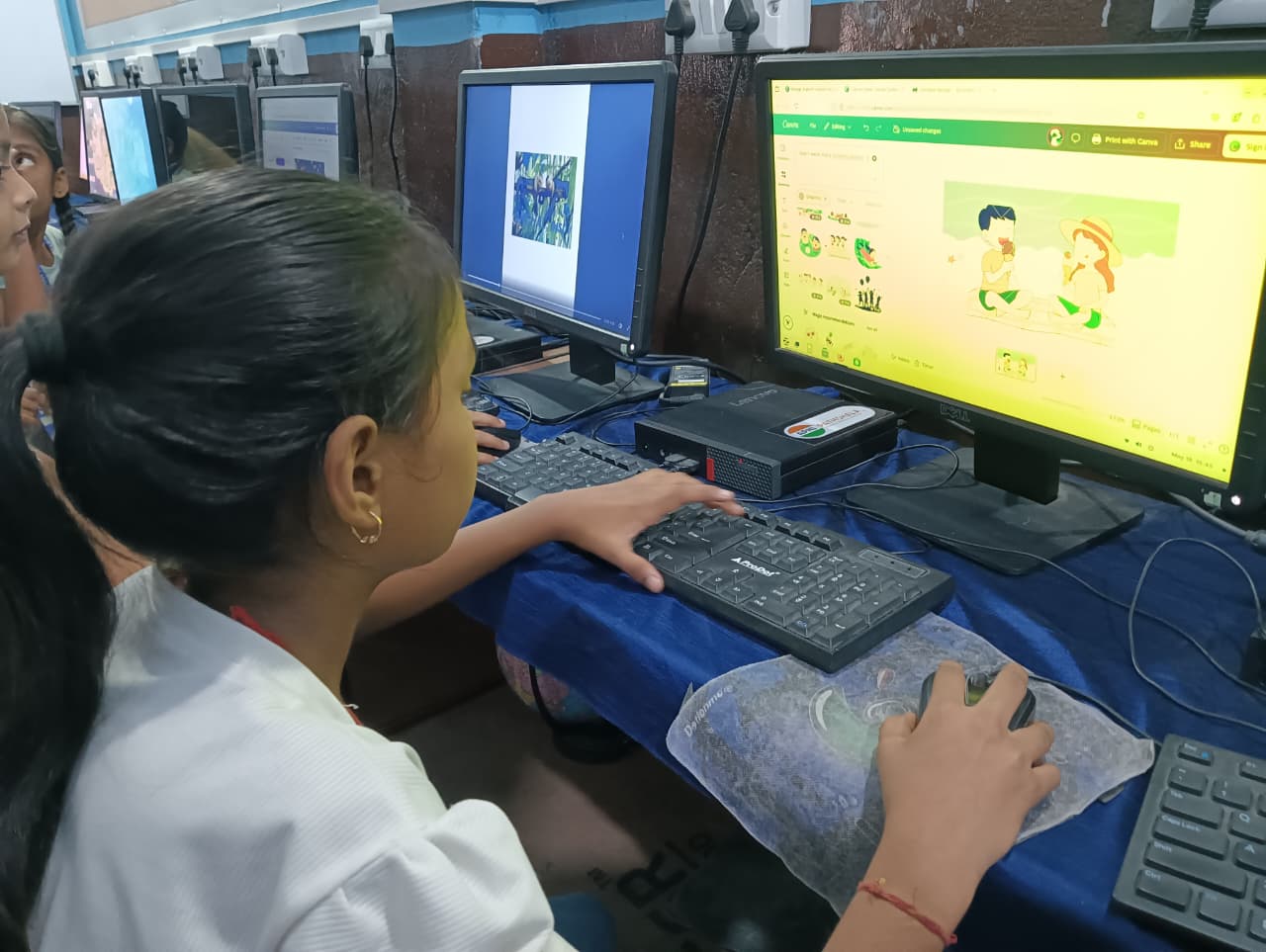
Confidence does not collapse in one dramatic moment. It erodes slowly, through dozens of small experiences in which a student feels behind, underprepared, or incapable, even when they are not.
Consider what happens when a student in a digital learning environment gets stuck on a topic. They search for a YouTube explanation. They find three different videos. They rewatch the one that clicks. They take notes. They move forward. That entire sequence, curiosity, search, struggle, resolution, builds something inside them. They learn that effort works. That they can figure things out. That the subject is manageable.
Now consider the same student without that environment. They get stuck. There is nothing to turn to except a textbook that already confused them once. They skip the concept, fall further behind, and wait until the next day, hoping the teacher clarifies it. Neither outcome builds confidence; both reinforce the feeling that understanding is beyond their control. Repeat this across a school year, and the student begins to identify as someone who is simply not good at studying. That identity is far harder to shake than any exam result.
Why Confidence-Building for Students Requires the Right Infrastructure?
Many schools invest in confidence programmes, motivational talks, group activities, and extra support, but see limited results. The reason is that confidence-building for students cannot happen through encouragement alone. It is built through repeated, successful action: a student tries something, sees it work, and tries again. That cycle requires tools.
A personal computer at home is not just a convenience; it is the platform on which a student practises being capable. Every homework assignment completed without borrowing a device is a small act of independence. Every concept looked up at 10 PM, on their own terms, is self-reliance. Every project typed and submitted on time is proof: I am the kind of student who gets things done.
Without that platform, those experiences simply do not happen, and without them, confidence cannot accumulate. This is why two students of equal intelligence, in the same school and under the same teacher, end up in very different places. The difference is rarely their minds. It is their environment.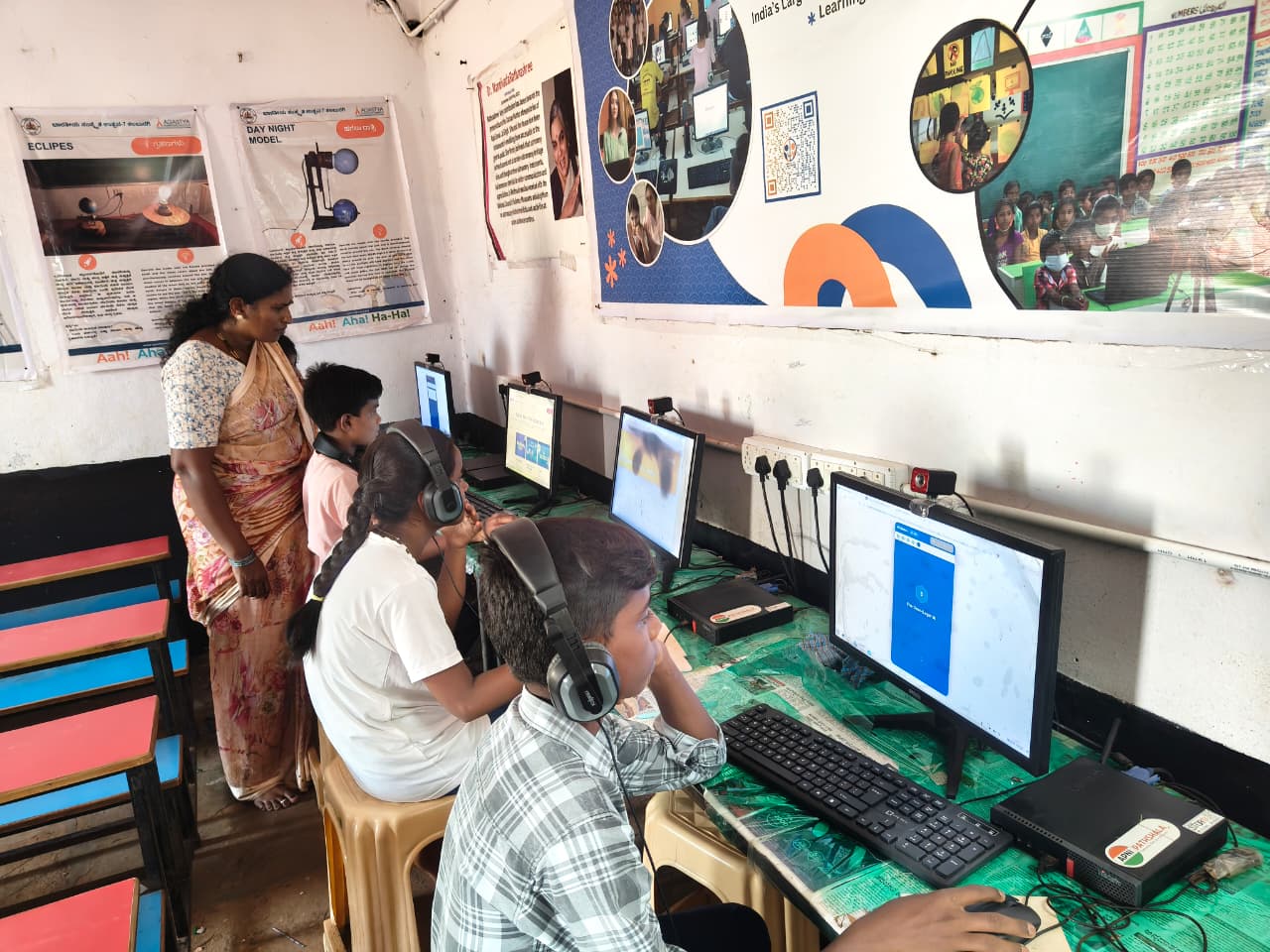
The Digital India initiative recognises this, pushing for equitable access to digital tools precisely because access shapes not just what students can do, but how they see themselves as learners. Learn more about The Hidden Cost of Not Having a Computer in 2026; the numbers are more significant than most families expect.
What Indian Families Can Do About It?
The good news: this is a solvable problem. A student who gains consistent access to a personal computer quickly begins to close the confidence gap, not because they suddenly become smarter, but because they finally get the environment their effort deserves.
Apna PC was built for exactly this situation. It is an affordable, education-focused computer designed for Indian students, reliable enough for daily study, simple enough for first-time users, and priced at ₹21,000 (shipping and GST excluded) so more families can afford it. See what Apna PC is and how it is already changing the learning environment for students across the country.
A student’s confidence is not fixed. But it does depend on the conditions around them. Give them the right environment, and watch what they are actually capable of. Visit apnapc.com to learn more.