

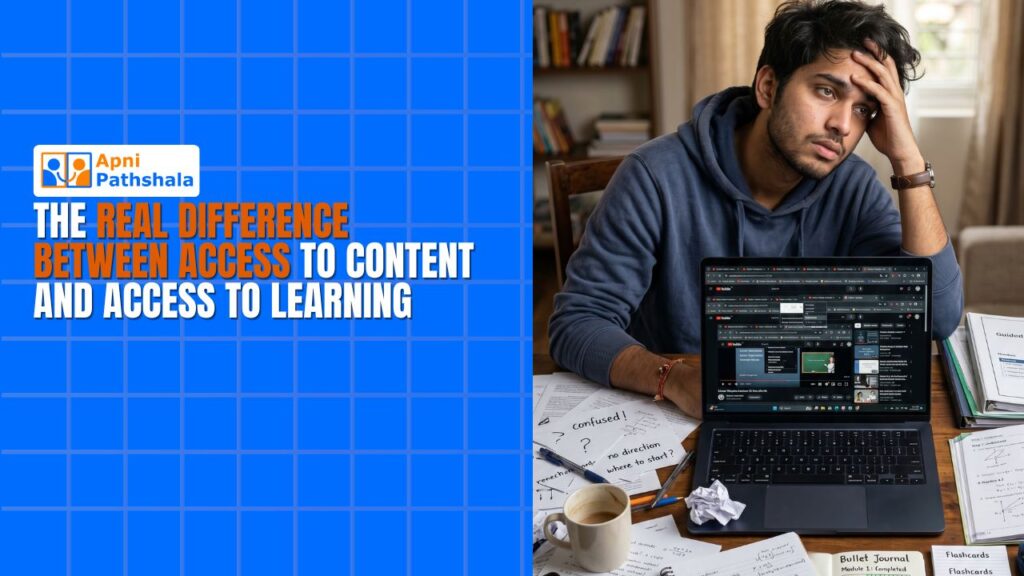
Content is available everywhere. A Class 10 student with a smartphone can find YouTube explanations for every chapter, watch an IIT professor break down a complex topic in 12 minutes, or download free revision notes in seconds. By any measure, digital learning for students has never been more accessible. Yet many students who have all of this still struggle when the exam arrives. The problem isn’t that resources don’t exist. It’s that having access to content and actually learning from it are two very different things, and mixing them up is a mistake that quietly costs students more than they realise.
Access to Content Is Not the Same as Access to Education
Access to content means being able to see or find information. In 2026, this barrier has nearly disappeared. Free lessons exist in Hindi, Bengali, Tamil, Marathi, and many other languages. Platforms across the internet have made an extraordinary volume of material available to any student with a phone and a data connection.
But seeing information is not the same as understanding it. When a student watches half a video on a borrowed phone and then gets interrupted, that is content access, not learning. When a PDF arrives in a WhatsApp group, and someone scrolls through it without reading closely, that is also content access.
Sustained access to education has always required more than proximity to material. A textbook sitting on a shelf doesn’t teach anyone who doesn’t sit with it daily. Content without the right conditions for engagement is information that enters and exits without leaving much of a mark. The quiet gap most families miss isn’t about what’s available; it’s about whether their child has a real chance to engage with it consistently, on their own terms.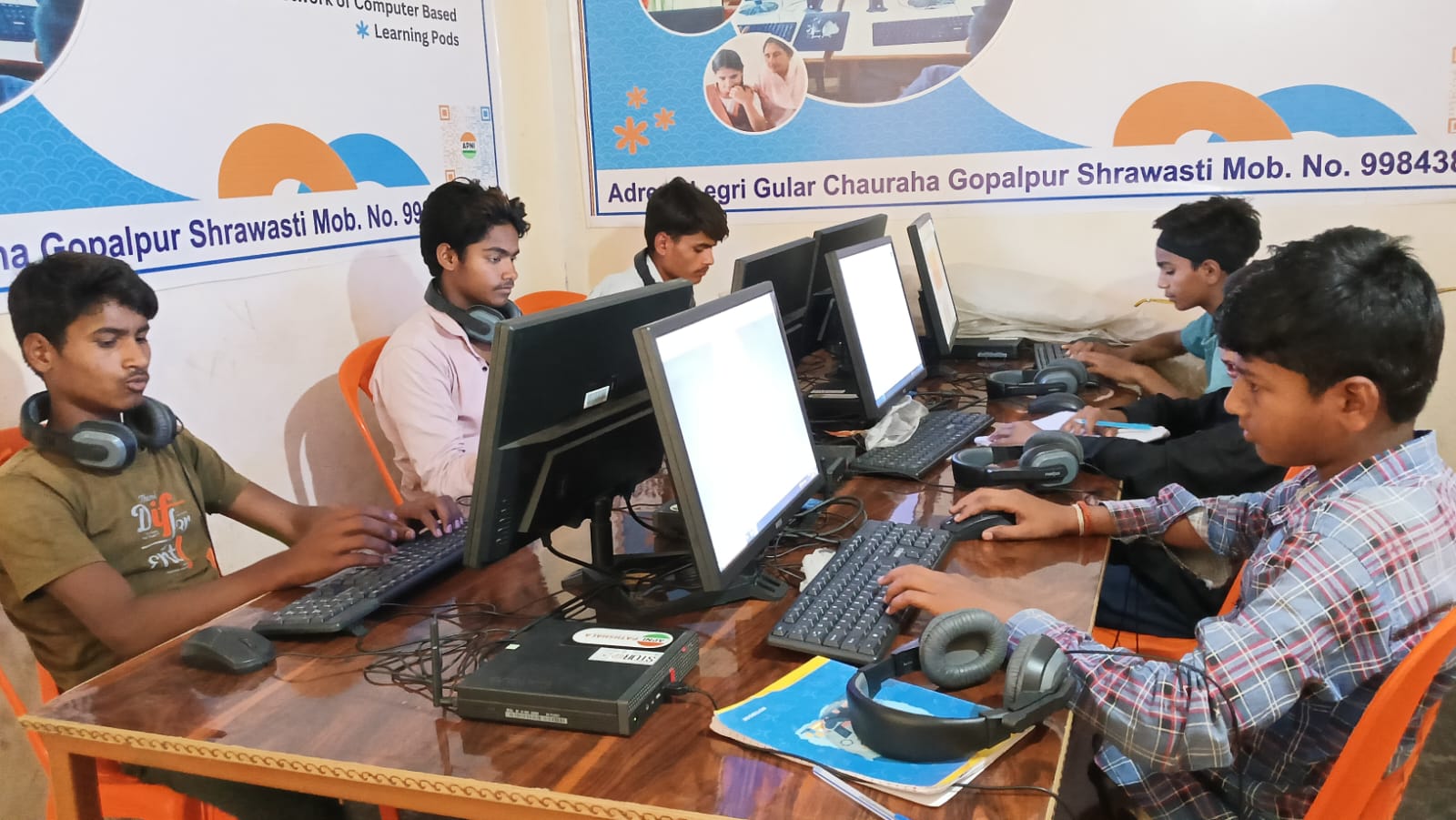
What Real Learning Actually Requires?
Real, lasting learning has specific requirements. It needs time, focus, the ability to repeat and revisit, and a space to practice. According to the UNICEF India education report, self-directed engagement with learning materials outside school hours is one of the strongest predictors of student progress, especially in households with limited home academic support.
The online learning benefits that platforms promise are only fully available when students have the right conditions. That means a device the student controls, one that’s ready when they are, not when someone else has finished using it. It means 45 minutes of uninterrupted time to work through a problem. It means being able to pause a video, reopen a tab the next evening, type out answers, and move through material at their own pace.
When those conditions exist, content becomes learning. When they don’t, even excellent digital platforms deliver very little. A student who spends 10 focused minutes practising a concept they’re unsure about will retain more than one who passively watches a one-hour video without pausing once. Learning is active. Content consumption is passive. These are not the same activity, even when they use the same device.
Why the Device Changes Everything?
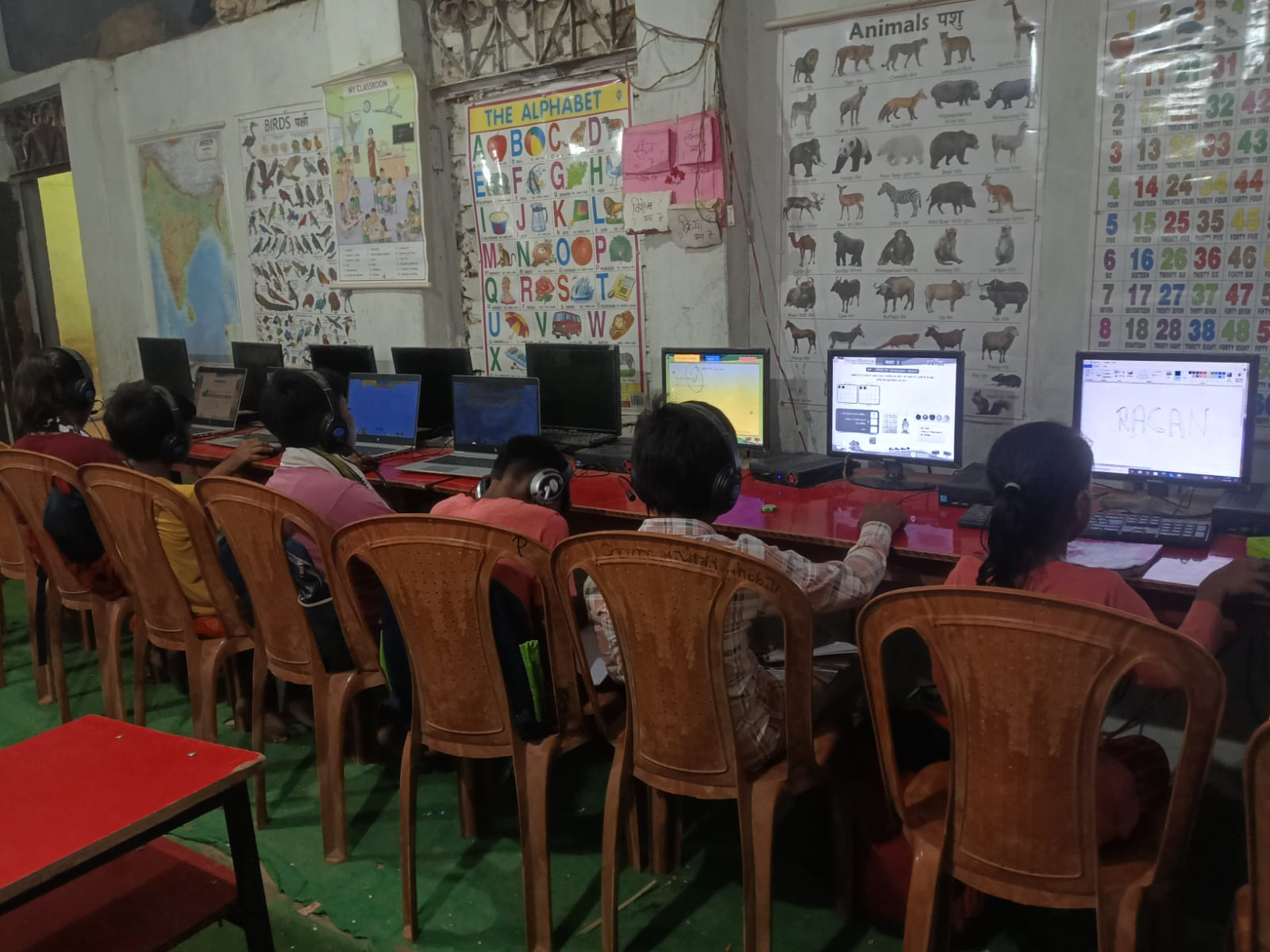
Learning through technology works best when the technology fits the task. A shared mobile phone is designed for communication, with a small screen, always in demand, always moments away from an interruption. A student who depends on it as their primary study tool is never fully in control of their own learning time.
A personal computer changes this. With a full screen, a keyboard, and a device that belongs entirely to them, students stop being passive content viewers and begin engaging actively. They can type answers properly, work on assignments, explore beyond the textbook, and build practical skills, formatting documents, using spreadsheets, doing research, that have genuine value in every direction their future takes them.
DIKSHA India’s national digital learning platform contains thousands of curriculum-aligned resources built specifically for Indian students. But like all digital platforms, it delivers its full benefit only to students who can use it properly, on a real screen, at a real pace, without someone needing the device back in five minutes.
The Biggest Advantage a Student Can Have Today isn’t marks or coaching, it’s the habit of learning independently and consistently. And Why Every Indian Student Needs Their Own Computer comes down to this exact shift: when a device belongs to you alone, your entire relationship with studying changes.
Apna PC was built to give Indian families this shift at a price that doesn’t require compromise. At ₹21,000 (shipping and GST excluded), it’s a dedicated, student-ready computer, built for daily learning, not shared use.
The difference between a student who has content and a student who is actually learning is almost always a device, one they own, one that’s ready when they are, one that makes deep engagement possible every single evening. Apna PC gives your child exactly that. Visit apnapc.com to learn more.