

Most students start school full of questions. They want to know why the sky is blue, how planes stay up, and what lies beyond the last page of the textbook. But somewhere between Class 5 and Class 10, that curiosity quietly disappears. By the time students reach board exams, many of them have stopped asking questions altogether and started chasing marks instead. Self-learning for students, the habit of exploring beyond what teachers assign, is one of the most powerful skills a student can develop. And it is also one of the first things the system accidentally kills.
What Kills Curiosity in Learning and When It Happens
Curiosity in learning does not fade on its own. It gets crowded out. When every subject becomes about scoring marks and every topic is measured by whether it will appear on an exam, students quickly learn to engage only with what is “useful.” Anything outside the syllabus feels like a risk, time spent on the wrong thing.
Teachers, often managing large classrooms with tight schedules, rarely have the time to follow up on a student’s tangential question. Parents, worried about results, remind children to focus on the portions. And students, eager to please both, quietly close the door on their own curiosity.
The damage is subtle but serious. A student who only learns what is assigned never develops the instinct to seek. They wait to be told what to read, what to watch, what to practise. That dependence does not end at school; it carries forward into college and careers.
The Case for Learning Beyond the Classroom
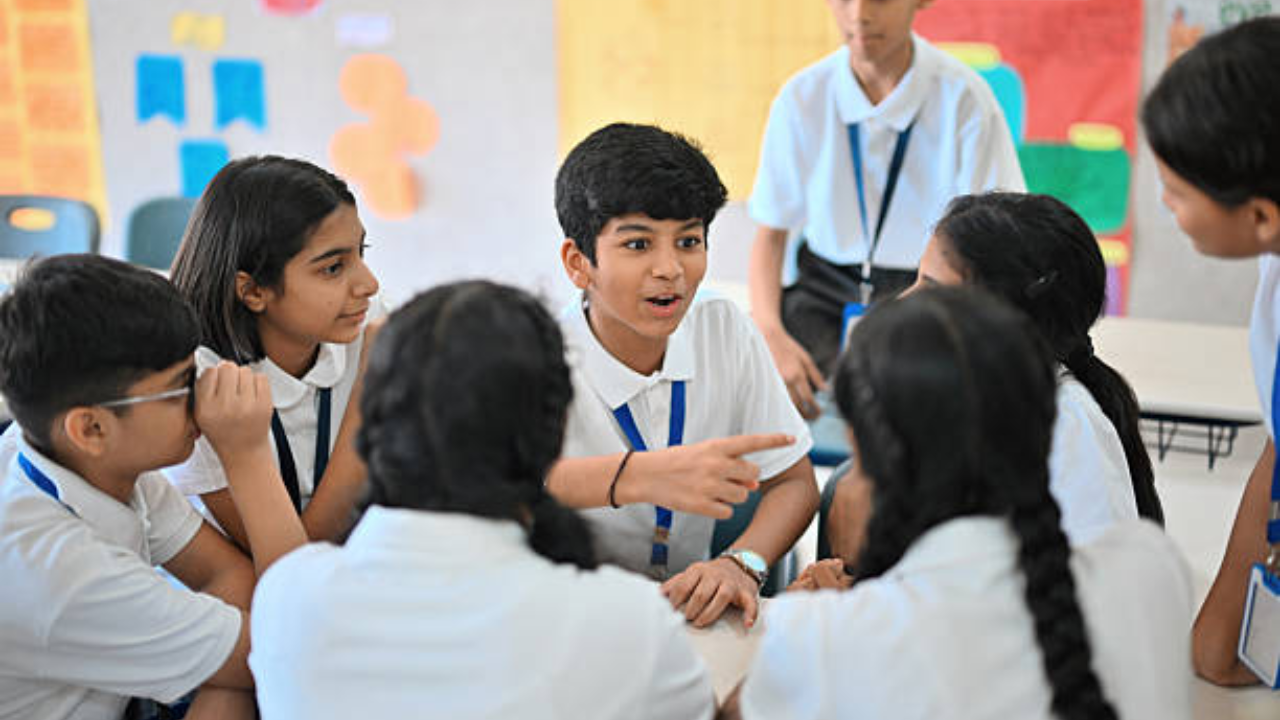
Learning beyond the classroom does not mean ignoring the syllabus. It means using the syllabus as a starting point, not a boundary. A student who reads about photosynthesis in a textbook and then watches a short documentary about how plants communicate is not wasting time. They are building a richer understanding that makes the exam answer sharper and the knowledge more lasting.
The students who do best in competitive exams, JEE, NEET, and UPSC, are almost never the ones who studied only what was prescribed. They read widely. They connected ideas across subjects. They explored because they were interested, not because it was assigned.
DIKSHA — India’s national dig ital learning platform offers thousands of supplementary learning resources across subjects and classes, specifically designed to help students explore beyond their school textbooks. Yet most students never use it because they have either never heard of it or do not have a reliable device to access it consistently.
Access to platforms like DIKSHA, YouTube educational channels, and free online courses means the syllabus is now just the floor, not the ceiling. But only students with reliable digital access can actually reach these resources when curiosity strikes.
How Independent Learning Skills Shape a Student’s Future
Independent learning skills are not something a teacher can hand over in a classroom. They grow through practice through the repeated experience of having a question, finding a resource, and figuring something out on your own. Every time a student does this successfully, they build confidence. Every time the process is interrupted by a missing device, a dead battery, or an unavailable shared phone, that confidence takes a hit.
Students who develop these skills carry a permanent advantage. In college, when professors expect self-directed study, they are already prepared. At work, when problems arise with no textbook answer, they know how to learn their way through. As highlighted in The Biggest Adva ntage a Student Can Have Today, the students who thrive are not always the ones with the best marks; they are the ones who never stopped being curious.
Central Board of Seconda ry Education (CBSE) has been steadily shifting towards competency-based assessments that reward understanding and application over rote learning. This shift rewards exactly the kind of student who explores, questions, and learns beyond what is handed to them.
But here is the honest truth: it is very hard to build independent learning habits without a personal device. A student who borrows a parent’s phone to look something up is unlikely to fall into a genuine hour of exploration. The friction is too high. The access is too uncertain. As explained in Why Every Indian Student Needs Their Own Computer, personal digital access is what turns occasional curiosity into a daily habit of learning.
Apna PC gives students a device of their own, a dedicated space to ask questions, follow their curiosity, and build the independent learning skills that will matter long after school ends. At ₹21,000 (shipping and GST excluded), it is one of the most practical investments a family can make in a child’s future. Visit apnapc.com to learn more.