


Every parent has said it at some point: “My child just doesn’t want to study.” The dropped grades, the distracted evenings, the constant push-and-pull over homework. But what if the problem is not attitude? What if student motivation is falling not because a child is lazy or careless, but because the environment in which they are expected to learn quietly makes effort feel pointless? Low-access learning environments, where devices are shared, unavailable, or simply the wrong tool for the job, affect a student’s willingness to try in a very specific way. Understanding that is the first step to actually fixing it.
Why Low-Access Environments Create a Lack of Motivation in Students?
When a student sits down to study, and the tools they need are not available, something happens inside them that is easy to miss from the outside.
Motivation is not just about wanting to learn. It is about believing that effort will lead somewhere. Psychologists call this self-efficacy, the sense that what you do actually produces a result. When a student repeatedly finds that the device is being used by someone else, that the internet is slow or gone, or that the app they need does not function on a shared phone, they begin to experience a quiet kind of learned helplessness. They stop trying, not because they do not want to succeed, but because experience has taught them that trying does not reliably lead anywhere in these conditions.
This is the hidden mechanism behind students’ lack of motivation that parents often misread as attitude or laziness. The child is not refusing to study. They have quietly decided that the effort is not worth making when the environment fights them at every step.
According to the UNICEF India education report, lack of access to proper learning environments is one of the key factors behind student disengagement across India’s Tier 2 and Tier 3 communities. Students who face repeated access barriers develop patterns of disengagement that are difficult to reverse once established, making early intervention far more valuable than trying to rebuild motivation after years of frustration.
How the Learning Environment for Students Shapes the Will to Study
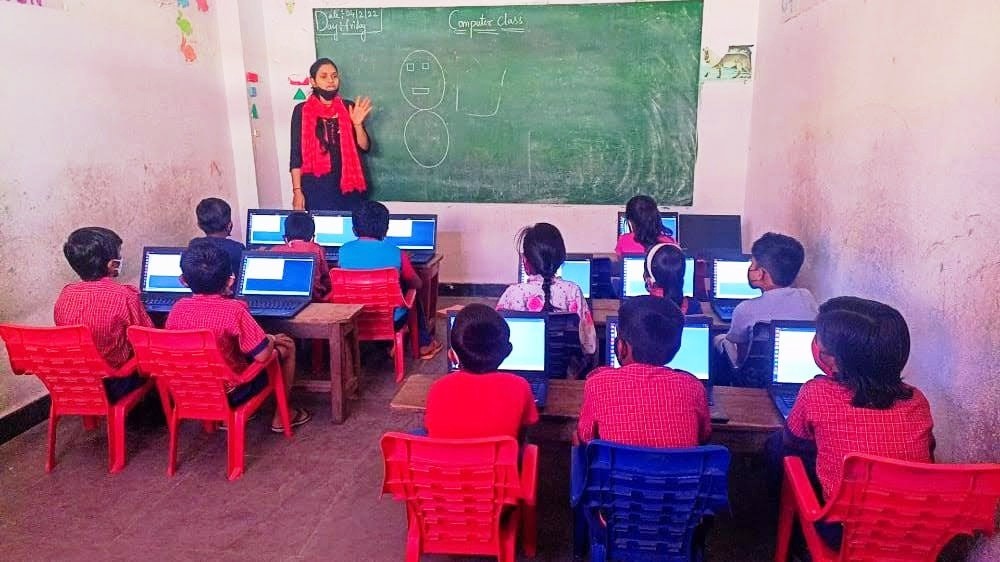
Most conversations about student motivation focus entirely on the student, their mindset, their discipline, and their habits. Very few focus on the space and tools they are working with. That is a significant blind spot.
The learning environment for students shapes behaviour in both practical and deeply psychological ways.
On the practical side: a student who has to clear the dining table, ask permission for the phone, wait for a call to finish, and then try to study in a noisy shared space is spending focus before a single word is read. By the time conditions are right to start, a portion of the mental energy needed for the actual work is already gone.
On the psychological side, the environment sends the student a signal about who they are. A student with their own desk, their own computer, and a consistent place to study receives a clear message: this is your work, and it matters. A student who studies hunched over a shared phone in a corner of the living room receives a very different message, one that nobody is consciously choosing to send but that lands just as clearly.
These environmental signals accumulate over months and years. Students who study in well-resourced environments begin to think of themselves as learners; it becomes part of their identity. Students in low-access environments often do not build that identity, and without it, motivation has no stable ground.
Study Motivation Tips That Actually Work Once the Right Tools Are in Place
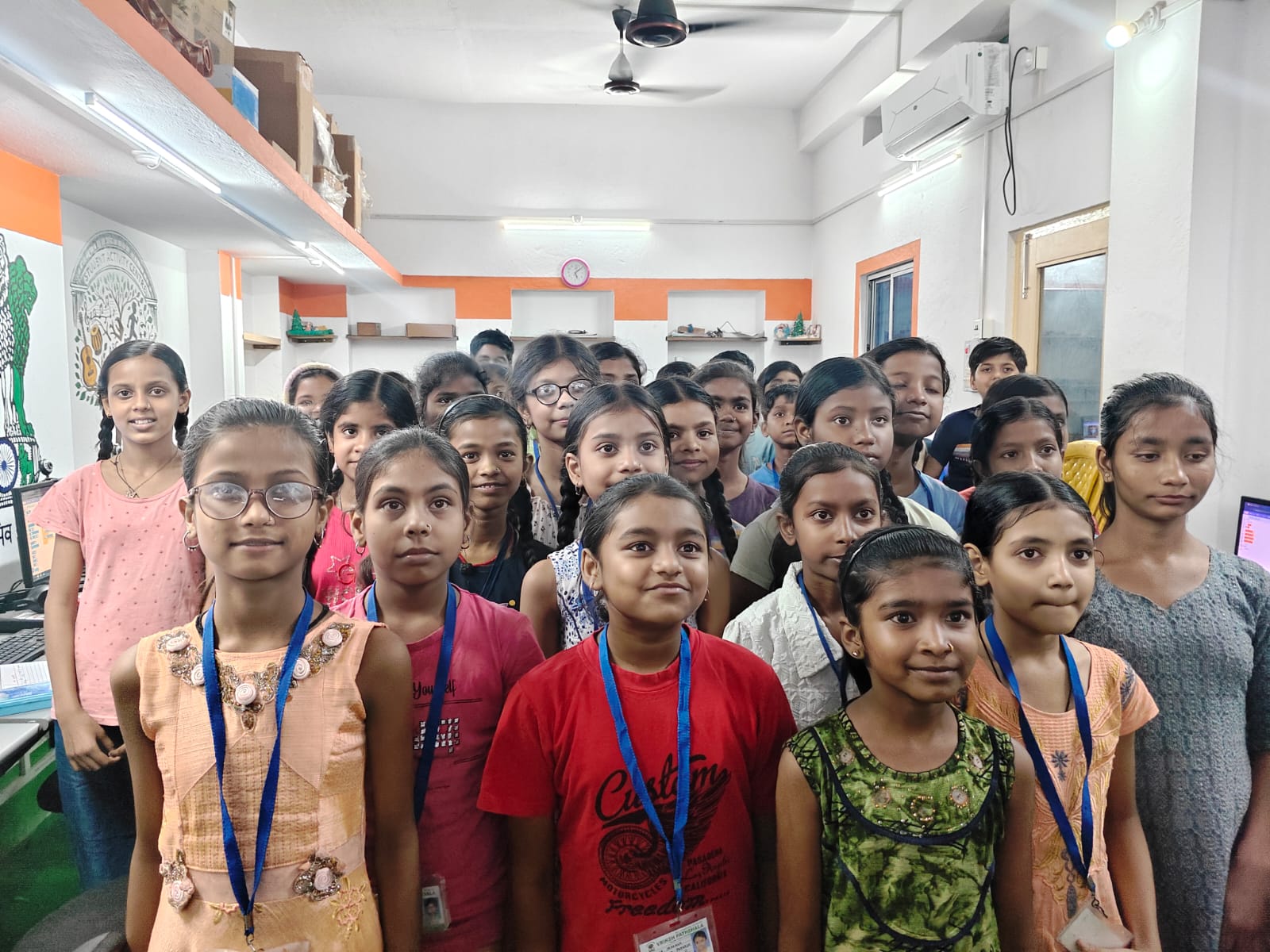
There is no shortage of study motivation tips: study at a fixed time each day, break tasks into smaller chunks, track your progress, and reward yourself after a session. These are genuinely useful approaches. But every single one of them assumes a baseline that many Indian students do not have.
Consistency requires a device that is consistently available. Breaking work into sessions requires software that opens without a fight. Tracking progress requires a screen that displays content properly. Rewarding effort with a learning video or practice quiz requires a device that belongs to the student, not one that might be needed by someone else the moment they settle in.
The most powerful motivational shift is not a technique. It is removing the friction that stands between a student and their work. When friction disappears, motivation naturally grows.
When a student has their own computer, always charged, always ready, several things happen without anyone having to force them. Daily habits form because nothing external breaks the routine. Procrastination shifts from “I can’t access the tool” to “I need to start the task,” which is a far more solvable problem. Most importantly, the student begins to feel ownership over their learning, and ownership is the strongest motivational force any student can develop.
According to NCERT (National Council of Educational Research and Training), structured, consistent home-based learning supported by adequate tools is one of the most significant predictors of student performance across all age groups and boards.
Learning about What Is Apna PC shows how this translates into something practical and affordable for Indian families. And The Biggest Advantage a Student Can Have Today makes the case plainly: access is not a luxury or a convenience. It is the foundation on which student motivation stands, and without it, even the most determined child will eventually tire of trying.
Apna PC is priced at ₹21,000 (shipping and GST excluded) and built for Indian homes, where the goal is simple: give the student what they need without making the family choose between that and everything else life demands.
Student motivation does not exist in a vacuum; it lives or dies in the environment you build around your child. Build that environment with intention. Visit apnapc.com to learn more.