

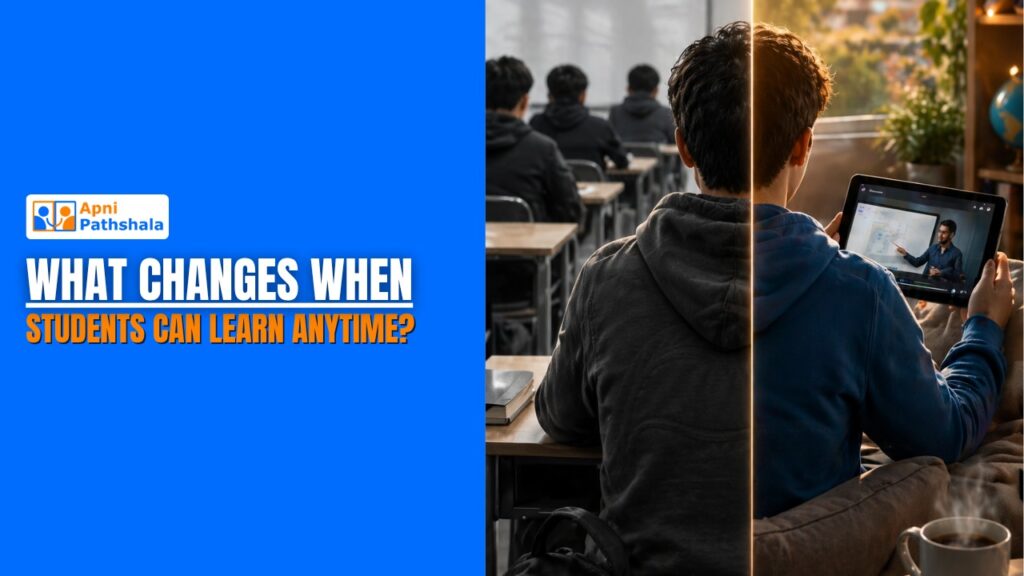
What does Anytime Learning actually mean?
The phrase “anytime learning” gets used a lot, but the core idea is simple. A student can return to a concept whenever they are ready, without waiting for a class, a teacher, or a scheduled slot. The benefits of anytime learning go far beyond convenience.
Learning does not follow a timetable. A student who is tired and distracted at 5 PM after school is not going to fully absorb a two-hour tuition session. But the same student, sitting quietly after dinner when the house has settled, can revisit the same topic and suddenly understand what had confused them all day. The brain absorbs information differently at different times, and flexible learning respects that reality.
This is why DIKSHA, India’s national digital learning platform, was built to be available around the clock. Quality content should not be locked to school hours. Students in villages, small towns, and Tier 2 cities deserve access to good explanations at any hour, not just when a teacher is available.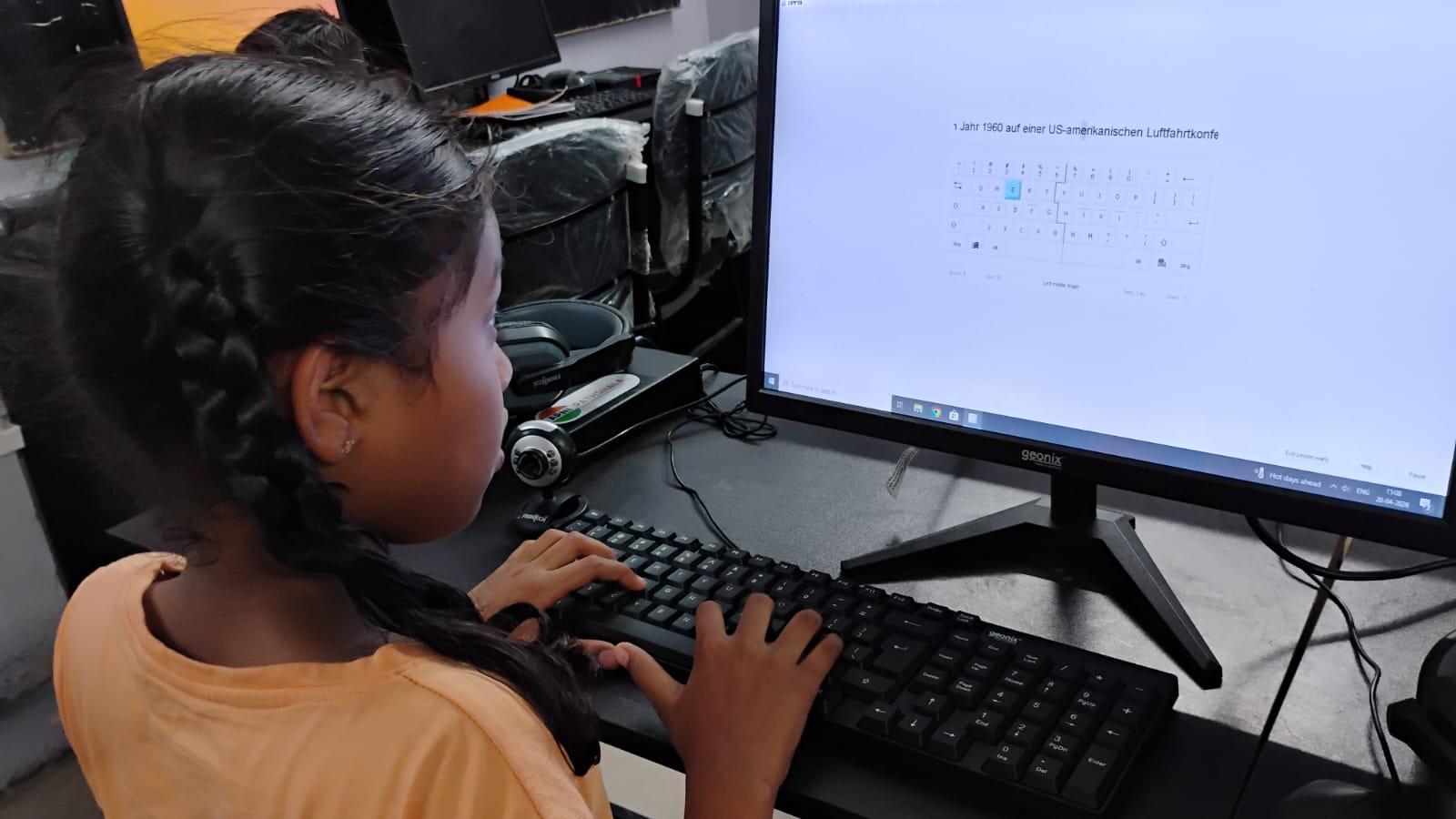
The Real Advantages of Learning at Your Own Pace
Every student is different. That is not a motivational quote; it is simply how learning works. A student who has not grasped the basics of algebra cannot meaningfully follow a lesson on quadratic equations. A student who has already understood the chapter should not have to sit idle while others catch up. The traditional classroom cannot solve this. Self-paced learning can.
The self-paced learning advantages are both practical and psychological:
-
- Students can pause, rewind, and replay explanations as many times as needed, without feeling embarrassed about asking the same question twice.
-
-
- Difficult topics get the extra time they deserve, without holding anyone else back.
-
- Concepts that come easily can be covered faster, freeing up time for revision and practice.
-
- Students build real understanding instead of exam-night memorisation that disappears after the paper.
-
- Confidence grows because they actually know the material, not just how to guess it.
NCERT (National Council of Educational Research and Training) has consistently highlighted that learning outside the classroom, when students have access to good resources, leads to stronger academic outcomes. The keyword is access. Without a personal device at home, a student cannot revisit a video explanation, attempt practice tests, or explore a topic further. The learning stops when the school bell rings.
Why This Matters Especially for Indian Students and Families?
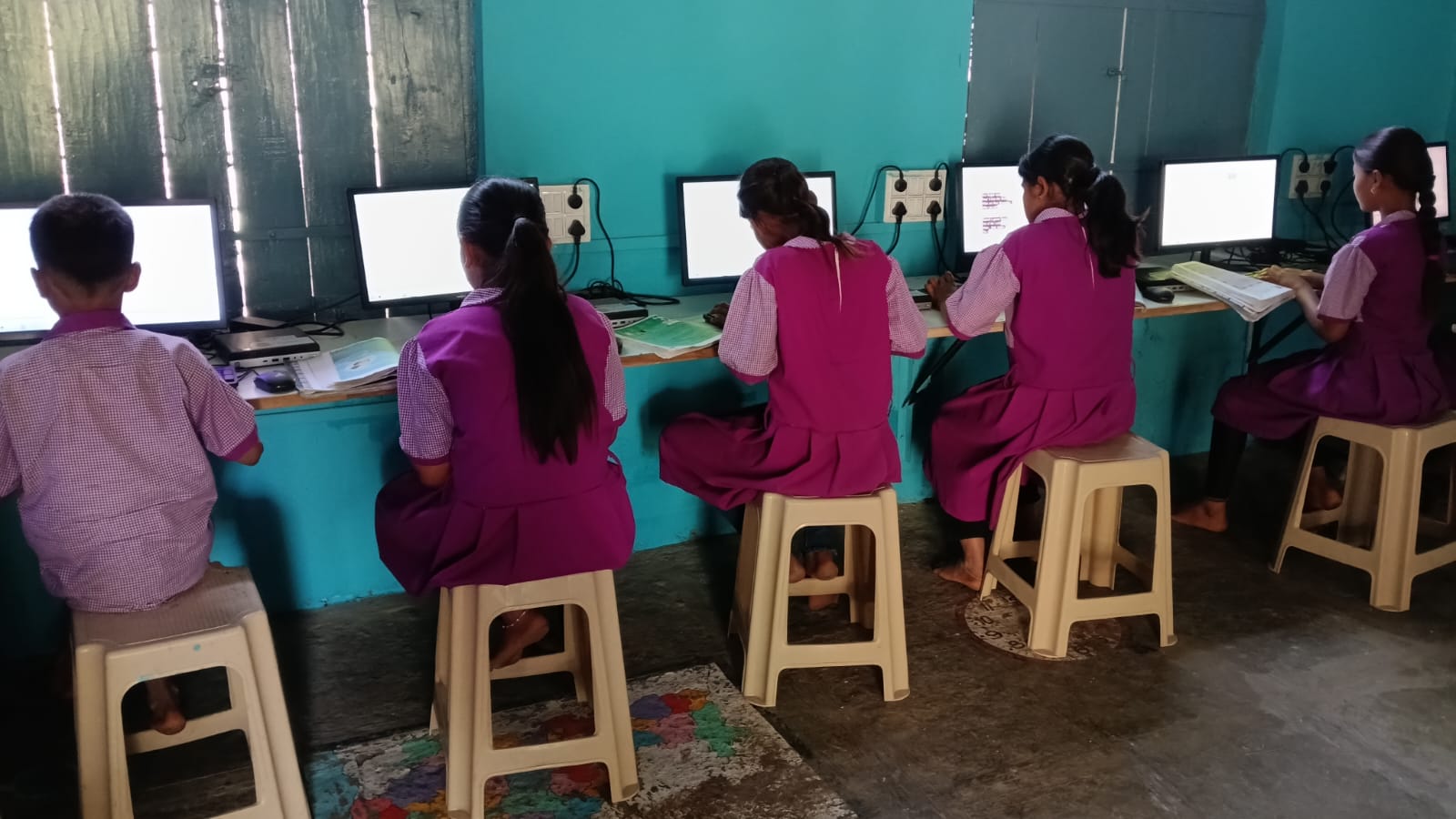
In most Indian homes, especially in Tier 2 and Tier 3 cities, children share study spaces, devices, and time. A student may not get quiet, uninterrupted study hours in the evening when the entire household is active. But early in the morning, or late at night after everyone has gone to sleep, that time belongs to the student alone.
Online learning flexibility turns those quiet moments into genuinely productive ones. Instead of sitting with a textbook and hoping something sticks, a student with a device can:
-
- Watch a clear video explanation of a chapter they did not follow in class.
-
-
- Take a short practice test and immediately see which questions they got wrong, and why
-
- Revise for board exams at a pace that suits them, not the pace of an entire tuition batch
-
- Explore a subject beyond the syllabus. Curiosity is one of the strongest drivers of learning.
This is precisely the gap that Apna PC is designed to fill. At just ₹21,000 (shipping and GST excluded), it is a personal computer built for Indian students, not an expensive gadget, but a practical everyday tool that makes flexible learning at home possible. You can also read “The Hidden Cost of Not Having a Computer in 2026” to understand just how much a student misses out on without one.
Flexible learning should not be a privilege reserved for students in premium urban schools. Every student deserves the freedom to learn at their own pace, on their own time. When families invest in the right device, that freedom becomes a daily reality, and the results follow.
If you want your child to have real control over their learning, studying when they are ready, revisiting what they missed, and growing at their own pace, the right device is the first step. Visit apnapc.com to learn more.