

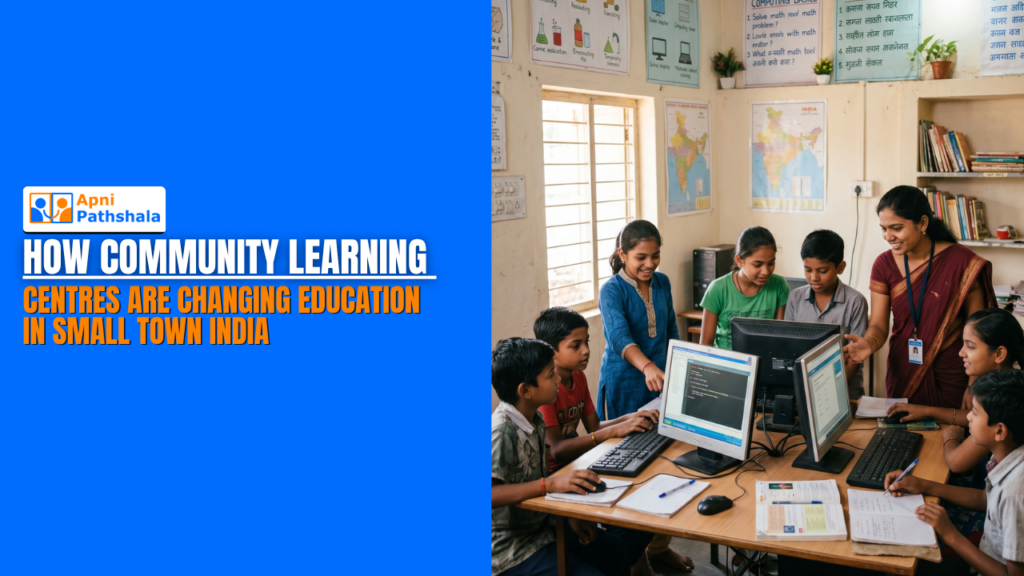
In a small town in Bihar, a modest two-room building has become the most important place in the neighbourhood, not a temple, not a market, but a community learning centre. Every evening, 25 children from surrounding homes walk in, sit down at shared tables, and study together under the guidance of a local teacher. Some use donated computers to practise maths. Others read books they cannot afford to buy. A few are preparing for competitive exams using online resources they could never access at home. This is what a community learning centre in a small town in India looks like, and it is quietly transforming education in places where schools alone cannot keep up.
What Is a Community Learning Centre and Why Does It Matter?
A community learning centre is a small, locally run space, often started by a teacher, an NGO, or a group of parents, where children gather to study, access resources, and receive academic support beyond what their school provides. These centres are not formal schools. They are supplementary, filling the gaps left by underfunded government schools and unaffordable private schools.
In small towns and semi-urban areas across India, the need is enormous. Schools are overcrowded. Teachers are overburdened. Many families cannot afford private tuition. An education centre in rural communities in India can be accessed locally, within walking distance, at minimal or no cost, and solves this problem directly. It gives children a place to study with focus, access to learning materials, and most importantly, a community that values education.
According to UNESCO’s research on community-based education models, locally run learning centres in developing countries consistently improve student attendance, academic performance, and retention rates, particularly for children from low-income families who would otherwise drop out of the education system entirely.
How These Centres Are Transforming Small Town Education
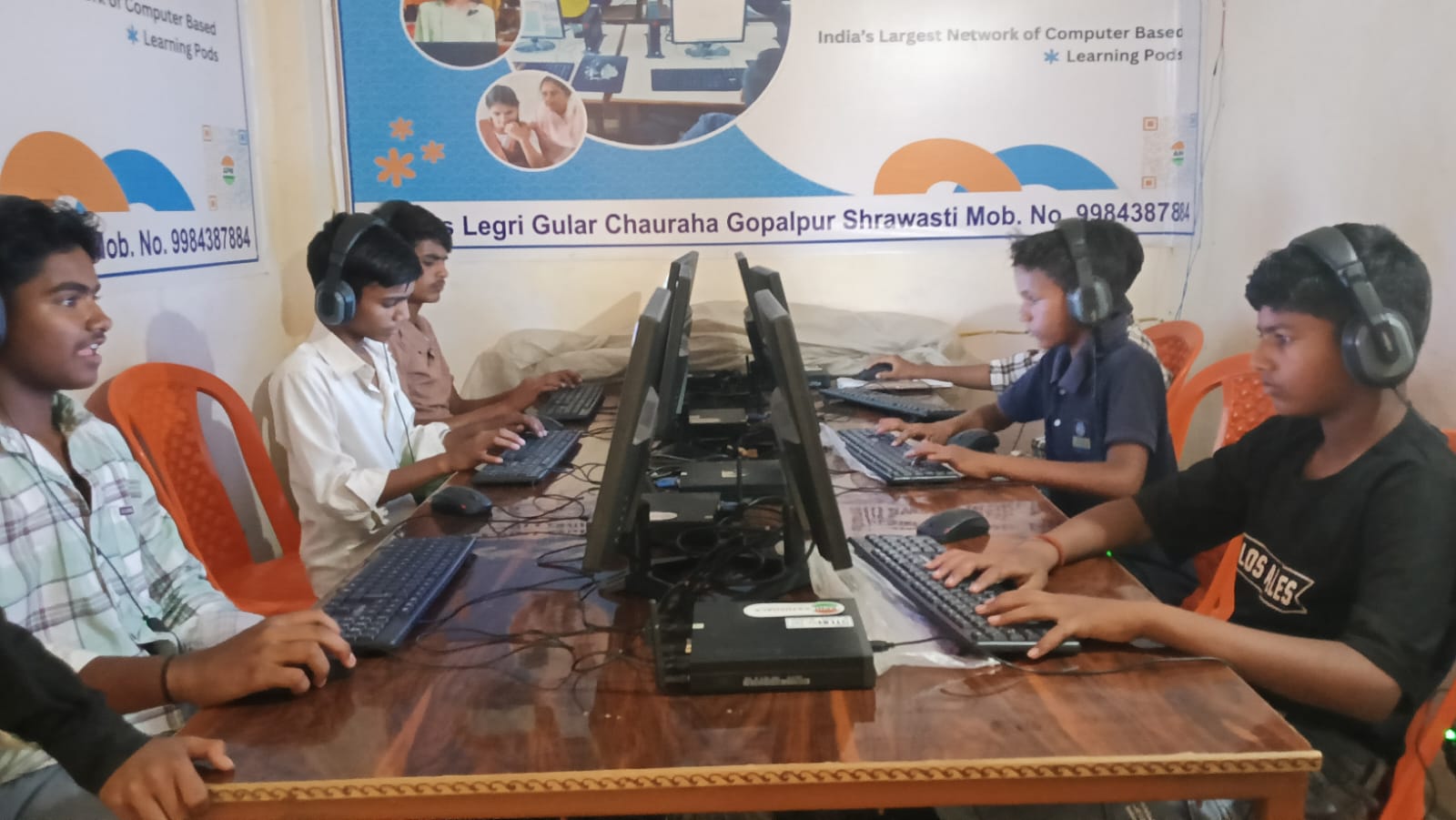
The impact of a community study centre NGO India runs, or a local teacher starts, goes far beyond homework help. Here is what these centres actually do for children and communities:
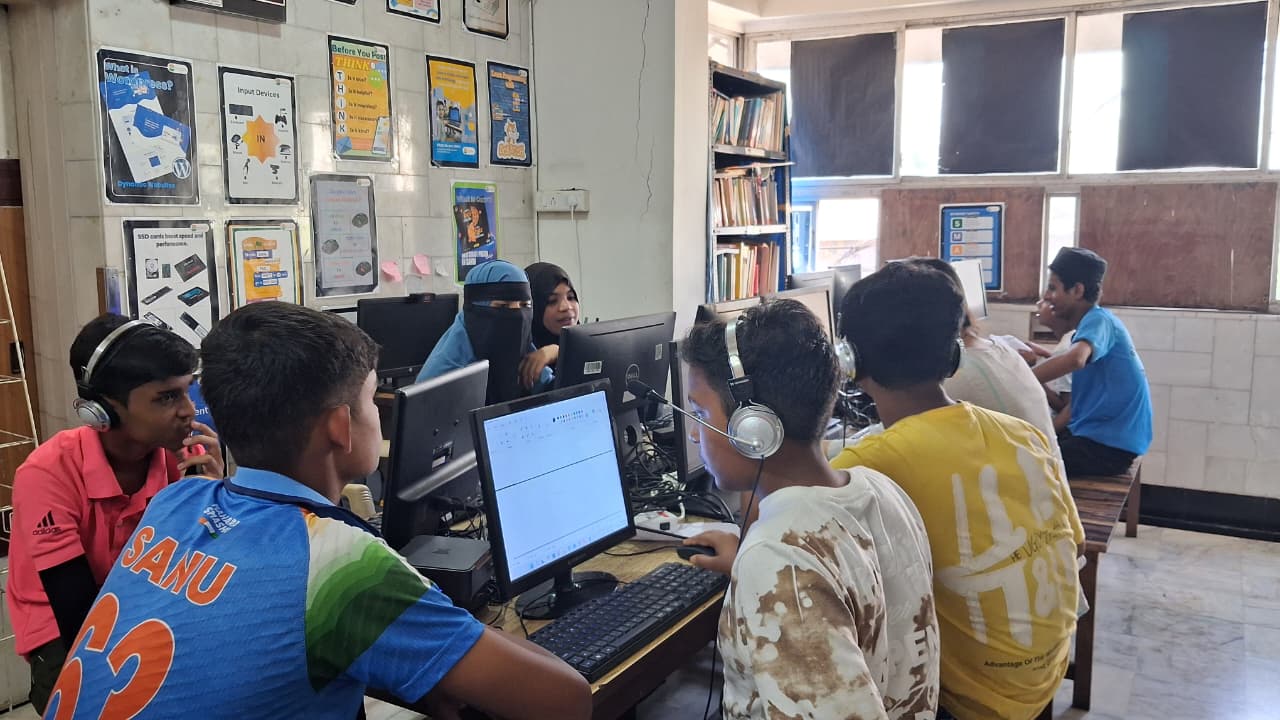
- Providing access to technology: Most small-town families do not have computers at home. Community learning centres that set up even a few devices give children their first real exposure to digital tools, typing, research, educational platforms, and computer-based practice. For many students, this is the only place they get hands-on experience with technology.
- Structured study time in a focused environment: Homes in small towns are often crowded, noisy, and lacking a proper study space. A learning centre gives children a quiet, dedicated environment where they can concentrate, surrounded by peers who are also studying. This peer environment motivates children far more effectively than studying alone at home.
- Bridging the teacher gap: In many government schools, a single teacher handles 40–60 students across multiple subjects. Community centres with dedicated tutors or volunteers provide the individual attention that schools simply cannot offer, particularly in subjects like mathematics, English, and science, where children most need support.
- Preparing students for digital exams: Competitive exams, scholarship tests, and board assessments are increasingly computer-based. A village education hub, built with a few computers, gives students regular practice with digital interfaces, so they walk into these exams with confidence, not confusion.
- Keeping children in the education system: Perhaps the most important role of these centres is preventing dropouts. When children have a supportive place to study, access to help when they are stuck, and a community that believes in them, they are far less likely to leave school early. This impact lasts a lifetime.
Learn how Apna PC is designed specifically for community learning environments on our Why Every Indian Student Needs Their Own Computer page.
How Apna PC Makes Community Learning Centres Possible on Any Budget
One of the biggest barriers to starting a community learning centre is the cost of technology. Branded laptops for a 10-device setup can cost Rs. 3–4 lakhs, an impossible investment for most local teachers and small NGOs. This is exactly where Apna PC changes the equation.
At Rs. 21,000 per unit (shipping and GST excluded), a community learning centre can set up a fully functional digital learning station for less than a quarter of the cost of branded alternatives. Five Apna PCs, enough for a small group learning setup, cost just over Rs. 1 lakh. And unlike general laptops, every Apna PC arrives preloaded with educational content, built-in safe browsing, and offline capability. No IT staff needed. No software installation. No ongoing maintenance headaches.
For NGOs and community organisations wondering how to launch a village education hub India desperately needs, Apna PC removes the single biggest obstacle: the cost of reliable, purpose-built technology. The devices work from day one, in any environment, with or without internet, and are built to handle daily use by multiple students for years.
The DIKSHA platform, India’s national digital learning resource, provides thousands of hours of free, curriculum-aligned content that works perfectly on Apna PCs, giving community centres access to the same quality of digital education that top city schools provide their students.
Explore how affordable educational technology supports community-driven learning on our What Is Apna PC page.
Community learning centres prove that meaningful education does not require massive infrastructure or government programmes. It requires a small space, a dedicated teacher, a few affordable tools, and the belief that every child, regardless of where they live, deserves a real chance to learn. Visit apnapc.com to learn more.