

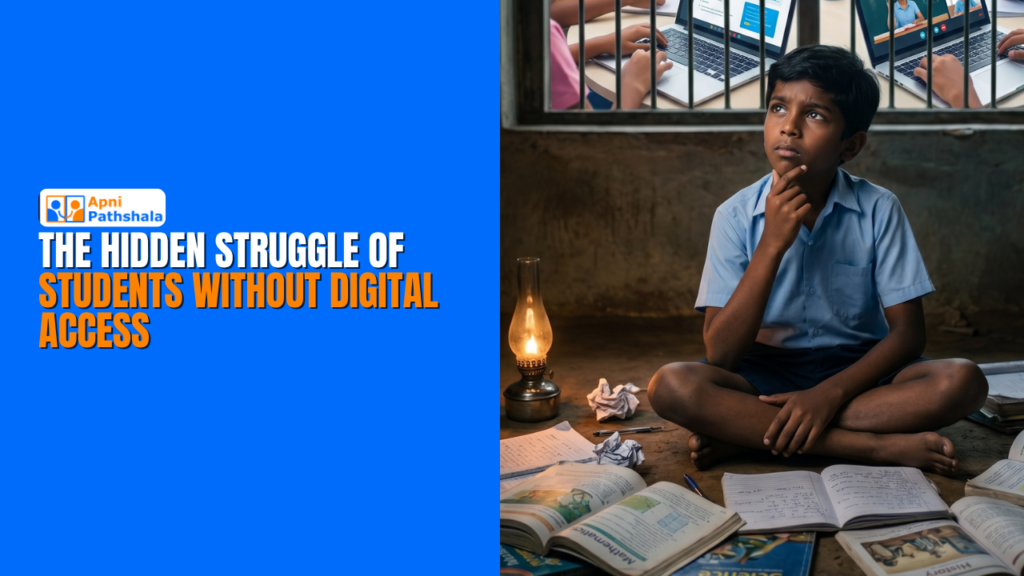
Every morning, Suresh walks 20 minutes to a cyber cafe in his village in eastern Uttar Pradesh just to check his school assignments online. He pays Rs. 20 per hour for a slow, shared computer with no educational software. He cannot save his work, revisit lessons, or practice at his own pace. Meanwhile, his cousin in Lucknow submits the same assignments from a laptop at home, in comfort, with time to revise and improve. Both children are equally capable. But only one has the tools to show it. This is the silent crisis of students without digital access, and it is far more widespread than most people realize.
The Reality of India’s Digital Divide in Education
The digital divide India faces is not just about who has internet and who does not. It is about who gets to participate in modern education and who gets left out entirely. When schools assign online homework, use digital textbooks, or conduct assessments on computer platforms, they assume every student has a device at home. That assumption is wrong for millions of children.
According to government data, a significant share of rural Indian households still lack a computer. Many families rely on a single shared smartphone, a 6-inch screen used by parents for work, by children for school, and by everyone for entertainment. Trying to write an assignment, attend an online class, or complete a coding exercise on a shared phone is not just difficult. It is practically impossible.
The result is a growing layer of education inequality that starts early and compounds over the years. A child who cannot practice typing in Class 5 will struggle with digital exams in Class 10. A student who has never used a research platform will write weaker projects in college. The gap does not close on its own; it widens.
According to UNICEF India’s education research, children from households without digital access are significantly more likely to fall behind in school, drop out earlier, and face limited career opportunities, not because of a lack of ability, but because of a lack of access.
What Students Without Digital Access Actually Go Through?
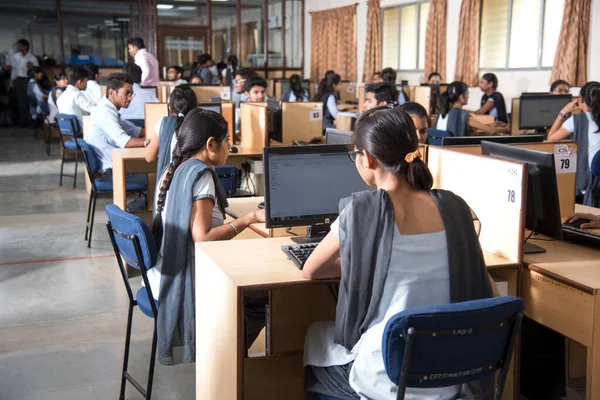
The learning challenges these students face go far beyond inconvenience. They affect confidence, motivation, and long-term self-belief. Here is what it actually looks like on the ground:
- Unable to complete school assignments: As schools increasingly assign digital homework, typed documents, online research, and presentation preparation, students without computers at home are forced to rely on cyber cafes, borrow devices from neighbors, or simply skip the work. Over time, this creates a visible gap between them and their peers.
- Missing out on free learning resources: India has world-class free educational content available online, including DIKSHA, Khan Academy, NPTEL, and e-Pathshala. But these resources only work if the student has a device to access them on. A child without a computer is locked out of the best free education the country offers.
- Struggling with computer-based exams: From competitive entrance exams to scholarship tests, India’s assessment systems are rapidly moving online. A student who has never used a computer regularly walks into these exams already at a disadvantage, not academically, but technically. They spend valuable exam time figuring out the interface instead of answering questions.
- Losing confidence silently: Children notice when their classmates can submit polished assignments, create presentations, and navigate digital tools effortlessly, and they cannot. This silent comparison erodes confidence over time, even in bright students who would otherwise excel.
- Falling behind in digital literacy: In 2026, digital literacy will be as fundamental as reading and writing. A student who graduates without basic computer skills faces a steeper climb in college, in job applications, and in professional life. The disadvantage compounds with every passing year.
Understand how Apna PC is designed to close this exact gap on our The Hidden Cost of Not Having a Computer in 2026 page.
How India Can Close This Gap Starting With the Right Device?
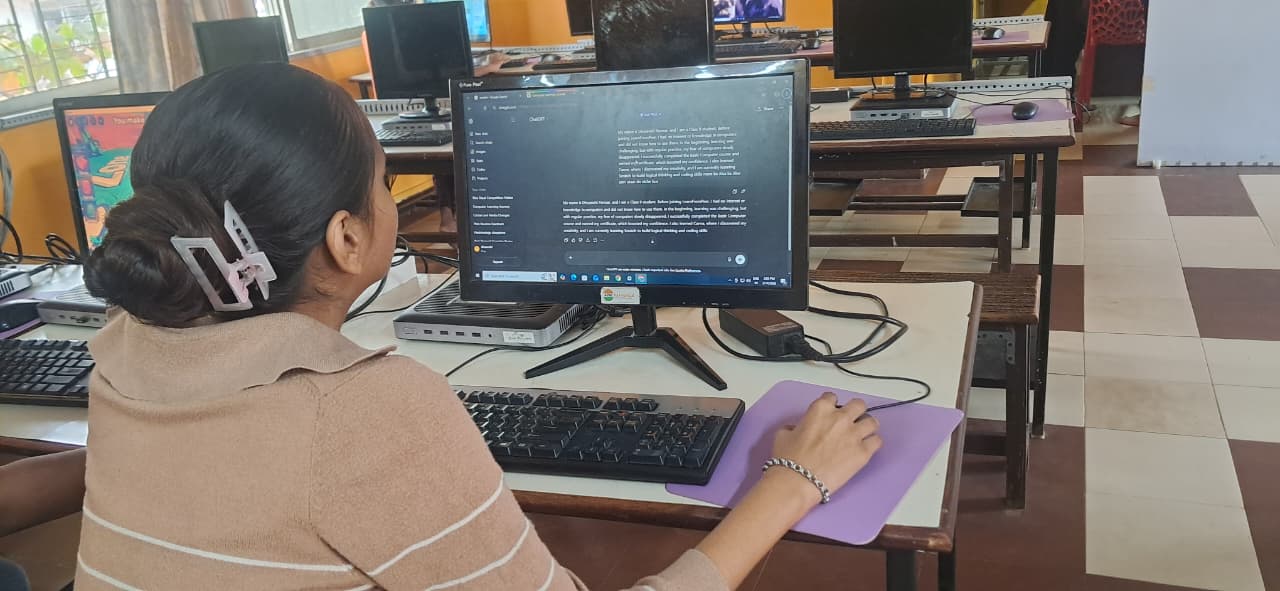
The solution to digital exclusion is not complex. It does not require expensive infrastructure or massive-scale government reform. It starts with one simple step: giving every student access to an affordable, purpose-built learning device.
Apna PC was created for exactly this reason. At Rs. 21,000 (shipping and GST excluded), it is the most accessible educational computer in India, preloaded with learning tools, built-in safe browsing, offline capability, and no entertainment distractions. It is designed for the realities of Indian homes: limited space, shared use, inconsistent internet, and budgets that do not stretch to Rs. 40,000 laptops.
For schools, it means building a computer lab for the price of a few desks. For NGOs, it means launching a community learning centre without waiting for grants. For parents, it means giving their child the same digital advantage that city families take for granted, at a price that makes sense.
The Ministry of Electronics and Information Technology (MeitY) has identified bridging the digital access gap in education as one of India’s most pressing challenges, and has been actively supporting programs that bring affordable digital tools to underserved communities. Apna PC is a direct answer to that call.
Read how a dedicated educational computer transforms a student’s entire learning journey on our The Biggest Advantage a Student Can Have Today page.
No child in India should fall behind simply because their family cannot afford a computer. The talent is there. The potential is there. What is missing is access, and Apna PC exists to change that. Visit apnapc.com to learn more.