

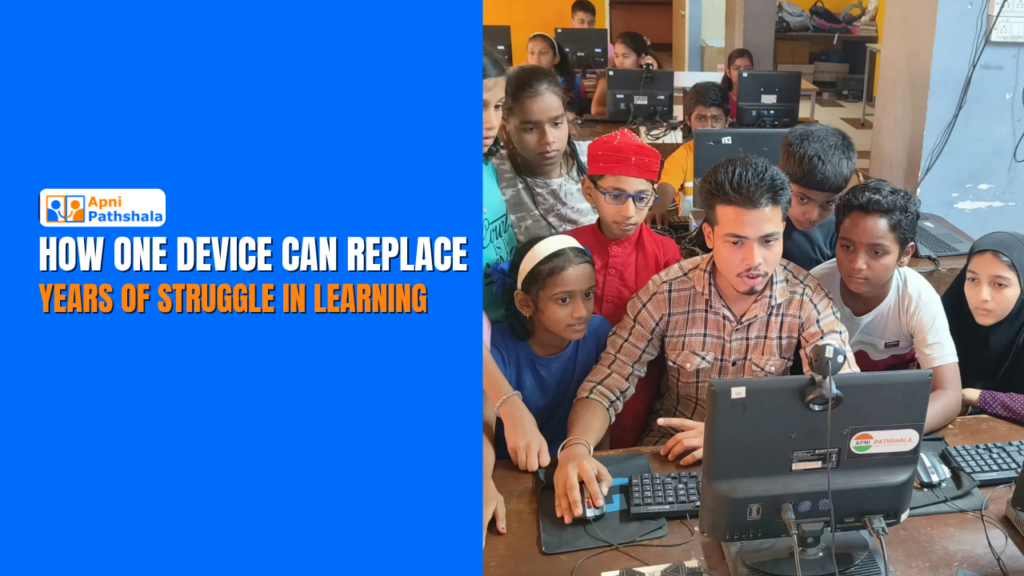
Most students in India have spent years knowing exactly what they need to learn, but never having the tools to actually learn it. They sit in classrooms, take notes by hand, and go home to practice on nothing. The knowledge exists. The motivation exists. But one device for learning is missing, and that gap swallows years of potential.
Picture Rajan, a Class 10 student from Uttar Pradesh. Every evening, he watches his school’s computer lab through the glass door, locked after 4 PM. He has a typing test in two weeks. He has never practiced at home. He gets 40 minutes, twice a week, in a shared lab with 30 students crowding around six working machines.
That was his reality for three years. Then one device changed everything. Call it the Learning Revolution, because that is what it is.
Years of Struggle Without Tools
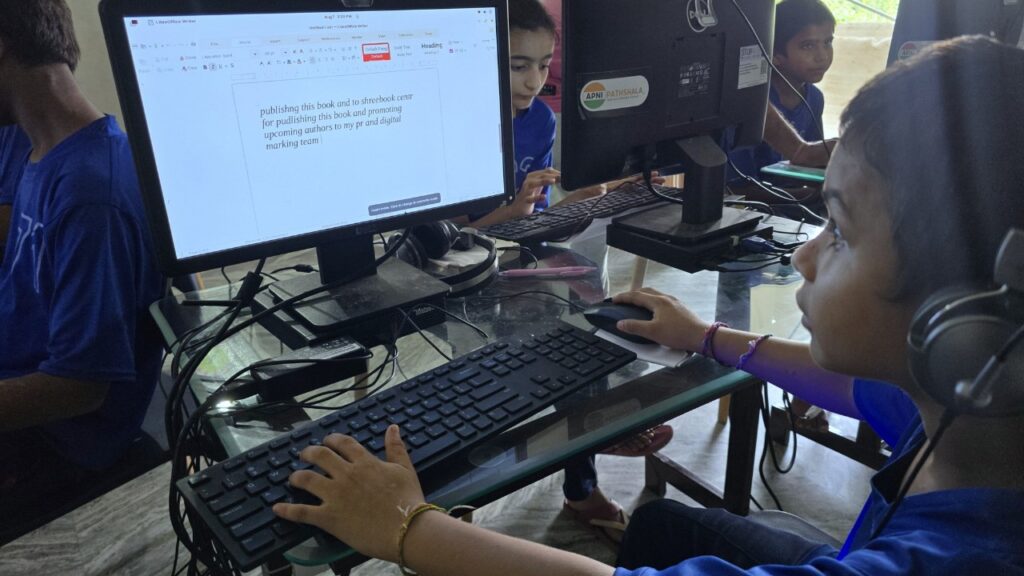
Across India, millions of students face the same wall Rajan faced. School computer labs exist, but access is limited. You get a slot. You share a machine. You rush through exercises because someone else is waiting. You go home and forget what you just practiced because there is no way to continue.
The frustration is not about intelligence. These students want to learn. But wanting to learn and having a place to practice are two different things. The gap between school hours and home hours is where progress dies. Skills need repetition. Repetition needs access. Access requires one device for learning at home.
The Day Everything Changed
For students who finally get a computer at home, the shift is immediate. Not gradual. Immediate.
Rajan’s family got a refurbished desktop setup through Apna PC. The first night, he sat at it for two hours. Not because someone told him to. Because he could. No waiting. No timer. No one standing behind him.
The psychological shift that happens in that first week is hard to describe. Suddenly learning does not feel like borrowing time. It feels like your own. According to edX, self-paced learning with consistent access leads to significantly better retention than scheduled, constrained learning environments.
What One Device Actually Unlocks
One device for learning does not just give you access to one thing. It opens everything at once. Video tutorials. Practice exercises. Government learning portals. Digital textbooks. Past exam papers. Typing practice. Spreadsheet tools. Presentation software for projects.
A student who depended entirely on what the school provided now has more resources than any school could offer. This is why India’s Ministry of Education has pushed digital learning access as a core part of student development.
The Struggles That Disappear
When one device for learning arrives at home, a specific list of daily frustrations stops. No more waiting for lab time. No more rushing through practice in 40-minute windows. No more depending on a cousin’s laptop or traveling to a cybercafe to type an assignment. No more falling behind classmates who happen to have computers at home.
These are not small inconveniences. They are barriers that quietly erode confidence over time. When they disappear, something opens up in a student that has been closed for years.
From Struggle to Strength
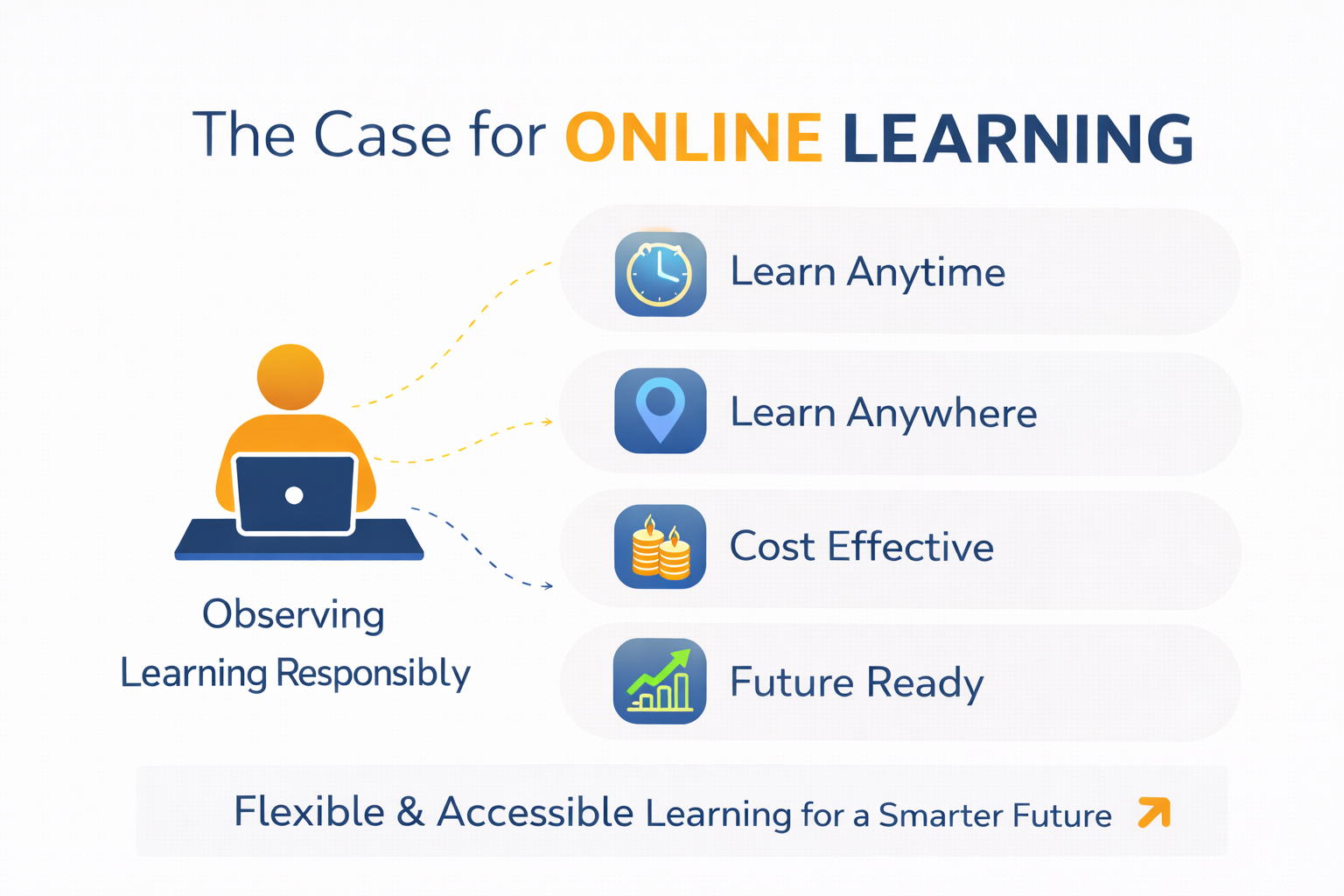
Three months after getting his computer, Rajan topped his school’s typing test. Six months later, he was helping classmates with Excel. A year later, he was teaching his younger sister basic coding. None of this happened because he was exceptional. It happened because he finally had consistent access to one device for learning and used it every day.
Skills built daily become confidence. Confidence becomes independence. As covered in our post on how one computer changed everything for self-learners, this pattern repeats across thousands of students once the right tool is in their hands.
The Ripple Effect on Family
The impact does not stop with one student. Siblings watch. They start using it too. Parents see the change and begin to understand what digital access actually means. Neighbors notice. Other families start asking questions. One device for learning in one home quietly shifts the entire block’s relationship with education.
This is generational change happening at the household level. One purchase. One device. Years of ripple effects.
Why One Device is Enough
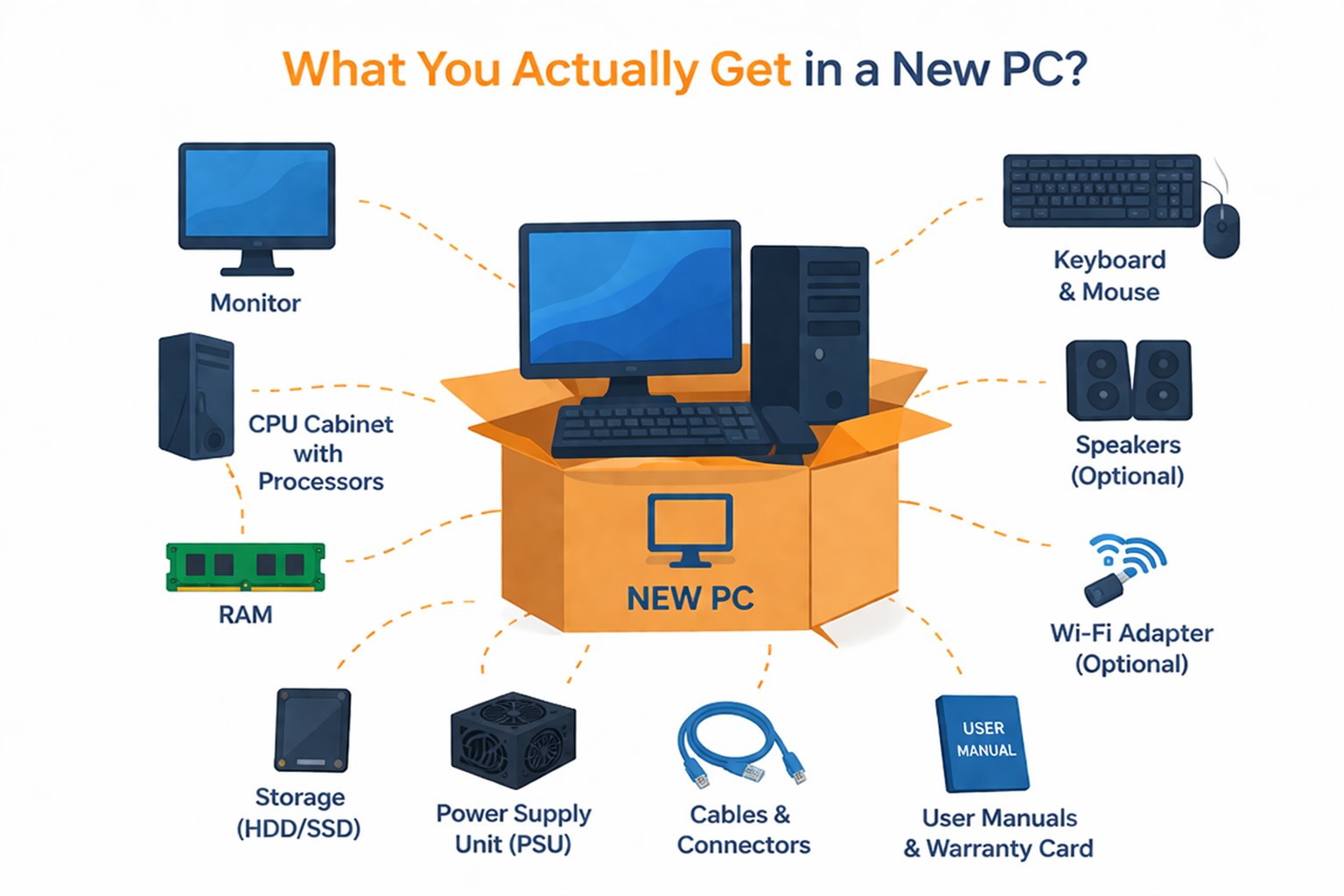
Apna PC costs Rs. 21,000. That includes a complete desktop setup, pre-installed tools, and a 3-year warranty. Everything a student needs to start learning the same day it arrives. As we covered in our guide on whether an affordable computer can replace tuition, one device for learning, used consistently, replaces years of struggle with steady, confident growth.
You do not need the most expensive device. You need the right one, available every day, at home. That is exactly what Apna PC delivers.
Stop waiting for the school lab to open. Visit apnapc.com today and bring one device for learning into your home.